Toronto's suburbs have often been dismissed as bland and banal. A closer look, however, reveals a diverse, complex landscape whose rapid changes have profound implications for the metropolis as a whole.


"In contrast to the central city—a bastion of progressive urbanism which, under the intellectual and moral guidance of Jane Jacobs, avoided the meat ax of modern postwar urban renewal," write geographers Jean-Paul Addie and Rob Fiedler, "Toronto’s suburbs have tended to be dismissed in pejorative terms as gray, flat sprawl."
This view drastically oversimplifies life outside of the downtown core, however. From the creation of dense satellite downtowns to shifting immigrant settlement patterns, dramatic changes are transforming the city's suburbs and leading to new questions about their relationship to Toronto as a whole.
The authors present six case studies of suburban sites that illustrate how some of these issues are playing out.
Read the full story: On the (cutting) edge of the global city
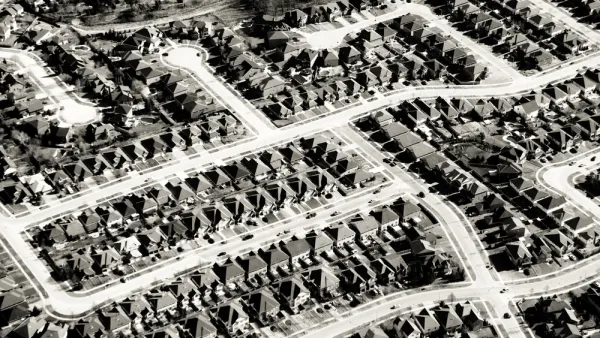
Tuesday's Election May Hinge on the Changing Demographics of Suburbs
Today's suburbs have changed dramatically from a generation ago. Younger, more diverse, and more liberal, they are "trending more Democratic." The PBS News Hour explores this critical demographic shift five days before Election Day.
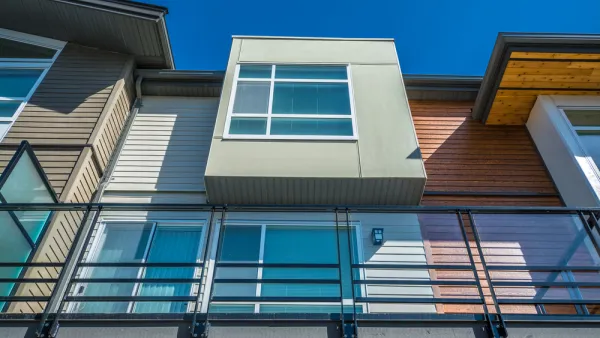
Denser, More Urban Suburbs
Social changes in America relating to work, demographics and the family are changing the face of suburbs around the US.
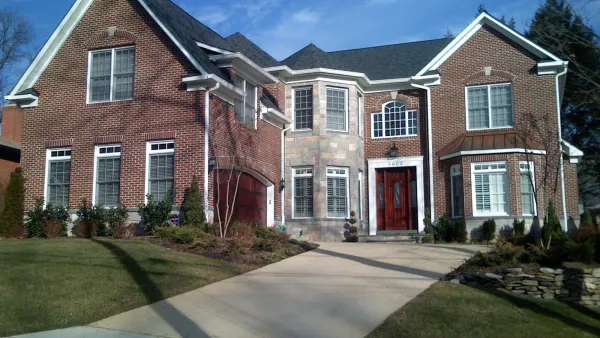
Empty Nesters Stuck in the Suburbs
Just when boomers are ready to return to the city to enjoy all its cultural offerings, they find themselves priced out. Many do downsize, however, from large single family homes to more urban areas close to home.

Planetizen Federal Action Tracker
A weekly monitor of how Trump’s orders and actions are impacting planners and planning in America.

Eastern Nebraska is running out of electricity
Data centers and electrification are straining eastern Nebraska’s grid, throttling economic development.

Study reveals best places in the U.S. for cycling, walking
New research from Streetlight Data examines bicycle and pedestrian miles per capita in the 100 largest U.S. cities by population.

DSA members accuse Mamdani of 'abandoning values' over housing redevelopment
New York City's mayor plans to replace about 2,000 units of public housing with private, mixed-income housing.

All sides of BRT debate unhappy with CDOT’s most recent move
The Colorado Department of Transportation is no longer considering center-running bus lanes for Colorado Boulevard.

Massachusetts bogs generate both power, and cranberries
Putting solar panels above farmland is one way Massachusetts is advancing toward its goal of net-zero carbon emissions by 2050.

FREE Course: Walkable City 1: Why Walkability?
After describing his path towards focusing on walkability as the essence of good planning, Jeff Speck marches through his five principal reasons for making more walkable places.
Reinventing Malls: Planning Alchemy—Turning Gray Fields Into Gold
The course focuses on the opportunities and imperatives that shape reinvention of mall sites.

City of Rosemead
Rutgers University, Edward J. Bloustein School of Planning and Public Policy
One Hundred Miles
University of Michigan School for Environment and Sustainability (SEAS)
Hunter College, City University of New York (CUNY)
The Architects Foundation
City of Cambridge
The Pocatello Development Authority
The Urban Renewal Agency of the City of Pocatello