On Eric Garcetti's 100th day in office, the new mayor of Los Angeles showed progress on his promise to increase accountability by launching a beta website to track City Hall performance in nine categories and for each city department.


"For better or worse, facts began tumbling forth in the new "performance" section of the mayor's website Tuesday, Garcetti's 100th day in office," report Michael Finnegan and Ben Welsh.
"Modeled on systems set up by Minneapolis, Boston and other cities, the website is supposed to answer the public’s most commonly asked questions," explained Finnegan in an article filed prior to the site's launch. "How many violent crimes have occurred in my neighborhood? How long does it take to get a building permit for a house remodel? Or a pothole filled, or a street light repaired?"
Though Garcetti promised to release the raw data behind the metrics unveiled on the beta site Tuesday, critics aren't waiting to pounce.
"This is a marketing website, not an open government website," said Clay Johnson, a leading advocate of open-government data. "The difference is: open government websites don't just have the PowerPoint deck slides that make you look good."
Read the full story: Mayor adds departments' performance data to his website
Can L.A.'s New Mayor Drag the City's Operations Into the Digital Era?
With a goal of improving the quality of life for the city's residents, Los Angeles Mayor Eric Garcetti is embarking on a titanic task: using technology, transparency, and accountability to transform the city's "lumbering" bureaucracy.
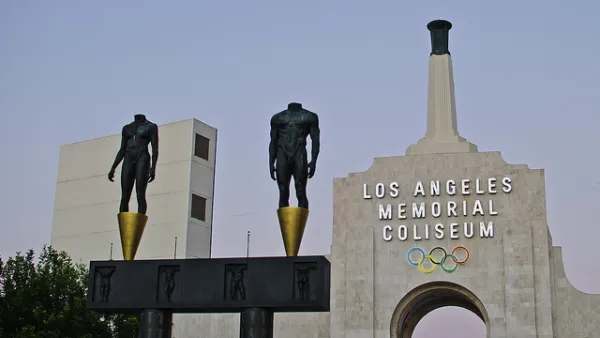
L.A. Seeking Funding for New Transit Projects Prior to the 2028 Summer Olympics
Los Angeles officials have been working for years to deliver a suite of transit projects in time for the 2028 Olympics. Planners now hope federal infrastructure funding could reinvigorate the effort.

L.A. Mayor Proposes Guaranteed Income Program
The city could give 2,000 families $1,000 a month in what would be the largest program of its kind in the country.

Planetizen Federal Action Tracker
A weekly monitor of how Trump’s orders and actions are impacting planners and planning in America.

Eastern Nebraska is running out of electricity
Data centers and electrification are straining eastern Nebraska’s grid, throttling economic development.

Study reveals best places in the U.S. for cycling, walking
New research from Streetlight Data examines bicycle and pedestrian miles per capita in the 100 largest U.S. cities by population.

DSA members accuse Mamdani of 'abandoning values' over housing redevelopment
New York City's mayor plans to replace about 2,000 units of public housing with private, mixed-income housing.

All sides of BRT debate unhappy with CDOT’s most recent move
The Colorado Department of Transportation is no longer considering center-running bus lanes for Colorado Boulevard.

Massachusetts bogs generate both power, and cranberries
Putting solar panels above farmland is one way Massachusetts is advancing toward its goal of net-zero carbon emissions by 2050.

FREE Course: Walkable City 1: Why Walkability?
After describing his path towards focusing on walkability as the essence of good planning, Jeff Speck marches through his five principal reasons for making more walkable places.
Reinventing Malls: Planning Alchemy—Turning Gray Fields Into Gold
The course focuses on the opportunities and imperatives that shape reinvention of mall sites.

City of Rosemead
Rutgers University, Edward J. Bloustein School of Planning and Public Policy
One Hundred Miles
University of Michigan School for Environment and Sustainability (SEAS)
Hunter College, City University of New York (CUNY)
The Architects Foundation
City of Cambridge
The Pocatello Development Authority
The Urban Renewal Agency of the City of Pocatello