After months of speculation, and decades of mismanagement and population decline, Detroit has filed for bankruptcy. The milestone is the culmination of a turbulent half-century for the city. But some see it as a chance for a new start.


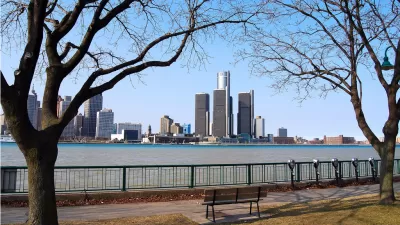
"Detroit, the cradle of America’s automobile industry and once the nation’s fourth-most-populous city, has filed for bankruptcy, an official said Thursday afternoon, the largest American city ever to take such a course," report Monica Davey and Mary Williams Walsh.
"From here, there is no road map for Detroit’s recovery, not least of all because municipal bankruptcies are rare. Some bankruptcy experts and city leaders bemoaned the likely fallout from the filing, including the stigma it would carry. They anticipate further benefit cuts for city workers and retirees, more reductions in services for residents, and a detrimental effect on future borrowing."
"But others, including some Detroit business leaders who have seen a rise in private investment downtown despite the city’s larger struggles, said bankruptcy seemed the only choice left — and one that might finally lead to a desperately needed overhaul of city services and a plan to pay off some reduced version of the overwhelming debts. In short, a new start."
Read the full story: Detroit Files for Bankruptcy

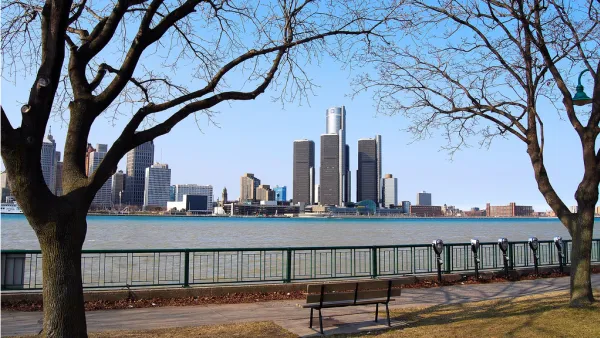
Bankruptcy in Detroit—The Tip of the Iceberg
One of the scariest things about Detroit's bankruptcy proceedings is that the fiscal choices that city made has been repeated in many other cities.
Commuter Taxes: An Untapped Revenue Source?
For all those cities that double population during the work day, here's a revenue thought to consider. But why restrict it to in-bound commuters? What about residents who commute-out of the city? Is the commuter tax a legitimate revenue source?

Could Detroit Be "Blight-Free" in 36 Months?
Kevyn Orr, Detroit’s emergency manager, has expressed his belief that the city can clear its backlog of 78,000 blighted buildings within the next 18-36 months.

Planetizen Federal Action Tracker
A weekly monitor of how Trump’s orders and actions are impacting planners and planning in America.

California plans to bury El Niño’s downpour
If the state plays its cards right, it may be able to store a billion acre-feet of El Niño’s water in aquifers.

Chicago breaks ground on $3 billion megadevelopment
The new neighborhood, titled Foundry Park, will one day host 3,700 residences.

Satanic place names
From streams and lakes to valleys and canyons, I mapped more than 1,000 places named after the Devil.

California High-Speed Rail Authority CEO resigns after $600,000 scandal
Under Ian Choudri, the authority used taxpayer dollars to fund first class flights and trips to nightclubs.

Want to study the Missouri River? Soon, you may need unanimous approval from 10 states
Legislation would require 10 governors’ permission to study or build projects moving water outside the basin.

FREE Course: Walkable City 1: Why Walkability?
After describing his path towards focusing on walkability as the essence of good planning, Jeff Speck marches through his five principal reasons for making more walkable places.
Reinventing Malls: Planning Alchemy—Turning Gray Fields Into Gold
The course focuses on the opportunities and imperatives that shape reinvention of mall sites.

City of Rosemead
Rutgers University, Edward J. Bloustein School of Planning and Public Policy
One Hundred Miles
Hunter College, City University of New York (CUNY)
The Architects Foundation
University of Cincinnati Online
City of Cambridge
Montrose County
The Pocatello Development Authority