Portland cement doesn't come close to matching the resiliency of the concrete created by ancient Romans. After years of research, scientists believe they've unraveled the ingredients and production techniques that made Roman concrete so superior.


"After 2,000 years, a long-lost secret behind the creation of one of the world’s most durable man-made creations ever—Roman concrete—has finally been discovered by an international team of scientists, and it may have a significant impact on how we build cities of the future," writes Bernhard Warner.
After a decade of work, "[t]he researchers now know why ancient Roman concrete is so superior," he reports. "They extracted from the floor of Italy’s Pozzuoili Bay, in the northern tip of the Bay of Naples, a sample of concrete breakwater that dates back to 37 B.C. and analyzed its mineral components at research labs in Europe and the U.S., including at Berkeley Lab’s Advanced Light Source. The analysis, the scientists believe, reveals the lost recipe of Roman concrete, and it also points to how much more stable and less environmentally damaging it is than today’s blend."
Read the full story: Ancient Roman Concrete Is About to Revolutionize Modern Architecture


The Pros and Cons of Concrete
A versatile building material with a long pedigree, concrete also has associations with ugliness and totalitarianism. Its reinforced variety, widely used today, can conceal a costly flaw.
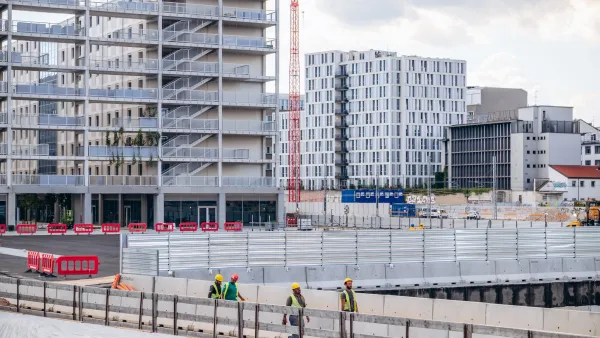
Milan’s Olympic Athletes’ Village is Designed for Reuse
This year’s athlete housing is designed specifically to be repurposed as student housing after the games.

Rome is Latest European Capital to Drop Speed Limit to 30KPH
Traffic fatalities in Bologna, the first major Italian city to lower their speed limit, dropped by 50 percent in the first year.

Planetizen Federal Action Tracker
A weekly monitor of how Trump’s orders and actions are impacting planners and planning in America.

HUD modernizes 50-year-old manufactured housing framework
The Next Generation Manufactured Housing Action Plan establishes new energy-efficiency standards for manufactured homes, and new guidelines for anchoring them.

Data reveals that NYC’s bet on congestion pricing has paid off
After almost two years of the program, reports show positive impacts on traffic and air quality and no disruptions to parking.

How Chicago, New York and Seattle are funding transit projects amid tough times
Notes from the American Public Transportation Association's TransForm conference in Chicago.

Transport for London tackles hate crime spike with free bystander training
Recorded hate crime offences on the London's transport network have increased by 36 per cent.

Denver is solving homelessness. Why aren't the rest of us?
Since 2023, Denver's street homeless population has decreased by 64%, proving that effective tools exist to support those in need of housing.

FREE Course: Walkable City 1: Why Walkability?
After describing his path towards focusing on walkability as the essence of good planning, Jeff Speck marches through his five principal reasons for making more walkable places.
Reinventing Malls: Planning Alchemy—Turning Gray Fields Into Gold
The course focuses on the opportunities and imperatives that shape reinvention of mall sites.

One Hundred Miles
County of Mendocino
planning NEXT
The Architects Foundation
University of Cincinnati Online
Montrose County
Northern Illinois Transit Authority (NITA)
The Pocatello Development Authority