Sprawling development and alternative energy projects are a growing threat to California's productive farmland. Susie Cagle discusses how two bills "could give a boost to California agriculture big and small," while reining in sprawl.


"First up: The Urban Agriculture Incentive Zone Act, AB 551," writes Cagle. "This would set up an optional program for counties to give residents breaks on their property taxes so long as they’re using the land to grow food." As San Francisco based urban think tank SPUR explains, "This legislation provides an incentive to private landowners to make more land available for urban agriculture...which is especially critical for the viability of commercial urban farms."
"For non-city dwellers, the California Farmland Protection Act, AB 823, packs a much bigger punch," Cagle adds. As SPUR notes, "The bill would require developers to either 1) permanently protect an acre of farmland for every acre they develop as part of the mitigation process in the California Environmental Quality Act or 2) build more densely."
Read the full story: Two new bills aim to save California farmland from rampant sprawl

Can Cities Help Solve Global Food Challenges?
With growing populations demanding more food and growing borders requiring more land, cities are one of the primary challenges to feeding the world's hunger problem. Can they also be the solution?
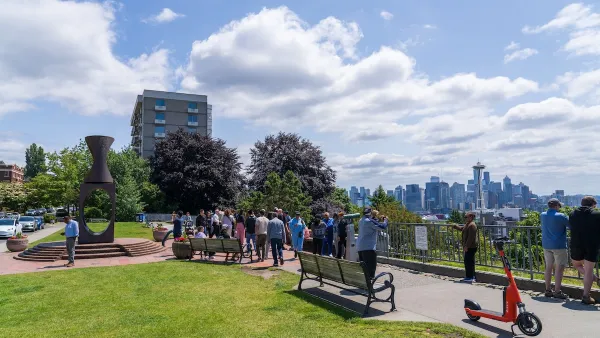
Yet again, Seattle’s density zoning update is hit with delays
The city must now examine the ‘maximum possible development’ under a future zoning scenario, rather than the ‘maximum likely development.’
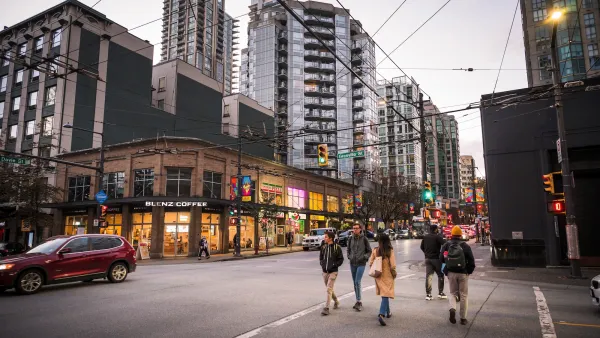
To upzone or not to upzone? Two views on the housing crisis
Allowing more density can increase the housing supply, but does the attendant rise in land prices cancel out the benefits?

Planetizen Federal Action Tracker
A weekly monitor of how Trump’s orders and actions are impacting planners and planning in America.

Data reveals that NYC’s bet on congestion pricing has paid off
After almost two years of the program, reports show positive impacts on traffic and air quality and no disruptions to parking.

Denver is solving homelessness. Why aren't the rest of us?
Since 2023, Denver's street homeless population has decreased by 64%, proving that effective tools exist to support those in need of housing.

In California, electric school buses are powering 1,000 homes — and turning a profit
Tellus Power, the charging equipment manufacturer behind the project, is also helping school buses connect to the power grid in Vermont, Illinois and San Francisco.

‘No state has sacrificed more:’ Arizona joins Nevada, sues feds over Colorado River plan
The Arizona Department of Water Resources' motion claims that the state's cities, tribes and farmers can't survive without sufficient water from the Colorado River.

Permits for single-family homes have nosedived, along with investor confidence
Permits to build new single-family homes also hit a 3.5 year low in September.

FREE Course: Walkable City 1: Why Walkability?
After describing his path towards focusing on walkability as the essence of good planning, Jeff Speck marches through his five principal reasons for making more walkable places.
Reinventing Malls: Planning Alchemy—Turning Gray Fields Into Gold
The course focuses on the opportunities and imperatives that shape reinvention of mall sites.

City of Rosemead
Rutgers University, Edward J. Bloustein School of Planning and Public Policy
One Hundred Miles
The Architects Foundation
University of Cincinnati Online
Montrose County
Northern Illinois Transit Authority (NITA)
The Pocatello Development Authority