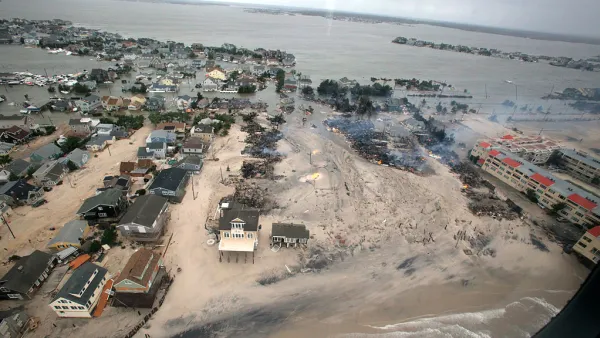
After Hurricane Sandy, hundreds of architects and engineers offered their services to assist an overwhelmed NYC Department of Buildings in assessing storm-damaged properties. So why were they turned away?


Matt Chaban examines how New York's lack of Good Samaritan laws, and fears of lawsuits, prevented hundreds of willing architects and engineers from helping in post-Sandy building evaluations.
"For more than a decade now, following a spate of lawsuits stemming from work they did at Ground Zero and got sued for subsequently, architects, engineers and contractors have been pushing for their own Good Samaritan protections in Albany," notes Chaban. "With Sandy as their rallying cry, they are making a renewed push, arguing that having such protections in place would help the city be better prepared for the next disaster."
"What building professionals in New York want is the sort of protection their colleagues in 24 states already have. Many of those states, including California, Colorado, Florida and Louisiana, are places better accustomed to natural disasters that only now, courtesy of rising sea levels, seem to be increasingly in the cards for New York as well."
"Staten Island Assemblyman Michael Cusick, a co-sponsor of the Good Samaritan bill, said that with the growing instances of disaster, the need for the bill is obvious: 'We saw the need for architects and engineers and professionals in times of disaster. We want to have them feel comfortable to help in a time of need.'"
"Mr. Morgan gave the bill only a 50-50 chance of passage. But he believes that unified support from architects, engineers and contractors, who do not always work together on legislation, could help."
Read the full story: Fears of lawsuits hold back Sandy help

Discrimination Limits Sandy Recovery Efforts
Many New Jersey residents are waiting for state aid to help them rebuild after Hurricane Sandy. But not everyone is receiving a fair share of recovery funds. How will Governor Chris Christie respond?
New Yorkers Take Pride in Resilience, Preserve Scars from Sandy
As New York and New Jersey continue to recover from Hurricane Sandy, some residents choose to preserve the watermarks left on their homes and businesses as a way to commemorate their survival.
The Era of “When, Not If,” Compels a New Approach to Waterfront Development
On the anniversary of Hurricane Sandy, ULI offers guidance on post-disaster rebuilding and building in anticipation of future disasters in a way that helps preserve the environment, boost economic prosperity, and foster a high quality of life.

Planetizen Federal Action Tracker
A weekly monitor of how Trump’s orders and actions are impacting planners and planning in America.

‘Going backwards:’ Baltimore mayor, students rally against state's transit funding plan
Maryland's proposed six-year plan provides no funding for Baltimore’s BMORE bus program and reduces its road maintenance funding.
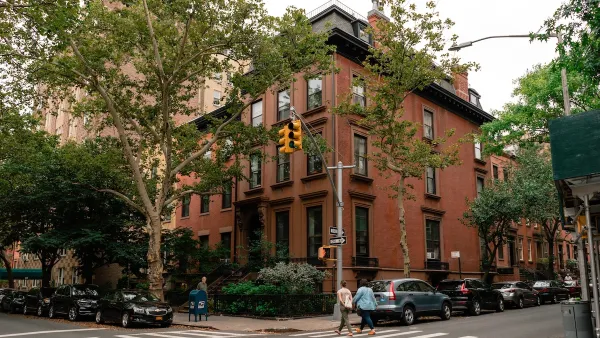
Mamdani sent nearly 6,000 pied-à-terre tax warnings to homes that didn’t qualify
A judge has ordered the administration to cancel thousands of pied-à-terre tax notices after it sent 35% of them erroneously.

Newsom vetoes high-speed rail supervision bill after agency receives condemnatory audit
The audit found the CHSRA approved almost $600,000 in unallowable travel expenses.

Nation sees first electric plane-boat hybrid take off in public demo
The Viceroy Seaglider can fly at speeds of 180mph for up to 180 miles.

One of nation’s poorest counties to receive $6 billion data center
The developers estimate the project will create 200 permanent jobs and 1,000 temporary construction jobs.

FREE Course: Walkable City 1: Why Walkability?
After describing his path towards focusing on walkability as the essence of good planning, Jeff Speck marches through his five principal reasons for making more walkable places.
Reinventing Malls: Planning Alchemy—Turning Gray Fields Into Gold
The course focuses on the opportunities and imperatives that shape reinvention of mall sites.

City of Thousand Oaks
City of Wisconsin Rapids
Harvard University Graduate School of Design
The Architects Foundation
University of Cincinnati Online
Northern Illinois Transit Authority (NITA)
The Pocatello Development Authority
The Urban Renewal Agency of the City of Pocatello