Affordable rental housing is scarce in the US, especially among low income people, finds a new report by the Bipartisan Policy Center. As "the housing demand of Baby Boomers and their children starts to converge," the problem will only get worse.


The Bipartisan Policy Center has released a report on how to fend off the growing housing crisis in the United States. The report provides details about the availability of rental housing by income bracket, reports Emily Badger.
According to the Census Bureau, 35 percent of American households are renters, and that percentage is going to increase as the economy gets back on track and the population ages. Among extremely low-income people (those making less than $10,000 a year), only 35 percent have access to affordable rental housing. "Now, as rents continue to rise faster than incomes throughout the economy," adds Badger, "it will be as important for cities to focus on housing these residents as those professionals for whom 'affordability' means something quite different."
Although affordable rental housing becomes more readily available for higher incomes, according to a Cities report from last year, renting is more expensive than home ownership in the majority of America's 100 biggest cities.
Read the full story: The U.S. Simply Doesn't Have Enough Available Rental Housing, Whether You're Rich or Poor
As Luxury Rents Drop, Low-Income Tenants Pay More
With increasing pressure on the nation's supply of affordable housing, low- and middle-income renters are seeing their rents go up while higher-quality apartments drop prices to lure back remote workers.
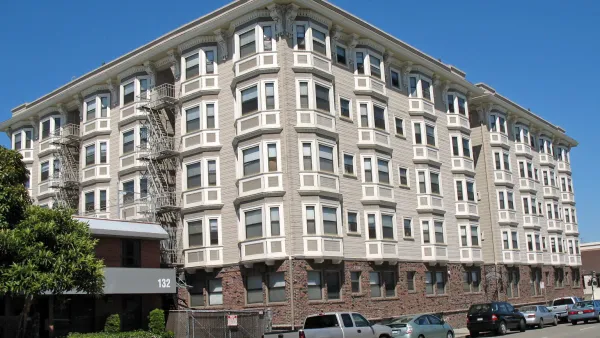
New California Bond Program Promotes Affordability for Middle-Income Renters
The California Statewide Communities Development Authority hopes that a new program, which helps cities purchase rental properties with no upfront cost, will lead to an increase in affordable middle-income housing.
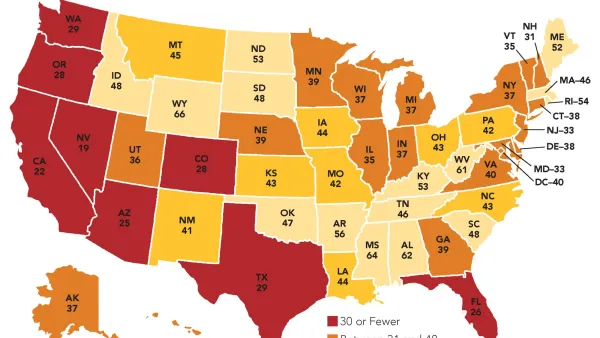
Report: No City or State in the U.S. Has Enough Housing for Low-Income Residents
"The Gap: A Shortage of Affordable Rental Homes" illustrates the depth of the nation's rental housing affordability crisis.

Planetizen Federal Action Tracker
A weekly monitor of how Trump’s orders and actions are impacting planners and planning in America.

California plans to bury El Niño’s downpour
If the state plays its cards right, it may be able to store a billion acre-feet of El Niño’s water in aquifers.

Desperate measures: Advocates weigh draining Lake Powell to fill Colorado River
Draining the reservoir could reduce evaporation losses by a couple hundred thousand acre-feet.

Housing is the top priority of Seattle’s sole new councilmember
Jenks campaigned on building 1,000 new units of affordable housing.

New tax cuts may slash $1.5 billion in funding for Miami transit, public parks
Amendment 3 will save Miami-Dade homeowners $2,700 in 2028.

Arizona, Wisconsin, Pennsylvania hope to finally advance climate goals post-midterms
The three states have spent years under Republican or divided control.

FREE Course: Walkable City 1: Why Walkability?
After describing his path towards focusing on walkability as the essence of good planning, Jeff Speck marches through his five principal reasons for making more walkable places.
Reinventing Malls: Planning Alchemy—Turning Gray Fields Into Gold
The course focuses on the opportunities and imperatives that shape reinvention of mall sites.

City of Rosemead
Rutgers University, Edward J. Bloustein School of Planning and Public Policy
One Hundred Miles
University of Michigan School for Environment and Sustainability (SEAS)
Hunter College, City University of New York (CUNY)
The Architects Foundation
City of Cambridge
Montrose County
The Pocatello Development Authority