An editorial in the Los Angeles Times praises the Cornfield Arroyo Seco Specific Plan as a model for how the city can break free of outdated zoning laws that force residents into obsolete living, working and commuting patterns.


After more than a decade of trying to "turn neglected neighborhoods and underused industrial properties next to the former Southern Pacific rail yard north of downtown — known as the Cornfield — into a collection of new urban zones," the Cornfield Arroyo Seco Specific Plan moved one step closer to passage this week with the approval of the City Council's planning committee.
As Los Angeles embarks on a long-overdue update to its 1946 zoning code, the Times points to the "smart land use model" and its four zoning types as worthy of emulating city-wide.
"There is a greenway zone, oriented toward enhancing the river as the neighborhood's frontyard. There is an urban village zone, focused on housing and other residential use, with some ground-floor retail. There is a denser urban center zone, close to rail stations, geared for job-creating uses but with residential space included. And there is an urban innovation zone, with flexible space geared toward anything from artists' studios to light manufacturing."
"The market has for years been demanding just those types of development in Los Angeles, and builders have been trying to respond — but have been getting stuck in variance hearings, lawsuits and community protests, development by development."
"The new zones and the new specific plan cut through that process. They bring that rarest of commodities to the Los Angeles land-use process: certainty."
Read the full story: A model for L.A. planning

No Parking Minimums and Also No Housing Development
Los Angeles is hoping that changes to the Cornfield Arroyo Seco Specific Plan will finally yield new residential developments.
Residents Disillusioned with the Planning Process in Los Angeles' Chinatown
Sharon McNary reports on a proposed development in the Chinatown neighborhood of Los Angeles that predates, and could thus avoid, the guidelines put forward by one of the most progressive plans in the city—the Cornfield Arroyo Specific Plan.
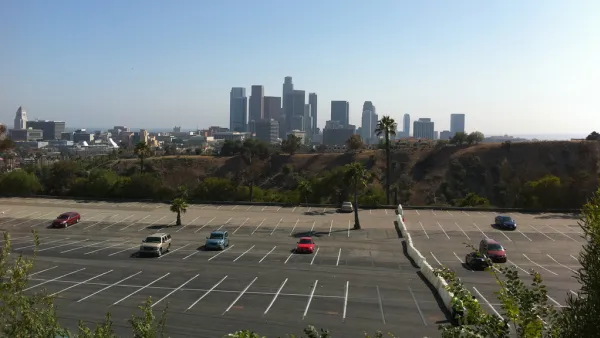
With Innovative Plan, L.A. Says Adios to Parking Requirements
Yesterday, the Los Angeles City Planning Commission approved a landmark specific plan that is notable as much for what it doesn't include as what it does.

Planetizen Federal Action Tracker
A weekly monitor of how Trump’s orders and actions are impacting planners and planning in America.

Amtrak, CN end decades-long dispute with eight-year agreement
The new operating agreement establishes an updated framework for the companies to work together, including processes to resolve disputes.

Judges permit Denver to divert 77,000 acre feet from the Colorado River for reservoir expansion
Overuse and climate change have caused the Colorado River’s water levels to plummet.

NYC DOT wants faster, more permanent street upgrades
The city is examining ways to build more concrete infrastructure without getting entangled in 'decades-long' projects.

'Something we’ve never seen before:' rising utility rates could strain city finances nationwide
Data centers, climate change and other factors have caused utility rates in the United States to increase by 38% since 2020.

Trump to overrule local leaders, lease millions of acres of America’s Pacific Island territories’ seafloors to mining companies
International law says that the Indigenous people of America’s territories have a right to prior and informed consent regarding projects that impact their countries.

FREE Course: Walkable City 1: Why Walkability?
After describing his path towards focusing on walkability as the essence of good planning, Jeff Speck marches through his five principal reasons for making more walkable places.
Reinventing Malls: Planning Alchemy—Turning Gray Fields Into Gold
The course focuses on the opportunities and imperatives that shape reinvention of mall sites.

Harvard University Graduate School of Design
KFH Group Inc.
Greater Baltimore Committee
The Architects Foundation
University of Cincinnati Online
The Pocatello Development Authority
The Urban Renewal Agency of the City of Pocatello