





















As New York's Grand Central Terminal celebrates its 100th birthday, Kent Barwick recalls how he and a motley group of advocates including Jacqueline Kennedy Onassis saved the building from being buried beneath a skyscraper.


Following the unsecessful effort to save its sister station across town the prior decade, the Municipal Arts Society, led by Barwick at the time, and aided by "the city’s most famous East Sider, Jackie Onassis," was able to convince a broke city to defend Grand Central's designation as a landmark all the way to the Supreme Court. Barwick recounts the story, and Ms. Onassis's role in it with Clyde Haberman.
“'[Ms. Onassis] was smart,' Barwick said. 'She had a visceral sense of architecture and style and politics.' In short, 'she was just a trouper.' Here is a measure of her importance: 'It would have stayed a local story, I think, except for her. Over the course of the campaign, there was enormous interest built around the country. We used to get $5 bills sent in from Iowa. It had a transformative effect.'”
“It changed how America thought about historic preservation,” Mr. Barwick said. “By the time the case was over, all the other major cities had come in as amicus curiae. So it wasn’t just a victory for New York. It was a victory for Chicago and Los Angeles and everybody else. The Supreme Court decision established that cities had the right to protect the public environment.”
FULL STORY: Looking Out on Grand Central, and Looking Back on Saving It


S.F.'s Transbay Transit Center: Grand Central Station of the West, or Billion Dollar Bus Station?
The developers of San Francisco’s Transbay Transit Center say it has the potential to change travel patterns in the region and land use in the neighborhood, as did New York City’s Grand Central Terminal. How realistic is this promise?

Chronic Homelessness Persists at New York City Transit Hubs and Airports
Two train stations, two airports, and one bus terminal double as homeless shelters in New York City. When some close for the night, the subways fill in.
Grand Central Terminal Owner Files $1.1 Billion Suit Against One Vanderbilt
A $1.1 billion lawsuit challenges the approval of plans for One Vanderbilt, adjacent to Grand Central Terminal, on the grounds that it circumvented the purchase of air rights from the adjacent Grand Central Terminal.

Planetizen Federal Action Tracker
A weekly monitor of how Trump’s orders and actions are impacting planners and planning in America.
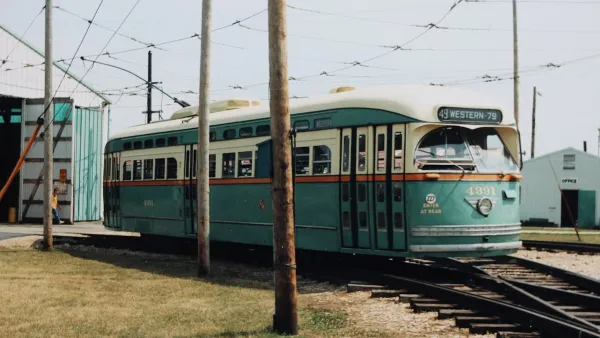
Chicago’s Ghost Rails
Just beneath the surface of the modern city lie the remnants of its expansive early 20th-century streetcar system.
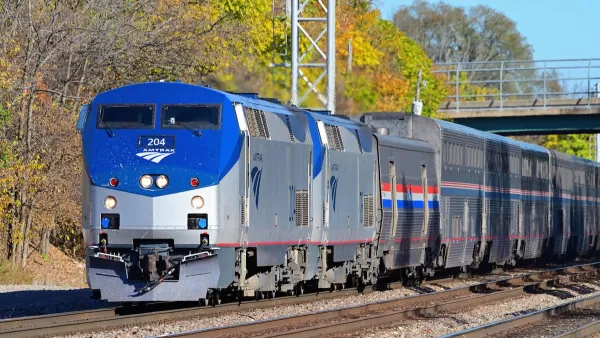
Amtrak Cutting Jobs, Funding to High-Speed Rail
The agency plans to cut 10 percent of its workforce and has confirmed it will not fund new high-speed rail projects.

Ohio Forces Data Centers to Prepay for Power
Utilities are calling on states to hold data center operators responsible for new energy demands to prevent leaving consumers on the hook for their bills.

MARTA CEO Steps Down Amid Citizenship Concerns
MARTA’s board announced Thursday that its chief, who is from Canada, is resigning due to questions about his immigration status.

Silicon Valley ‘Bike Superhighway’ Awarded $14M State Grant
A Caltrans grant brings the 10-mile Central Bikeway project connecting Santa Clara and East San Jose closer to fruition.

Urban Design for Planners 1: Software Tools
This six-course series explores essential urban design concepts using open source software and equips planners with the tools they need to participate fully in the urban design process.
Planning for Universal Design
Learn the tools for implementing Universal Design in planning regulations.

Caltrans
City of Fort Worth
Mpact (founded as Rail~Volution)
City of Camden Redevelopment Agency
City of Astoria
City of Portland
City of Laramie