






















What does the impending demise of the Fresh & Easy grocery chain mean for food deserts? Hannah Burton Laurison and Christine Fry look at how small-format grocery stores can still succeed where Fresh & Easy failed.


Reports that the British supermarket giant Tesco is getting ready to close its U.S. grocery chain Fresh & Easy "came as a blow" to many nutrition advocates, Hannah Burton Laurison and Christine Fry write. By opening small-footprint food stores in neighborhoods that other grocery chains have largely ignored, the company made fresh produce and other healthy foods available in neighborhoods with few options.
But the failure of Fresh & Easy doesn't mean healthy food stores "can’t make enough of a profit to survive in these neighborhoods," the authors write. They note that a number of other major retailers -- including WalMart, Target, and Safeway -- are now testing out small-format grocery stores in low-income communities, and lessons from Fresh & Easy’s experience will be critical to seeing these outlets succeed.
Supermarkets have become "nothing less than huge" since the post World War II suburbanization of America, Laurison and Fry write, making it hard for inner-city markets to compete. But as the industry continues to try out small-format discount grocery stores, tailoring their offerings to community needs may be one key to making sure these food outlets thrive.
"While Fresh & Easy may not have proved profitable enough for Tesco, small grocery stores offering fresh foods are still cropping up in underserved neighborhoods around the country," the authors write – "and these successors should take a lesson from local grocers if they expect to truly succeed."
FULL STORY: Fresh & Easy’s Demise: What Does it Mean for Food Access in California?


Even in ‘Food Deserts,’ Independent Grocers Struggle to Survive
Government support has helped open stores in underserved communities, but cost and scale make it difficult for small businesses to survive long-term.
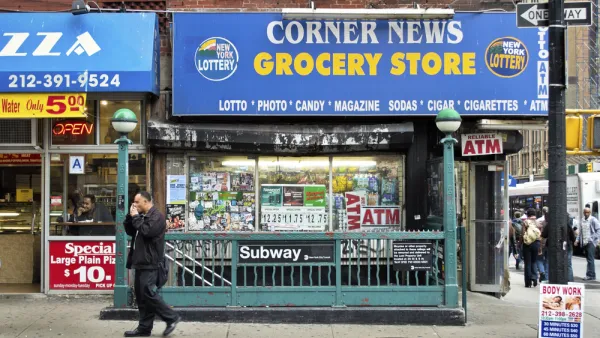
Healthy Corner Stores Fight 'Retail Redlining'
Small entrepreneurs are working to combat 'food deserts' by bringing fresh, healthy foods to communities lacking access to major grocery stores. But price continues to be a major factor in people's food choices.
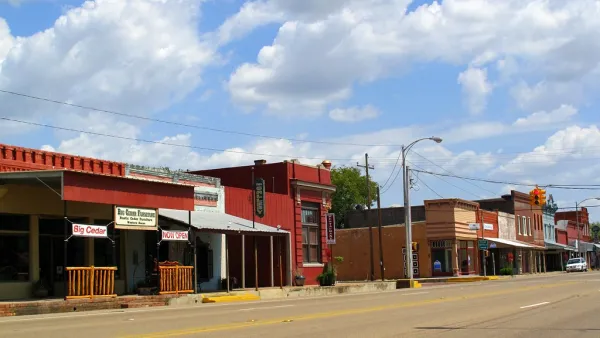
The Food Deserts of Rural America
When a town doesn’t have a grocery store, it means people don’t have access to food. But grocery stores also play an essential social and economic role in rural places. Community stores are trying to fill in the void.

Planetizen Federal Action Tracker
A weekly monitor of how Trump’s orders and actions are impacting planners and planning in America.
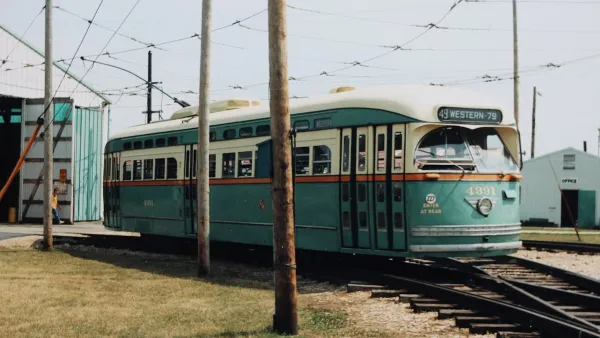
Chicago’s Ghost Rails
Just beneath the surface of the modern city lie the remnants of its expansive early 20th-century streetcar system.
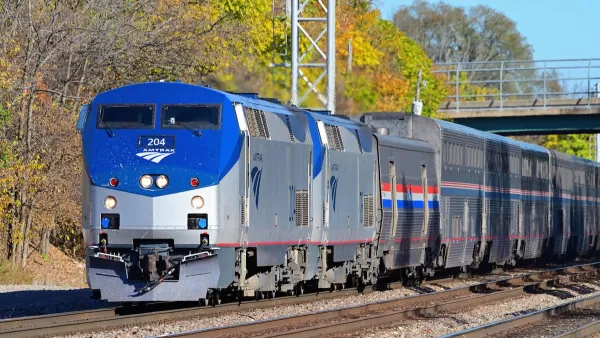
Amtrak Cutting Jobs, Funding to High-Speed Rail
The agency plans to cut 10 percent of its workforce and has confirmed it will not fund new high-speed rail projects.

Ohio Forces Data Centers to Prepay for Power
Utilities are calling on states to hold data center operators responsible for new energy demands to prevent leaving consumers on the hook for their bills.

MARTA CEO Steps Down Amid Citizenship Concerns
MARTA’s board announced Thursday that its chief, who is from Canada, is resigning due to questions about his immigration status.

Silicon Valley ‘Bike Superhighway’ Awarded $14M State Grant
A Caltrans grant brings the 10-mile Central Bikeway project connecting Santa Clara and East San Jose closer to fruition.

Urban Design for Planners 1: Software Tools
This six-course series explores essential urban design concepts using open source software and equips planners with the tools they need to participate fully in the urban design process.
Planning for Universal Design
Learn the tools for implementing Universal Design in planning regulations.

Caltrans
City of Fort Worth
Mpact (founded as Rail~Volution)
City of Camden Redevelopment Agency
City of Astoria
City of Portland
City of Laramie