A free digital toolkit allowing communities to collect, analyze, and share their own data will be launched nationally at the end of the year.


"LocalData," writes Kelsey Campbell-Dollaghan, "disrupts convention by putting expert tools in the hands of communities, letting everyone get their hands (digitally) dirty with an easy-to-understand interface." Developed by 2012 Code for America fellows Alicia Rouault, Matt Hampel, and Prashant Singh, the app is "poised to revolutionize how communities collect and leverage data."
"All across the nation, community groups are out in their neighborhoods, collecting information about where they live," says Rouault. "But they're doing it in a cumbersome way." Campbell-Dollaghan explains, "Typically, this process is divided between on-the-ground volunteers who collect the data, and urban planners who glean meaning from it." LocalData helps communities analyze and visualize the data they collect without professional assistance.
The app, which has been field-tested by local advocates in Detroit, works by allowing a community to easily create a survey and record results on their smartphones. The collected information is automatically visualized, mapped, and made downloadable for further analysis. Campbell Dollaghan notes, "With the free toolkit, the people who are culling the data--who arguably know the most about the issues at hand--can crunch it, too."
The national launch of LocalData is slated for the end of the year, and the developers intend for the app to remain free. "We tried to make it [LocalData] as inclusive as possible," Rouault adds. "We're really proud of that thinking."
Read the full story: LocalData, An App That Helps Communities Do Their Own Urban Planning


Former Transportation Secretary Joins Lyft, Explains Why
Anthony Foxx, former Secretary of Transportation under President Obama, has accepted a job at Lyft. In a post, he discusses why.

The Best Planning Apps for 2017
A list of mobile apps that support planning, as part of an annual update. Learn about exciting new ways to explore cities and enhance planning via mobile apps. Please feel free to add your own favorites.

Get Around Chicago Like an Insider with 20 Apps
These 20 apps and services will help you engage with everything Chicago has to offer in a whole new way.

Planetizen Federal Action Tracker
A weekly monitor of how Trump’s orders and actions are impacting planners and planning in America.

Data reveals that NYC’s bet on congestion pricing has paid off
After almost two years of the program, reports show positive impacts on traffic and air quality and no disruptions to parking.
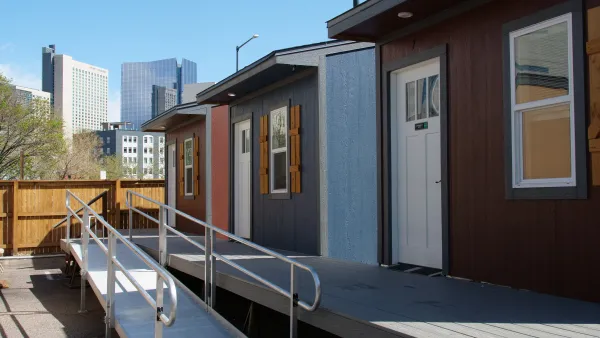
Denver is solving homelessness. Why aren't the rest of us?
Since 2023, Denver's street homeless population has decreased by 64%, proving that effective tools exist to support those in need of housing.

Michigan needs billions to save its water infrastructure. The state won't fund it
Michigan needs to invest $2.8 billion per year over the next 20 years to fix its water infrastructure. The FY 2027 budget allocates only $27.9 million.

Trump asks Supreme Court to allow border wall through Texas national park
Judge Kathleen Cardone previously blocked the Big Bend border wall project, and Texas’ Land Commissioner has spoken out against it as well.

This MA town is drowning in its own sewage — and residents like it that way
Susan Murcott, a waste water expert, said if Carlisle didn't address their leaking sewage, the problem could turn “deadly.”

FREE Course: Walkable City 1: Why Walkability?
After describing his path towards focusing on walkability as the essence of good planning, Jeff Speck marches through his five principal reasons for making more walkable places.
Reinventing Malls: Planning Alchemy—Turning Gray Fields Into Gold
The course focuses on the opportunities and imperatives that shape reinvention of mall sites.

City of Rosemead
Rutgers University, Edward J. Bloustein School of Planning and Public Policy
One Hundred Miles
The Architects Foundation
University of Cincinnati Online
Montrose County
Northern Illinois Transit Authority (NITA)
The Pocatello Development Authority