






















Nate Berg asks what the practical limit is to the seemingly endless quest to design and construct the world's tallest building.


With the world's first 1,000 meter-high building planned for Jeddah, Saudi Arabia, the topic of the practical limit to building heights was the focus of a series of interviews with leading skyscraper architects and designers conducted by the Council on Tall Buildings and Urban Habitat.
Adrian Smith, the architect behind the current tallest building in
the world (Burj Khalifa) and the kilometer-tall
Kingdom Tower in Jeddah, believes the single biggest limiting factor is "in the elevator and transportation system."
William Baker, the structural engineer at Skidmore, Owings and
Merrill who worked with Smith on the Burj Khalifa, and designed the innovative "buttressed core" system that allowed it to rise so high, shares his ideas on the possibilities with Berg.
"We could easily do a kilometer. We could easily do a mile," Baker says.
"We could do at least a mile and probably quite a bit more."
"The buttressed core would probably have to be modified to go much
higher than a mile. But Baker says that other systems could be designed.
In fact, he's working on some of them now," writes Berg.
"You could conceivably go higher than the highest mountain, as long as you kept spreading a wider and wider base," Baker says.
FULL STORY: Is There a Limit to How Tall Buildings Can Get?


On a Potential Mile-High Skyscraper
A New York magazine article examines the idea of the mile-high skyscraper. Once imagined by Frank Lloyd Wright but impossible to build, the idea is not science fiction anymore.

Promoting Infill Development for a Denser Houston
An advocacy group is calling for ‘sustainable, vertical’ mixed-use urbanism in the famously sprawling city.

When Architects Dress Like Buildings
The 1931 Beaux-Arts Ball immortalized the architects who participated by dressed like famous buildings. Will a 2019 version of the event achieve a contemporary version of the same fame?

Planetizen Federal Action Tracker
A weekly monitor of how Trump’s orders and actions are impacting planners and planning in America.

Maui's Vacation Rental Debate Turns Ugly
Verbal attacks, misinformation campaigns and fistfights plague a high-stakes debate to convert thousands of vacation rentals into long-term housing.
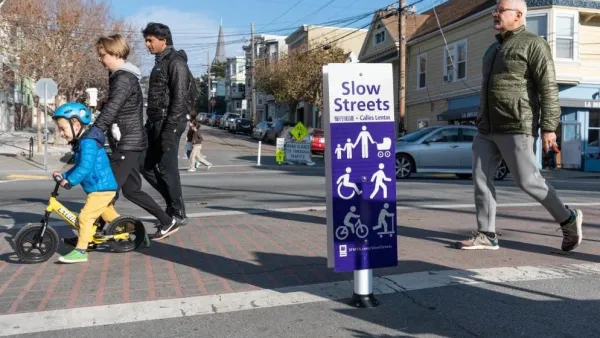
San Francisco Suspends Traffic Calming Amidst Record Deaths
Citing “a challenging fiscal landscape,” the city will cease the program on the heels of 42 traffic deaths, including 24 pedestrians.

Defunct Pittsburgh Power Plant to Become Residential Tower
A decommissioned steam heat plant will be redeveloped into almost 100 affordable housing units.

Trump Prompts Restructuring of Transportation Research Board in “Unprecedented Overreach”
The TRB has eliminated more than half of its committees including those focused on climate, equity, and cities.

Amtrak Rolls Out New Orleans to Alabama “Mardi Gras” Train
The new service will operate morning and evening departures between Mobile and New Orleans.

Urban Design for Planners 1: Software Tools
This six-course series explores essential urban design concepts using open source software and equips planners with the tools they need to participate fully in the urban design process.
Planning for Universal Design
Learn the tools for implementing Universal Design in planning regulations.

Heyer Gruel & Associates PA
JM Goldson LLC
Custer County Colorado
City of Camden Redevelopment Agency
City of Astoria
Transportation Research & Education Center (TREC) at Portland State University
Jefferson Parish Government
Camden Redevelopment Agency
City of Claremont