The futuristic sounding "Domain Awareness System," NYC's newest crime fighting tool, utilizes cutting edge technology to further cut down on crime in what has become "one of the safest big metropolitan areas in America."


Paul Harris, of The Guardian, reports on the City of New York's newest innovation in crime fighting. Developed with Microsoft, the aptly named 'Domain Awareness System' (DAS), centralizes information visually and geographically to, "allow a host of activities to be carried out, such as spotting a suspicious vehicle and being able to track its recent movements or use cameras to track back and see who left a suspicious package."
In addition to its crime fighting capabilities, New York City hopes to benefit from the new system in other ways. "Part of the deal with Microsoft will result in the city of New York taking a 30% cut on any profits that the computer firm gets from selling the technology to other cities in America or around the world," reports Harris. New York Mayor Michael Bloomberg hopes the city can "make a few bucks," and serve as an example of how public agencies can work collaboratively with private firms to improve people's lives.
Read the full story: NYPD and Microsoft launch advanced citywide surveillance system
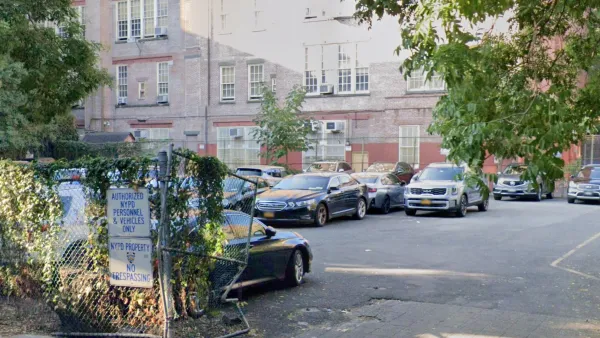
NYPD parking lot to become affordable housing as part of Mamdani's Block by Block initiative
The city awarded the lot to a group of developers to build a mixed-use project with 131 housing units.
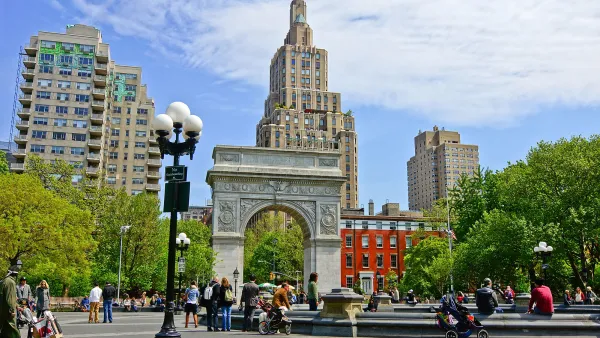
Manhattan Residents Cling to Public Space Amid NYPD Crackdowns
The city's police has begun issuing citations and implementing curfews in public parks that became oases of social activity during the pandemic.

IPCC Report Sways Microsoft to Endorse Carbon Fee Initiative on Washington Ballot
A dire report on climate change issued by a United Nations panel influenced Washington-based Microsoft to take a position on a controversial state carbon fee, Initiative 1631. Oil companies are fighting back, citing wide exemptions from the fee.

Planetizen Federal Action Tracker
A weekly monitor of how Trump’s orders and actions are impacting planners and planning in America.

Eastern Nebraska is running out of electricity
Data centers and electrification are straining eastern Nebraska’s grid, throttling economic development.

Study reveals best places in the U.S. for cycling, walking
New research from Streetlight Data examines bicycle and pedestrian miles per capita in the 100 largest U.S. cities by population.

DSA members accuse Mamdani of 'abandoning values' over housing redevelopment
New York City's mayor plans to replace about 2,000 units of public housing with private, mixed-income housing.

All sides of BRT debate unhappy with CDOT’s most recent move
The Colorado Department of Transportation is no longer considering center-running bus lanes for Colorado Boulevard.

Massachusetts bogs generate both power, and cranberries
Putting solar panels above farmland is one way Massachusetts is advancing toward its goal of net-zero carbon emissions by 2050.

FREE Course: Walkable City 1: Why Walkability?
After describing his path towards focusing on walkability as the essence of good planning, Jeff Speck marches through his five principal reasons for making more walkable places.
Reinventing Malls: Planning Alchemy—Turning Gray Fields Into Gold
The course focuses on the opportunities and imperatives that shape reinvention of mall sites.

City of Rosemead
Rutgers University, Edward J. Bloustein School of Planning and Public Policy
One Hundred Miles
University of Michigan School for Environment and Sustainability (SEAS)
Hunter College, City University of New York (CUNY)
The Architects Foundation
City of Cambridge
The Pocatello Development Authority
The Urban Renewal Agency of the City of Pocatello