With suburbia saturated, large retailers chase an urban market poised for growth.


The very symbol of suburbia -- the big box store -- is moving downtown, chasing younger shoppers who are choosing city apartments over leafy lawns. Wal-Mart, Office Depot, and Target are all actively expanding into urban locations and, for the first time, adapting their stores to city living. That means working with tight spaces, such as stocking fewer goods, as well as adapting to the tastes and needs of urban shoppers who want it small, and want it fast.
It also means tweaking their distribution systems, which tend toward the one-size-fits-all approach in suburbia, to reflect the character of their surroundings. In Toronto, for example, many residents of one neighborhood happened to be recent immigrants seeking to upgrade their bathrooms as their primary home improvement, which kept the toilet seats and shower heads in the prototype city Wal-Mart flying off the shelves. Adapting to the urban environment doesn't just help court shoppers; for some retailers, it's a way to fend off the zoning battles that have accompanied previous urban forays.
The move underscores recent recent census data showing growth in urban areas inching above suburban growth for the first time in decades.
Thanks to Rachel Proctor May
Read the full story: Retailers’ Idea: Think Smaller in Urban Push
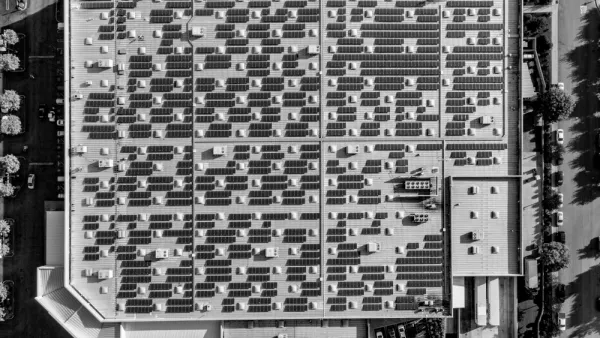
Big Box Stores Leading the Shift to Renewable Energy
The cheap price of solar and wind energy have corporations "falling all over themselves" to embrace renewable, according to this article. Target and Wal-Mart lead the green arms race.
Big Box Store Target Focusing Growth in Urban Areas
Target announced recently that almost all of the stores it expects to open in 2016 and 2017 will be located in urban areas.
More Signs of the Big-Boxalypse
The era of big-box retail dominance is coming to an end. That's the opinion of David Welch, Chris Burritt and Lauren Coleman-Lochner, writing in Bloomberg on the occasion of Best Buy's recent announcement that it is closing 50 big stores.

Planetizen Federal Action Tracker
A weekly monitor of how Trump’s orders and actions are impacting planners and planning in America.

Eastern Nebraska is running out of electricity
Data centers and electrification are straining eastern Nebraska’s grid, throttling economic development.

Study reveals best places in the U.S. for cycling, walking
New research from Streetlight Data examines bicycle and pedestrian miles per capita in the 100 largest U.S. cities by population.

Federal government nominates new FTA administrator
Mark Aesch is currently the founder and CEO of a transportation management consulting firm.

Developers reveal $10 billion stadium plan as ‘Hail Mary’ to keep Bears in Chicago
The plan would also boast a public park, high- and mid-rise buildings and a youth sports complex.

As Texas embraces carbon storage, a Black community questions the risks
Texas now issues permits for companies to store carbon dioxide underground. East Texas residents fear safety risks, and skeptics doubt the climate benefits.

FREE Course: Walkable City 1: Why Walkability?
After describing his path towards focusing on walkability as the essence of good planning, Jeff Speck marches through his five principal reasons for making more walkable places.
Reinventing Malls: Planning Alchemy—Turning Gray Fields Into Gold
The course focuses on the opportunities and imperatives that shape reinvention of mall sites.

City of Rosemead
Rutgers University, Edward J. Bloustein School of Planning and Public Policy
One Hundred Miles
University of Michigan School for Environment and Sustainability (SEAS)
Hunter College, City University of New York (CUNY)
The Architects Foundation
City of Cambridge
The Pocatello Development Authority
The Urban Renewal Agency of the City of Pocatello