The BBC has provided an infographic timeline indicating when scientists and researchers predict valuable resources and ecosystems will disappear, urging planners and officials to address the dangers of current population and consumption levels.


The unsettling infographic timeline was created to answer the daunting question that is plaguing planners, officials, environmentalists and industry: "the clock is already ticking, and if the unthinkable happens and we fail to correct current trends, then when can we expect our most valuable resources to run out?"
Predictions include an ice-free summer in the Arctic by 2030 and the loss of essential minerals like silver, copper and titanium in under 50 years. Prepared in anticipation of last month's Rio+20 Earth Summit, the lack of conclusive progress at the conference means the clock has begun to tick just a little bit louder.
The data used to create the infographic can be found here (PDF).
Read the full story: Global resources stock check

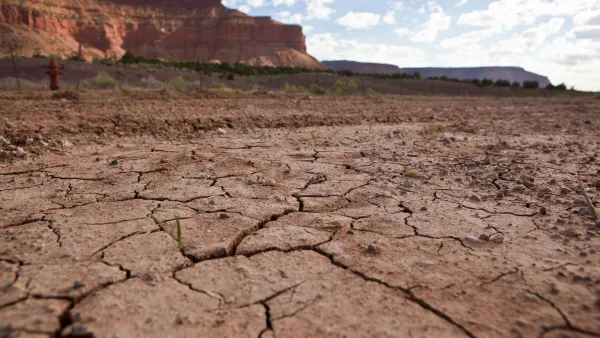
Researchers Propose the Concept of 'Anthropogenic Drought'
As climate change heightens the risk of intense drought periods, a new framework can help scientists better understand the interconnected causes and effects of drought.

Indigenous Peoples Lead Fight Against Climate Change
Tribal communities are preparing for climate impacts by drawing on their deep understanding of the relationship between humans and the natural environment.

The 11 Most Endangered Places in the U.S.
These historic sites—be they buildings, districts, or natural landscapes—are closer to destruction than any others in the United States.

Planetizen Federal Action Tracker
A weekly monitor of how Trump’s orders and actions are impacting planners and planning in America.

‘Going backwards:’ Baltimore mayor, students rally against state's transit funding plan
Maryland's proposed six-year plan provides no funding for Baltimore’s BMORE bus program and reduces its road maintenance funding.

Detroit to transform waterfront with $2.2 billion investment
Developers will convert about 18 acres of unused parking lot space into civic spaces.

25 states, cities sue the EPA over erased power plant emissions limits
The coalition also intends to sue the EPA for not regulating emissions from gas-fired power plants.

Newsom vetoes giving CA tribes greater voice in water projects
In his veto letter, Newsom said the bill would add ‘uncertainty’ to the state’s fight to secure Californians’ water supplies.

Michigan Senate votes to revise 'lax' dam safety laws
A Bridge Michigan investigation found more than 100,000 Michigan residents live in the floodpath of a high or significant-hazard dam.

FREE Course: Walkable City 1: Why Walkability?
After describing his path towards focusing on walkability as the essence of good planning, Jeff Speck marches through his five principal reasons for making more walkable places.
Reinventing Malls: Planning Alchemy—Turning Gray Fields Into Gold
The course focuses on the opportunities and imperatives that shape reinvention of mall sites.

City of Thousand Oaks
City of Wisconsin Rapids
Harvard University Graduate School of Design
The Architects Foundation
University of Cincinnati Online
Northern Illinois Transit Authority (NITA)
The Pocatello Development Authority
The Urban Renewal Agency of the City of Pocatello