Matt Bevilacqua pens a response to a recent opinion piece by author Shalom Auslander in the New York Observer that decries the big city for turning people into "blithering narcissists."


"As a general booster of all things urban," Bevilacqua is compelled to respond to Auslander's recent opinion piece praising the humbling power of nature over the narcissistic power of the city.
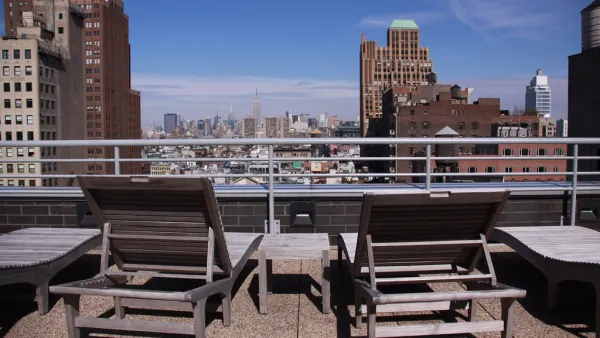
"Auslander misses the point, I think, because he can't see that it's just as easy to find humbling solace among tall buildings as it is in the woods. There's something about separating yourself form the fast-moving crowds, every now and again, to drown in the immensity of a city. Like the sight of a mountain or vast valley, it can make you feel small and insignificant."
"Granted, too many people might feel entitled to everything in the
world. And yes, walking around a city like New York can leave you with
the impression that everyone lives in a myopic bubble where nothing
other than their own feelings and desires.
"But the city itself doesn't create that bubble. We're all flawed creatures, whether we live in SoHo or the setting of Brother's Keeper. All
that living in the city does is force us to see one another, in all our
damaged glory, on a daily basis. Some of us - and increasingly, many of us - think it's worth it."
Read the full story: Hey, Writers: Stop Romanticizing the Country at the Expense of the City

Experiencing the City in the Supermarket
Grocery stores are more than just places to buy food. They’re the universal gateway to city life and culture.
Creating Suburban Exclusivity in the City
City life is being sold as a convenient version of the suburbs, with similar amenities minus the time-consuming commute.
Review: Seeing the City
Hoping to shake city folks out of our everyday stupor, Charles Wolfe has written a book on observing the city.

Planetizen Federal Action Tracker
A weekly monitor of how Trump’s orders and actions are impacting planners and planning in America.

Eastern Nebraska is running out of electricity
Data centers and electrification are straining eastern Nebraska’s grid, throttling economic development.

Study reveals best places in the U.S. for cycling, walking
New research from Streetlight Data examines bicycle and pedestrian miles per capita in the 100 largest U.S. cities by population.

DSA members accuse Mamdani of 'abandoning values' over housing redevelopment
New York City's mayor plans to replace about 2,000 units of public housing with private, mixed-income housing.

All sides of BRT debate unhappy with CDOT’s most recent move
The Colorado Department of Transportation is no longer considering center-running bus lanes for Colorado Boulevard.

Massachusetts bogs generate both power, and cranberries
Putting solar panels above farmland is one way Massachusetts is advancing toward its goal of net-zero carbon emissions by 2050.

FREE Course: Walkable City 1: Why Walkability?
After describing his path towards focusing on walkability as the essence of good planning, Jeff Speck marches through his five principal reasons for making more walkable places.
Reinventing Malls: Planning Alchemy—Turning Gray Fields Into Gold
The course focuses on the opportunities and imperatives that shape reinvention of mall sites.

City of Rosemead
Rutgers University, Edward J. Bloustein School of Planning and Public Policy
One Hundred Miles
University of Michigan School for Environment and Sustainability (SEAS)
Hunter College, City University of New York (CUNY)
The Architects Foundation
City of Cambridge
The Pocatello Development Authority
The Urban Renewal Agency of the City of Pocatello