The eminent architect's lesser-known contributions to graphic design get the spotlight in a new book by Penny Fowler, writes Maria Popova.


Wright is known for designing every aspect of his homes and other buildings, from the patterned blocks to the lamps to the stained glass, so it isn't likely to surprise many to learn of his adroit contributions to graphic design, in the form of posters, brochures, typography, murals, books and magazine covers.
In her new book, Frank Lloyd Wright: Graphic Artist, Fowler "examines Wright's ingenious and bold graphic work - his covers for Liberty (some of which were so radical the magazine rejected them), his mural designs for Midway Gardens, his photographic experiments, his hand-drawn typographical studies, the jacket designs for his own publications, including The House Beautiful and An Autobiography, and a wealth more," writes Popova.
See a sampling of Wright's masterful design's in Popova's article for Brain Pickings.
Read the full story: Frank Lloyd Wright’s Lesser-Known Contributions to Graphic Design

Can We Please Give Communities the Design They Deserve?
Often an afterthought, graphic design impacts everything from how we navigate a city to how we feel about it. One designer argues: the people deserve better.
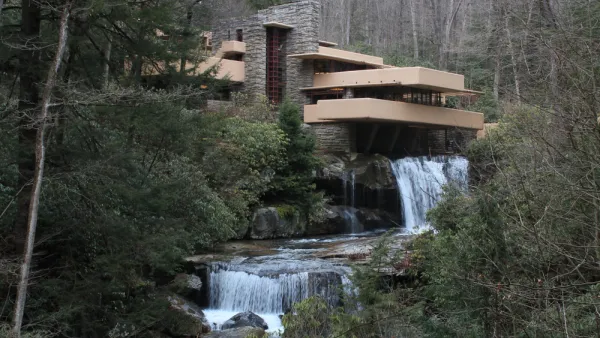
8 Frank Lloyd Wright Buildings Named World Heritage Sites
Eight buildings designed by Frank Lloyd Wright are the first works of U.S. modern architecture to be named UNESCO World heritage sites.
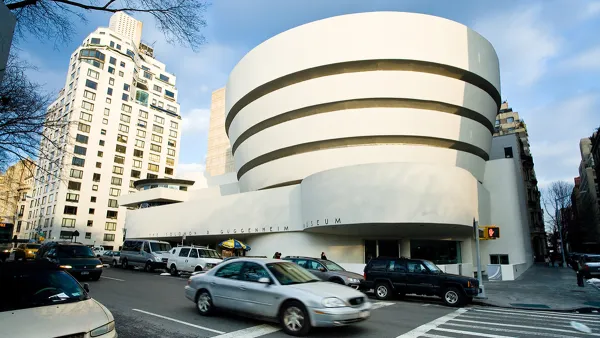
8 Frank Lloyd Wright Buildings Nominated as UNESCO World Heritage Sites
If accepted as UNESCO World Heritage sites, the eight Frank Lloyd Wright buildings would be the first examples of modern architecture in the United States included in that august company.

Washington state to charge fee to drivers with fuel-efficient cars
Revenue from the fee will go towards supporting the state’s highways.

Illinois considers spending $1 billion in taxpayer money on data center
A quantum computing campus and data center are currently under construction in Chicago.

Trump to blast ‘hydrocarbon highway’ through ‘world’s longest art gallery’
Environmental and historic preservation groups are suing to stop the project.

NYC, state sue feds over mixed-immigration-status housing assistance rule
The state’s lawsuit argues that the rule change violates the Administrative Procedure Act.

Michigan to turn neighborhood into virtual power plant
Residents will soon be able to divert their excess energy to the grid in exchange for compensation.

Data center, mining project swarm to long-awaited Alaska railroad line
The state-owned railroad approved final plans for the spur line this week; the project is expected to cost $311 million, mostly funded by the federal government

FREE Course: Walkable City 1: Why Walkability?
After describing his path towards focusing on walkability as the essence of good planning, Jeff Speck marches through his five principal reasons for making more walkable places.
Reinventing Malls: Planning Alchemy—Turning Gray Fields Into Gold
The course focuses on the opportunities and imperatives that shape reinvention of mall sites.

City of Charlotte
City of Rosemead
Rutgers University, Edward J. Bloustein School of Planning and Public Policy
University of Michigan School for Environment and Sustainability (SEAS)
Hunter College, City University of New York (CUNY)
The Architects Foundation
University District Partnership