In an interview with the Journal of International Affairs, Rem Koolhaas discusses the effects of globalization on architectural practice and cultural identity, and what city he thinks will be the "Rosetta Stone" of the 21st century.


Next American City has excerpted an interview with Koolhaas that appeared in the JIA's recent issue on "The Future of the City." In it, Koolhaas discusses the impacts of globalization on architecture, including the positive effect that his firm's recent work in the developing world has had on his office, and the spiky way (to paraphrase Richard Florida) in which globalization has effected national and cultural identity.
Koolhaas also describes the evolution of the city in the 21st century:
"The reinvention and the re-imagining of cities is taking place all over the world. The energy that inspires reinvention either comes from pressure - when negative forces lead to a breakthrough, which is what I noticed in Lagos - or cities get their energy from striving. Cities are machines for emancipation. When the striving for emancipation is at its most intense, when there is the clearest promise of success, change is at its most intense. That is why cities in the West are so morose. We can strive until we're blue in the face, but we have nothing to change, at least not in the way that other parts of the world will change. In these places - particularly in the Middle East and Africa - real change is happening now."
Read the full story: INTERVIEW: Rem Koolhaas on the Invention and Reinvention of the City

Boba as a Symbol of Identity and Culture
The Chinese American Museum in L.A. currently features an exhibit exploring the drink’s journey from the cassava root in South America, to the tapioca balls in the Taiwanese confection, and back to the U.S. as a symbol of Asian American identity.
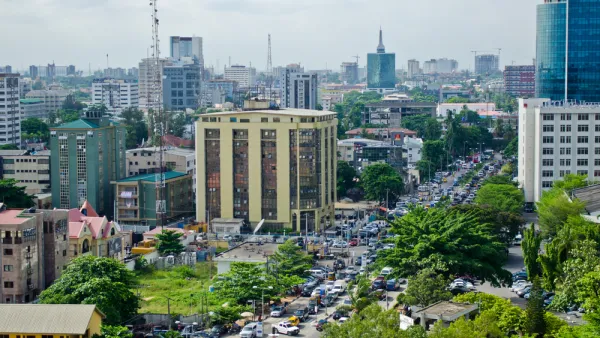
Urban Development in African Cities
Rising populations and political challenges complicate the future development of Africa's major metropolitan centers.

The High Cost of Cool Air
Air conditioning has drastically changed modern life and the ways cities have developed. But, the environmental consequences are immense, and it’s time to cut back.

Planetizen Federal Action Tracker
A weekly monitor of how Trump’s orders and actions are impacting planners and planning in America.

Eastern Nebraska is running out of electricity
Data centers and electrification are straining eastern Nebraska’s grid, throttling economic development.

Study reveals best places in the U.S. for cycling, walking
New research from Streetlight Data examines bicycle and pedestrian miles per capita in the 100 largest U.S. cities by population.

DSA members accuse Mamdani of 'abandoning values' over housing redevelopment
New York City's mayor plans to replace about 2,000 units of public housing with private, mixed-income housing.

All sides of BRT debate unhappy with CDOT’s most recent move
The Colorado Department of Transportation is no longer considering center-running bus lanes for Colorado Boulevard.

Massachusetts bogs generate both power, and cranberries
Putting solar panels above farmland is one way Massachusetts is advancing toward its goal of net-zero carbon emissions by 2050.

FREE Course: Walkable City 1: Why Walkability?
After describing his path towards focusing on walkability as the essence of good planning, Jeff Speck marches through his five principal reasons for making more walkable places.
Reinventing Malls: Planning Alchemy—Turning Gray Fields Into Gold
The course focuses on the opportunities and imperatives that shape reinvention of mall sites.

City of Rosemead
Rutgers University, Edward J. Bloustein School of Planning and Public Policy
One Hundred Miles
University of Michigan School for Environment and Sustainability (SEAS)
Hunter College, City University of New York (CUNY)
The Architects Foundation
City of Cambridge
The Pocatello Development Authority
The Urban Renewal Agency of the City of Pocatello