Matthew Tresaugue reports on the difficulties Texas cities such as College Station are having in living up to their green commitments in the down economy, reflecting a nationwide pattern.


During the past several years, with the assistance of federal aid and the guidance of public sector leaders, College Station was able to implement a number of green initiatives, along a path to meeting the U.S. Conference of Mayors' agreement calling for cities to reduce emissions of carbon dioxide below 1990 levels during the next few years.
However, the disappearance of federal aid and drying coffers has the city being more mindful of return on investment and being smarter about its green investment. And College Station is not alone in backing away from the Conference of Mayors' agreement.
Tresaugue reports that, "[a] recent survey of 396 cities by the mayors' group identified financial constraints as the biggest obstacle to their promises on climate protection. Limited city budgets, high up-front costs and the uncertainty of the rates of return on new technology have slowed their efforts, the survey found."
"I think green is here to stay," said [City Councilman Dave] Ruesink, the only remaining member of the council that first backed the Green College Station program. "We are no way backing away from it. What we are now looking at is how long will it take to recoup our investment."
Read the full story: Texas cities find it can take a lot of green to be 'green'

Moab Adopts Sustainability Plan
Moab adopted a Sustainability Action Plan to map out goals and strategies for the pursuit of sustainability, including the reduction of greenhouse gas emissions. The plan was approved by the Moab City Council on December 12, 2023.
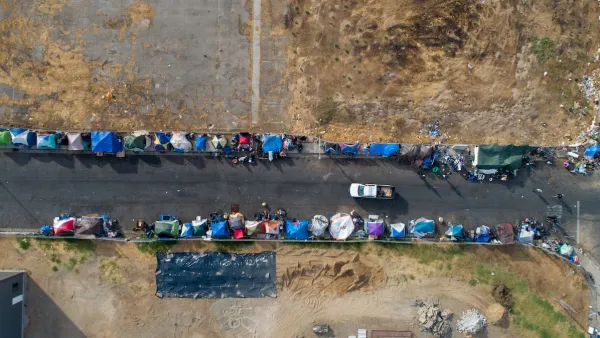
Mayors’ Meeting Focuses on Housing Crisis
As the number of unhoused Americans grows, mayors met to learn from each other and assess their needs for federal support.
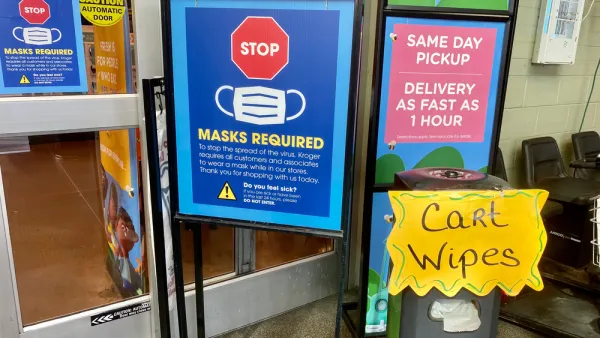
Biden: Masks, Not Vaccines, Are Best Defense in Near Term
President Joe Biden is calling on all Americans to wear masks for the next 100 days to mitigate the spread of the coronavirus, issuing two executive orders that require wearing masks on federal property and in domestic and international travel.

Desperate measures: Advocates weigh draining Lake Powell to fill Colorado River
Draining the reservoir could reduce evaporation losses by a couple hundred thousand acre-feet.

Eastern Nebraska is running out of electricity
Data centers and electrification are straining eastern Nebraska’s grid, throttling economic development.

Malls are becoming the midtowns of the future
Mall and office park redevelopments are a generational opportunity to create new nodes of urbanity.

NYC breaks ground on anti-flooding infrastructure project
New York City's new system will reduce stormwater flows to local sewers by 90%.

One Kentucky town’s secret to affordable housing
The Smoketown Community Land Trust has already built seven affordable homes for community members.

Houston gains petal-shaped cooling infrastructure to make streets more ‘delightful’
The city has installed the pavilions along 15 blocks in Houston.

FREE Course: Walkable City 1: Why Walkability?
After describing his path towards focusing on walkability as the essence of good planning, Jeff Speck marches through his five principal reasons for making more walkable places.
Reinventing Malls: Planning Alchemy—Turning Gray Fields Into Gold
The course focuses on the opportunities and imperatives that shape reinvention of mall sites.

City of Rosemead
Rutgers University, Edward J. Bloustein School of Planning and Public Policy
One Hundred Miles
University of Michigan School for Environment and Sustainability (SEAS)
Hunter College, City University of New York (CUNY)
The Architects Foundation
City of Cambridge
Montrose County
The Pocatello Development Authority