


















The discovery of the harbor town of Bathonea in 2007, after a drought uncovered its water-logged remains, has yielded a treasure trove of relics illuminating Istanbul's rise as a world power.


Jennifer Pinkowski reports on the significance of the find to understanding Istanbul's founding and its rise as Constantinople, a period for which few physical artifacts exist. According to archaeologist Volker Heyd, "The discoveries made are now shedding a completely new light to the wider urbanized area of Constantinopolis. A fantastic story begins to unveil."
According to Pinkowski, "the Bathonea archaeologists also hope to uncover more artifacts dating to the earliest days of civilization. In 2007, Dr. Aydingun and Emre Guldogan of Istanbul University found 9,000-year-old flint tools at the site that could be evidence of the earliest pre-pottery farming settlement in Europe."
FULL STORY: After Being Stricken by Drought, Istanbul Yields Ancient Treasure

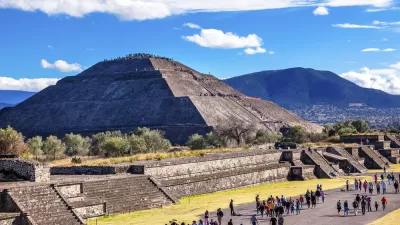
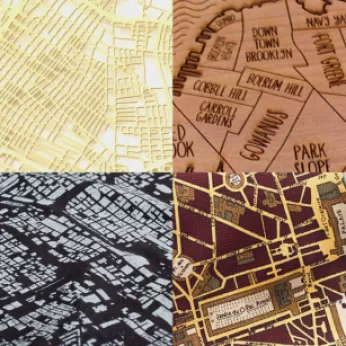
Friday Eye Candy: Images of the World's Cities Through History
Tour the history of the world's most famous cities.
New Report Explores the Benefits of BRT
By synthesizing existing literature and utilizing four detailed case studies, a new report from EMBARQ explores how bus rapid transit can impact the quality of life, productivity, health, and safety of city residents.
New Rail Tunnel is First to Join Two Continents
On the 90th anniversary of the founding of modern Turkey, officials realized a vision dreamt by an Ottoman sultan by inaugurating a rail tunnel beneath the Bosporus to connect Asia and Europe. Critics have questioned the tunnel's safety.
Planetizen Federal Action Tracker
A weekly monitor of how Trump’s orders and actions are impacting planners and planning in America.
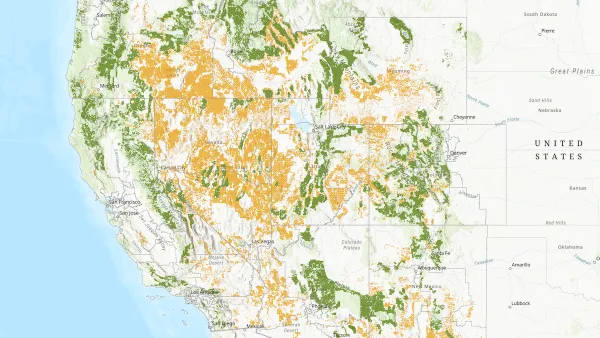
Map: Where Senate Republicans Want to Sell Your Public Lands
For public land advocates, the Senate Republicans’ proposal to sell millions of acres of public land in the West is “the biggest fight of their careers.”
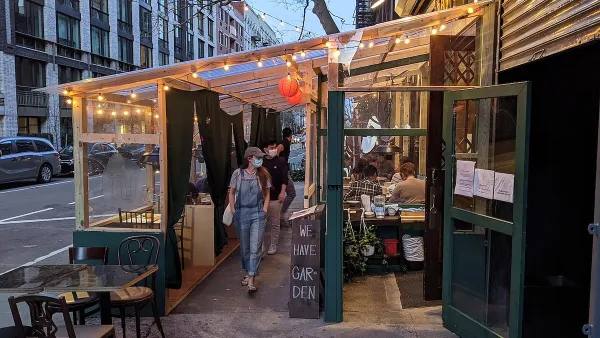
Restaurant Patios Were a Pandemic Win — Why Were They so Hard to Keep?
Social distancing requirements and changes in travel patterns prompted cities to pilot new uses for street and sidewalk space. Then it got complicated.

Platform Pilsner: Vancouver Transit Agency Releases... a Beer?
TransLink will receive a portion of every sale of the four-pack.

Toronto Weighs Cheaper Transit, Parking Hikes for Major Events
Special event rates would take effect during large festivals, sports games and concerts to ‘discourage driving, manage congestion and free up space for transit.”

Berlin to Consider Car-Free Zone Larger Than Manhattan
The area bound by the 22-mile Ringbahn would still allow 12 uses of a private automobile per year per person, and several other exemptions.

Urban Design for Planners 1: Software Tools
This six-course series explores essential urban design concepts using open source software and equips planners with the tools they need to participate fully in the urban design process.
Planning for Universal Design
Learn the tools for implementing Universal Design in planning regulations.

Heyer Gruel & Associates PA
JM Goldson LLC
Custer County Colorado
City of Camden Redevelopment Agency
City of Astoria
Transportation Research & Education Center (TREC) at Portland State University
Camden Redevelopment Agency
City of Claremont
Municipality of Princeton (NJ)