Ever wonder why LA's skyline is so bland? Apparently it was planned that way.


Jeremy Rosenberg examines one piece of "well-meaning" text inserted into the Los Angeles Municipal Code in 1974 requiring rooftop emergency helicopter landing facilities. While the Fire Department seems unlikely to undo this key piece of code anytime soon, a new community plan for the Hollywood neighborhood includes an amendment that would exempt tall buildings in this limited area from the requirement.
According to Rosenberg, "[LA Planning Commisioner Michael K.] Woo and others I've contacted over the years about this topic all take responsible and appropriate pains to make clear that they're not opposed to fire safety, first responders, rapid building evacuations or public health. But Woo and others dare to ask a legitimate question: Is having a helipad at the peak of every tall building necessary, much less wise?"
Read the full story: Laws That Shaped L.A.: Why is the Los Angeles Skyline So Bland?
Flat Tops No Longer Required for Los Angeles Skyscrapers
Emily Alpert Reyes reports that Los Angeles has overturned a long-standing requirement for its skyscrapers to have flat roofs to accommodate the fire department's helicopters in the event of an emergency.
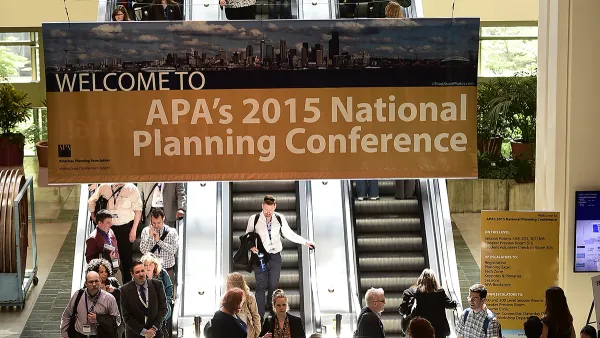
A Retiring Dean Considers the Changing Responsibilities of Planners
Former L.A. City Councilmember and retiring Cal Poly College of Environmental Design Dean Michael Woo reminds readers of the visionary responsibilities of elected officials to ensure the plans of today indeed consider the needs of tomorrow.
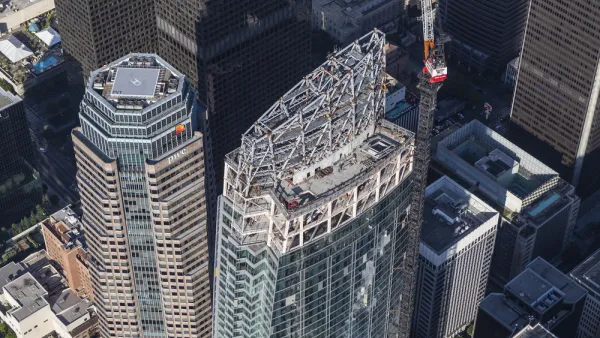
New Tallest Building West of the Mississippi Now Open
Friday was the first day the public could walk into Los Angeles' new iconic skyscraper. The Wilshire Grand is noteworthy for more than just its height.

Desperate measures: Advocates weigh draining Lake Powell to fill Colorado River
Draining the reservoir could reduce evaporation losses by a couple hundred thousand acre-feet.

Eastern Nebraska is running out of electricity
Data centers and electrification are straining eastern Nebraska’s grid, throttling economic development.

Malls are becoming the midtowns of the future
Mall and office park redevelopments are a generational opportunity to create new nodes of urbanity.

NYC breaks ground on anti-flooding infrastructure project
New York City's new system will reduce stormwater flows to local sewers by 90%.

One Kentucky town’s secret to affordable housing
The Smoketown Community Land Trust has already built seven affordable homes for community members.

Houston gains petal-shaped cooling infrastructure to make streets more ‘delightful’
The city has installed the pavilions along 15 blocks in Houston.

FREE Course: Walkable City 1: Why Walkability?
After describing his path towards focusing on walkability as the essence of good planning, Jeff Speck marches through his five principal reasons for making more walkable places.
Reinventing Malls: Planning Alchemy—Turning Gray Fields Into Gold
The course focuses on the opportunities and imperatives that shape reinvention of mall sites.

City of Rosemead
Rutgers University, Edward J. Bloustein School of Planning and Public Policy
One Hundred Miles
University of Michigan School for Environment and Sustainability (SEAS)
Hunter College, City University of New York (CUNY)
The Architects Foundation
City of Cambridge
Montrose County
The Pocatello Development Authority