In August, I moved into a high density apartment complex just 1.5 miles from my office and a five minute walk to a bus stop. One of the central advantages of the building's location was its access to alternative transportation modes. While I could park my car for "free" (the real cost is built into the lease), I was interested in keeping it parked as much as possible. Now, after nearly three months of experimentation, I'm ready to give up the bus, and the reasons are central to understanding the future of transit in the US.


In August, I moved into a high density apartment complex just 1.5 miles from my office and a five minute walk to a bus stop. One of the central advantages of the building's location was its access to alternative transportation modes. While I could park my car for "free" (the real cost is built into the lease), I was interested in keeping it parked as much as possible. Now, after nearly three months of experimentation, I'm ready to give up the bus, and the reasons are central to understanding the future of transit in the US.
First, I should note that as a bus rider and cyclist, I am in a distinct minority despite living in the middle of a corridor populated by tens of thousands of college and university students. (Tallahassee has a college/university student population of 75,000, or about 23% of the metropolitan area population.) I rarely have to compete for boarding the bus or stand when riding because the buses are crowded.
I'm also usually the only cyclist on the mile stretch of main road heading to campus. (I will occasionally pass someone going in the opposite direction.)
Second, the most efficient and effective way to get to my office on the Florida State campus is by bicycle. I can get reliably door-to-door in under 20 minutes (including the time it takes to lock my bike into the bike rack). This is largely due to Florida State's investment in pedestrian and cycling friendly walkways and underpasses. (Cyclists also share the sidewalks with pedestrians, but that will be the topic of a future post.) Driving is almost as reliable as cycling, but inefficient traffic signal timing and coordination usually extends a 20 minute door-to-door commute to 30 minutes.
So, what about the bus? If the bus is running on time and on schedule, my door-to-door commute can be about 20 minutes. But, that's the problem. The bus is rarely on-time or on-schedule. The buses run on 20-minute headways, so the consequences of missing the bus can be pretty severe for anyone trying to make class or a meeting. I have to arrive at least 5 minutes before the bus is scheduled to arrive in the morning because it often arrives about 5 minutes ahead of schedule. In the afternoons on the return trip, buses have completely missed the stop (and I'm not sure where they've gone). Within the last week, I've walked home after waiting 45 minutes for a bus, and in another case I was left at the bus stop for 40 minutes. So, in order to adjust for the uncertainties of bus travel, I typically have to arrive at the bus stop 10 minutes before the bus arrives in the morning, and I have to plan for waiting 15 minutes to 40 minutes in the afternoon for the return trip.
Thus, as a practical matter, the bus is an option only if I have a lot of time on my hands, have no deadlines, and really don't care what time I get home. It's no wonder that students shy away from taking the bus and, instead, prefer to drive.
All this is anecdotal evidence of what many transit operators already know: Providing high quality, reliable service is essential for transit to survive (not just remain competitive with other modes). With the level of uncertainty and unreliability I experience on a regular basis, I simply can't afford the risk of taking the bus on most days. In my case, I will continue to opt for the bike as long as I live close to campus. On the days when the weather is poor, it's hot, or it's cold, I'll grudgingly pull out the keys to the car and drive the short distance to work. Even though the bus service is free for FSU students, staff, and faculty, the bus is simply too expensive along the dimensions of everday life that count.

Employers Going Beyond Requirements for Commute Alternatives
Employers in the Seattle area are outpacing City Hall in providing incentives to employees not to drive to work in single occupancy cars. A state law even requires companies with 100 or more commuters to provide alternative commuting plans.
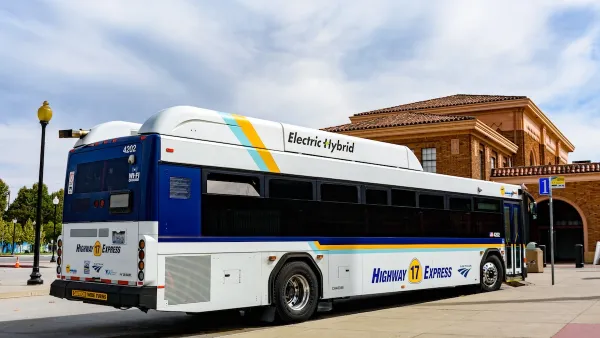
Beyond Congestion Pricing: Strategies for Revolutionizing Urban Mobility
How cities are leveraging data and technology to improve their transportation networks and reduce traffic.
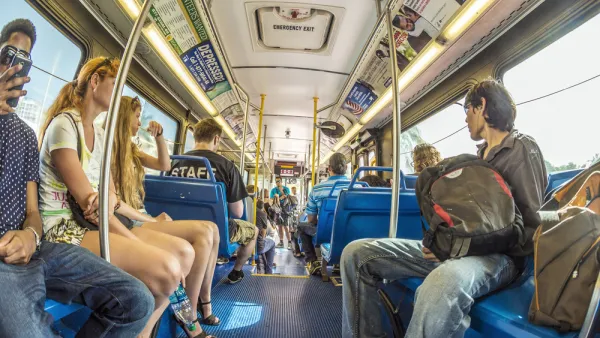
To Fight Climate Change, Support Public Transit
Electric cars may garner a lot of attention these days, but significantly reducing carbon emissions and urban congestion means investing in high-quality mass transit.

Planetizen Federal Action Tracker
A weekly monitor of how Trump’s orders and actions are impacting planners and planning in America.

‘Going backwards:’ Baltimore mayor, students rally against state's transit funding plan
Maryland's proposed six-year plan provides no funding for Baltimore’s BMORE bus program and reduces its road maintenance funding.

Detroit to transform waterfront with $2.2 billion investment
Developers will convert about 18 acres of unused parking lot space into civic spaces.

Newsom vetoes high-speed rail supervision bill after agency receives condemnatory audit
The audit found the CHSRA approved almost $600,000 in unallowable travel expenses.

Nation sees first electric plane-boat hybrid take off in public demo
The Viceroy Seaglider can fly at speeds of 180mph for up to 180 miles.

One of nation’s poorest counties to receive $6 billion data center
The developers estimate the project will create 200 permanent jobs and 1,000 temporary construction jobs.

FREE Course: Walkable City 1: Why Walkability?
After describing his path towards focusing on walkability as the essence of good planning, Jeff Speck marches through his five principal reasons for making more walkable places.
Reinventing Malls: Planning Alchemy—Turning Gray Fields Into Gold
The course focuses on the opportunities and imperatives that shape reinvention of mall sites.

City of Thousand Oaks
City of Wisconsin Rapids
Harvard University Graduate School of Design
The Architects Foundation
University of Cincinnati Online
Northern Illinois Transit Authority (NITA)
The Pocatello Development Authority
The Urban Renewal Agency of the City of Pocatello

