


















For the past few weeks, we’ve been asking you to help us crowdsource the Top 100 Public Spaces in the U.S. and Canada, in collaboration with Project for Public Spaces. For a different perspective, we asked some top architecture critics and practitioners to give us their favorites.
If you still haven't voted, head on over to IdeaScaleand give us your suggestions. Voting is getting competitive, with Seattle's Cal Anderson Park currently topping the list.
It has been a fascinating experiment so far, attracting some of the expected responses (The High Line, Millennium Park, Bryant Park) and some less so (The Circle in Normal, Illinois). For me, it's been a revelation to read about the many beloved plazas and parks I've yet to visit.
While crowdsourcing has its benefits, it is also useful to talk to people who's business is to think about cities and architecture. I asked a handful of architecture critics, urban designers and architects to give us their bests.

James S. Russell, architecture critic for Bloomberg News and recently the author of The Agile City: Building Well-being and Wealth in an Era of Climate Change
James S. Russell's Top 10
- High Line Park, NYC
- Central Park, NYC
- Olympic Sculpture Park, Seattle
- University of Washington campus, Seattle
- Benjamin Franklin Parkway, Philadelphia
- Millennium Park, Chicago
- Stanley Park, Vancouver BC
- Moore Sculpture Garden (Nelson Atkins Museum), Kansas City
- Back Bay Fens, Boston
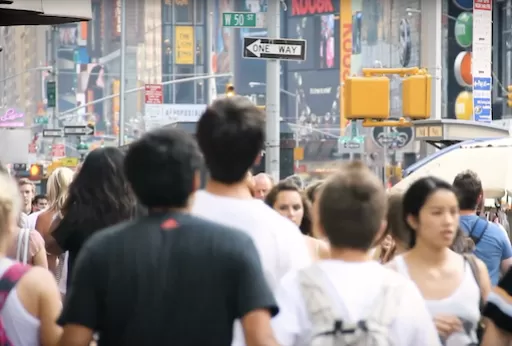
- Times Square, NYC

John King is urban design critic for the San Francisco Chronicle, and he also has a new book out, Cityscapes: San Francisco and its Buildings

Inga Saffron is the Philadelphia Inquirer's architecture critic, and currently a Loeb Fellow at Harvard's Graduate School of Design, provided us with this list of her picks:
Inga Saffron's Top 10
- Rittenhouse Square, Philadelphia
- Central Park, New York
- High Line, New York
- Emerald Necklace, Boston
- Millennium Park, Chicago
- Olympic Sculpture Park, Seattle
- Bryant Park, New York
- Stanley Park, Vancouver
- The Lachine Canal Bike Path, Montreal
- National Mall, Washington D.C.

Anthony Flint, a fellow at the Lincoln Institute of Land Policy, a contributor to The Boston Globe and author of Wrestling with Moses: How Jane Jacobs Took On New York's Master Builder and Transformed the American City
Anthony Flint's Top 10
- Rose Kennedy Greenway, Boston
- High Line Park, NYC
- Harborwalk/Fort Point Channel, Boston
- Millennium Park, Chicago
- Washington Square Park, NYC
- Yerba Beuna Gardens, San Francisco
- Riverwalk & Waterplace Park, Providence
- Presidio & Chrissy Field, San Francisco
- Harvard Square, Cambridge
- Grand Central Terminal, NYC
Flint explains his choices:

To get a different perspective, we spoke with some people who are on the design side, like David R. Gal, a landscape architect for SWA Group and the primary on-site landscape architect for Burj Khalifa Tower Park in Dubai:
Nicole Horn is also a Landscape Architect with SWA Group, and also has a California pick:
And to close, here's a completely different sort of public space, a favorite of Sam Zimbabwe, Director of the Center for Transit-Oriented Development:
One of my favorite public spaces in the United States is not the most beautiful place in the world. And it's not a place that I would choose to sit and sip a cup of coffee, but it is a place that works despite its disfunctions.
Thanks to all our contributors, and let us know what your favorite public spaces are!
Tim Halbur is managing editor of Planetizen.

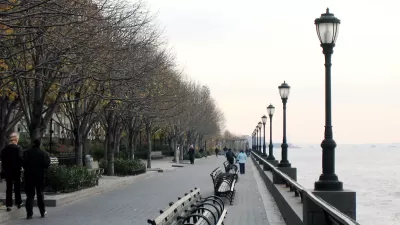
Meet Some of New York City's Newest Parks
In a city where density is everything, these park projects make creative use of existing public spaces—and, in some cases, create their own.

Los Angeles to Redesign Its 'Worst Public Space'
Josh Stephens reports on the Pershing Square Renew Design Challenge, an effort to redo one of the "world's worst squares and plazas." The new Pershing Square may hearken back to the years before its misguided 1992 redesign.
The Top 100 Public Spaces in the U.S. and Canada
The results of our crowdsourcing project, in collaboration with the Project for Public Spaces, reveal not an objective Top 100 but instead a handful of communities passionate about their own local public spaces.

Planetizen Federal Action Tracker
A weekly monitor of how Trump’s orders and actions are impacting planners and planning in America.
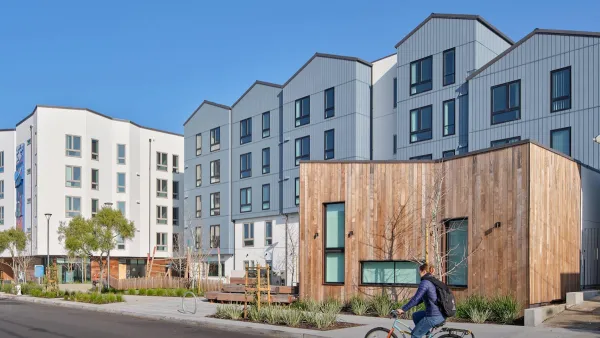
San Francisco's School District Spent $105M To Build Affordable Housing for Teachers — And That's Just the Beginning
SFUSD joins a growing list of school districts using their land holdings to address housing affordability challenges faced by their own employees.
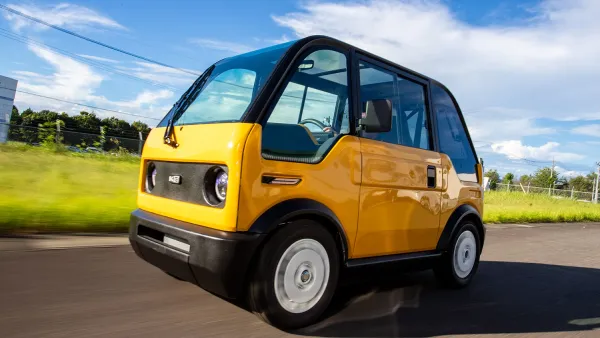
The Tiny, Adorable $7,000 Car Turning Japan Onto EVs
The single seat Mibot charges from a regular plug as quickly as an iPad, and is about half the price of an average EV.

Seattle's Plan for Adopting Driverless Cars
Equity, safety, accessibility and affordability are front of mind as the city prepares for robotaxis and other autonomous vehicles.

As Trump Phases Out FEMA, Is It Time to Flee the Floodplains?
With less federal funding available for disaster relief efforts, the need to relocate at-risk communities is more urgent than ever.

With Protected Lanes, 460% More People Commute by Bike
For those needing more ammo, more data proving what we already knew is here.

Urban Design for Planners 1: Software Tools
This six-course series explores essential urban design concepts using open source software and equips planners with the tools they need to participate fully in the urban design process.
Planning for Universal Design
Learn the tools for implementing Universal Design in planning regulations.

Smith Gee Studio
City of Charlotte
City of Camden Redevelopment Agency
City of Astoria
Transportation Research & Education Center (TREC) at Portland State University
US High Speed Rail Association
City of Camden Redevelopment Agency
Municipality of Princeton (NJ)