






















A recent study found that a city could completely live off food grown from urban agriculture. Sharanbir Grewal, the study's author, discovered in his analysis of Cleveland that the city could produce up to 48 percent of the city's fresh produce.


Grewal's solution to increase the output from urban agriculture is based on converting vacant lots into farms, and residential lots producing crops.
"In the first scenario, Grewal found that if Cleveland converted 80% of its vacant lots into farms it could produce 22% to 48% of the city's demand for fresh produce (vegetables and fruits) depending on the type of farming. It could also produce 25% of poultry and shell eggs, and 100% of honey.
"In addition, if Cleveland used 80% of every vacant lot and 9% of every occupied residential lot, the city could generate between 31% and 68% of the needed fresh produce, 94% of poultry and shell eggs, and 100% of honey."
"Growing food in the city would also keep $29-115 million in the local economy."
FULL STORY: Could cities rely 100% on urban agriculture for their food?


Urban Farming Addressing Hunger (and More) in Pittsburgh
Urban farming provides opportunities to increase food security in addition to other benefits.
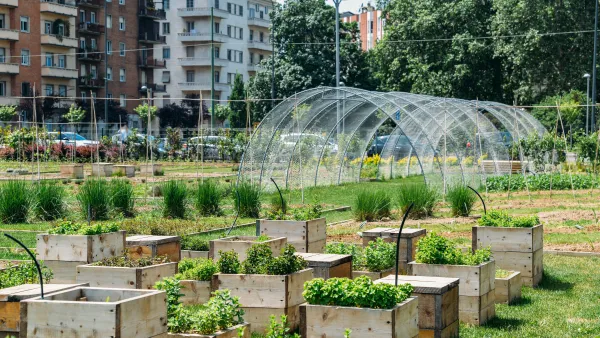
Urban Ag Activists Up In Arms About New Study
Researchers looked at the carbon footprint of urban farming versus conventional, and the results were surprising.

New Tax Credit for Urban Farming in Missouri
Urban farmers in Missouri can receive up to $5,000 in tax credits to establish or expand their operations.

Planetizen Federal Action Tracker
A weekly monitor of how Trump’s orders and actions are impacting planners and planning in America.
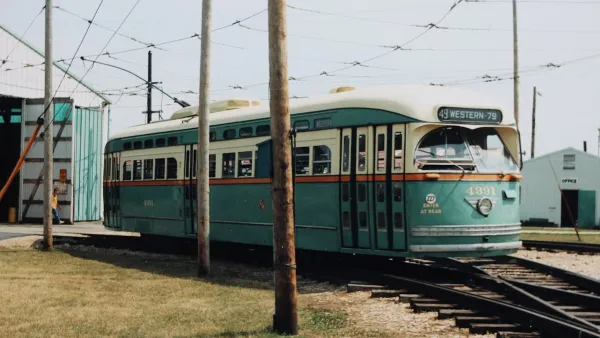
Chicago’s Ghost Rails
Just beneath the surface of the modern city lie the remnants of its expansive early 20th-century streetcar system.
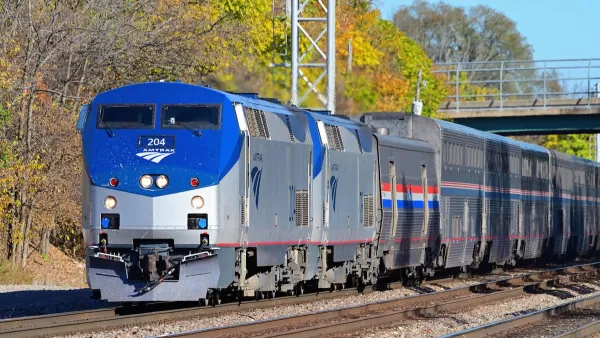
Amtrak Cutting Jobs, Funding to High-Speed Rail
The agency plans to cut 10 percent of its workforce and has confirmed it will not fund new high-speed rail projects.

The French Solution to Congested Tunnels: Make Them Car-Free
Bay Area transportation officials keep expanding car capacity. Lyon’s Croix Rousse Tunnel offers a different way.

Missouri Governor Reverses Anti-Discrimination Housing Policies
A new state law bars cities from prohibiting source-of-income discrimination against tenants using Section 8 housing vouchers.

USDOT Launches Unfunded 'SAFE ROADS' Program
The program targets “distractions” and “political messages or artwork,” and paves the way for autonomous vehicles.

Urban Design for Planners 1: Software Tools
This six-course series explores essential urban design concepts using open source software and equips planners with the tools they need to participate fully in the urban design process.
Planning for Universal Design
Learn the tools for implementing Universal Design in planning regulations.

City of Fort Worth
planning NEXT
Mpact (founded as Rail~Volution)
City of Camden Redevelopment Agency
City of Astoria
City of Portland
City of Laramie