Many of those who have recently graduated in planning are currently asking “how can I get a job?” Of course a number of recent graduates do have work. But government budget cuts may mean that local jobs are hard to get. This is the time to use your imagination. To get you started here are some ideas:



Many of those who have recently graduated in planning are currently asking "how can I get a job?" Of course a number of recent graduates do have work. But government budget cuts may mean that local jobs are hard to get. This is the time to use your imagination. To get you started here are some ideas:
- Nonprofits are a great place to start. They seldom pay well but you will get experience and typically you will be helping save some aspect of the planet as well. Unpaid internships can often lead to nonprofit jobs-as long as you impress them!
- Small cities, particularly ones in out-of-the-way places, can also be a great place to work as you'll get to do a bit of everything. You may even start off as planning director-though if that is the case be sure you find a support network!
- Big cities often have big and complicated bureaucracies with planning jobs in less obvious places like housing agencies, public works departments, and facilities management groups. Look beyond the planning and zoning departments.
- Similarly, big engineering, architecture, and development firms may have small units that do planning work-planning sites and districts, getting permissions or entitlements, doing public participation, or coordinating projects. One of my most interesting professional experiences was bidding for a job as a subcontractor to the planning unit in a multinational engineering firm. It was fascinating seeing how they put together the proposal.
- Very small planning firms often hire part-time and hourly people when they have work. Big firms doing smaller projects in your local area may need helpers for things like public meetings. It is a bit unpredictable as a long-term employment strategy but it can give you useful skills and potentially good references. Let your contacts, including your network of fellow graduates, know you are available.
- Freelancing can take the form of subcontracting for small and big firms, or you can directly contract with a city or other planning entity. Again, it isn't the most stable work but it can give you the experience to get a more permanent job. Over the years I've done quite a bit of this kind of work, a lot of it remotely.
- Related fields: There are often positions to be had in public policy, foundations, the softer side of engineering, mapping, and so on. There may well be alumni of different colleges who could provide contacts. Take advantage!
Finally, as well as types of employers you should also consider the locations where you are looking for work. In an earlier blog I advised to be prepared to go to Kansas, meaning a place where you can get great experience and don't have to compete with dozens of other recent graduates. There is life beyond Boston, New York, and San Francisco.
And in the interim stay gainfully unemployed. Work will come eventually.
This is May's blog, a few days late.

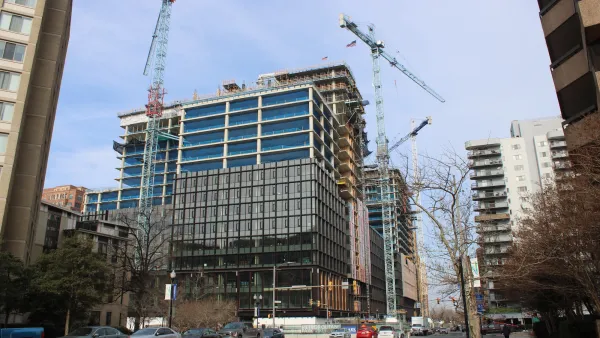
Amazon's HQ2 promised 25,000 jobs. It has created less than a third of that.
Virginia offered Amazon up to $750 million in public subsidies in exchange for creating local jobs and investment.

Data Centers Gaining Ground in Central Ohio
Massive data centers are gobbling up energy resources and tax breaks while creating few jobs in the region.
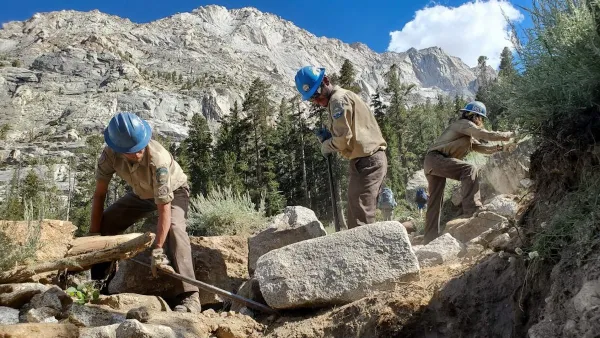
American Climate Corps Echoes New Deal Programs
A new federal initiative places young workers in jobs aimed at building climate resilience, but will it avoid the mistakes of similar programs?

Planetizen Federal Action Tracker
A weekly monitor of how Trump’s orders and actions are impacting planners and planning in America.

Amtrak, CN end decades-long dispute with eight-year agreement
The new operating agreement establishes an updated framework for the companies to work together, including processes to resolve disputes.

Northwest rail fans eager for Sept. 30 debut of Amtrak’s Airo fleet
Get ready for that new train smell and more seats. But they won’t go faster or run more frequently on the Cascades route in Washington and Oregon.

Trump administration unlawfully slashed $7 billion in clean energy grants, judge rules
The Environmental Protection Agency ended the Solar For All program, which provided the grants, after President Donald Trump’s inauguration.

Record-breaking wildlife overpass in Colorado brings 91% reduction in animal collisions
Prior to the overpass, vehicles were hitting one deer per day on Colorado’s Interstate 25.

California lawmakers approve just 5% of much-needed LA28 transportation funding
State legislators appear just as unwilling as Trump to pay for Olympics-related transportation projects.

FREE Course: Walkable City 1: Why Walkability?
After describing his path towards focusing on walkability as the essence of good planning, Jeff Speck marches through his five principal reasons for making more walkable places.
Reinventing Malls: Planning Alchemy—Turning Gray Fields Into Gold
The course focuses on the opportunities and imperatives that shape reinvention of mall sites.

City of Thousand Oaks
City of Wisconsin Rapids
Harvard University Graduate School of Design
The Architects Foundation
University of Cincinnati Online
The Pocatello Development Authority
The Urban Renewal Agency of the City of Pocatello

