New York Time's columnist David Leonhardt contends that what Egypt really needs to do is refocus on urbanism.


Egypt's economic growth has stalled over the last 30 years due to the fact that it has become less urban. Development has faltered, says Leonhardt, who also points out that Egyptians have had difficulty using their skills to advance the city.
"So one of the tasks facing Mr. Mubarak's successors will be creating places within Egypt where Egyptians want to move,"
"These will be the places where Egyptian companies become less reliant on the state and more exposed to global competition. They will be places where research and development, which is scant in Egypt today, take off. They will be places where ingenuity - the same kind of ingenuity that just toppled a dictator - creates jobs."
"Whatever the details, you can be sure that a more prosperous Egypt will be a more urban one."
Read the full story: For Egypt, a Fresh Start, With Cities
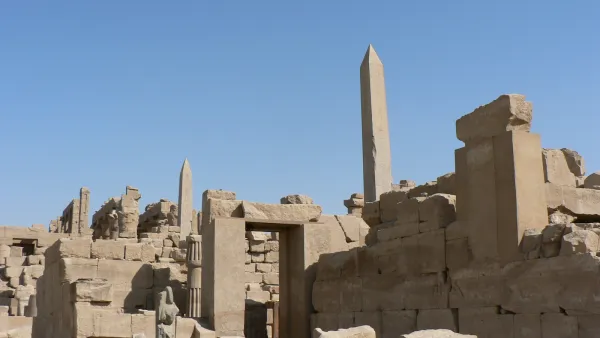
A Lost Ancient City Is Unearthed in Egypt
The newly unearthed "golden city" sheds light on everyday life at the height of ancient Egypt's power.

Egypt's New Capital City Development Gets Chinese Backing
Plans for the development of a new, unnamed capital city just east of Cairo has received the financial backing of Chinese investors.
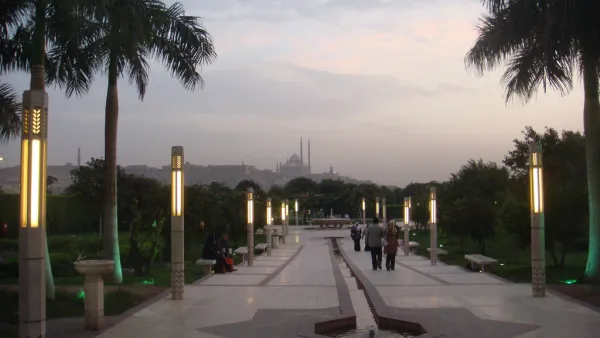
Open Spaces Are Contested Spaces in the Middle East
Parks and other public open spaces continue to be squeezed out by private development and attempts to limit political dissent throughout cities in Arab countries.

Desperate measures: Advocates weigh draining Lake Powell to fill Colorado River
Draining the reservoir could reduce evaporation losses by a couple hundred thousand acre-feet.

Eastern Nebraska is running out of electricity
Data centers and electrification are straining eastern Nebraska’s grid, throttling economic development.

Malls are becoming the midtowns of the future
Mall and office park redevelopments are a generational opportunity to create new nodes of urbanity.

NYC breaks ground on anti-flooding infrastructure project
New York City's new system will reduce stormwater flows to local sewers by 90%.

One Kentucky town’s secret to affordable housing
The Smoketown Community Land Trust has already built seven affordable homes for community members.

Houston gains petal-shaped cooling infrastructure to make streets more ‘delightful’
The city has installed the pavilions along 15 blocks in Houston.

FREE Course: Walkable City 1: Why Walkability?
After describing his path towards focusing on walkability as the essence of good planning, Jeff Speck marches through his five principal reasons for making more walkable places.
Reinventing Malls: Planning Alchemy—Turning Gray Fields Into Gold
The course focuses on the opportunities and imperatives that shape reinvention of mall sites.

City of Rosemead
Rutgers University, Edward J. Bloustein School of Planning and Public Policy
One Hundred Miles
University of Michigan School for Environment and Sustainability (SEAS)
Hunter College, City University of New York (CUNY)
The Architects Foundation
City of Cambridge
Montrose County
The Pocatello Development Authority