The reason? Dan Zambonini proposes that the prevailing winds in most U.S. cities run westerly, so pollution from industrial smokestacks would blow through the eastern neighborhoods.


While the poorer people moved east, people with money during the industrial era moved westward:
"The massive, unchecked pollution from these early industries would therefore drift eastward, making the air quality much lower in the east end of cities, lowering the desirability (and price) of the housing. Middle classes preferred the cleaner west ends."
Read the full story: Why are the East of Cities usually Poorer?

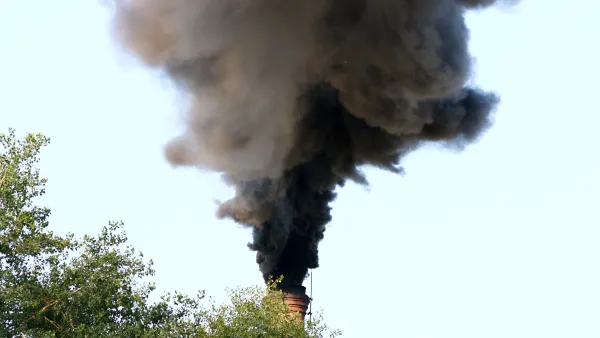
‘Ground-Breaking’ Settlement Reached in Detroit Environmental Justice Case
Civil rights activists celebrate a legal settlement that will require the state of Michigan to prevent hazardous waste and other industrial facilities from disproportionately polluting lower income and predominantly Black and brown communities.
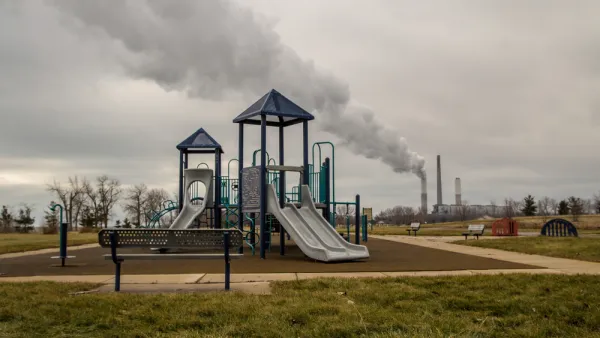
Mapping Cancer Risk From Toxic Air Pollution
An investigation by ProPublica has produced something the U.S. Environmental Protection Agency has never been able to complete: a nationwide map of the cancer risks created by industrial sources of air pollution.
Court Overrules U.S. EPA in Baltimore Runoff Case
Environmentalists challenged the U.S. Environmental Protection Agency and won.

Planetizen Federal Action Tracker
A weekly monitor of how Trump’s orders and actions are impacting planners and planning in America.

Data reveals that NYC’s bet on congestion pricing has paid off
After almost two years of the program, reports show positive impacts on traffic and air quality and no disruptions to parking.
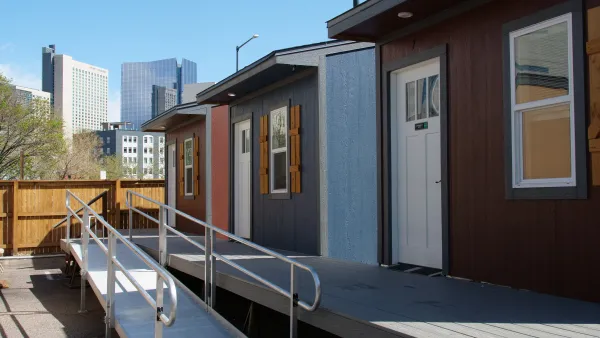
Denver is solving homelessness. Why aren't the rest of us?
Since 2023, Denver's street homeless population has decreased by 64%, proving that effective tools exist to support those in need of housing.

In California, electric school buses are powering 1,000 homes — and turning a profit
Tellus Power, the charging equipment manufacturer behind the project, is also helping school buses connect to the power grid in Vermont, Illinois and San Francisco.

‘No state has sacrificed more:’ Arizona joins Nevada, sues feds over Colorado River plan
The Arizona Department of Water Resources' motion claims that the state's cities, tribes and farmers can't survive without sufficient water from the Colorado River.

Permits for single-family homes have nosedived, along with investor confidence
Permits to build new single-family homes also hit a 3.5 year low in September.

FREE Course: Walkable City 1: Why Walkability?
After describing his path towards focusing on walkability as the essence of good planning, Jeff Speck marches through his five principal reasons for making more walkable places.
Reinventing Malls: Planning Alchemy—Turning Gray Fields Into Gold
The course focuses on the opportunities and imperatives that shape reinvention of mall sites.

City of Rosemead
Rutgers University, Edward J. Bloustein School of Planning and Public Policy
One Hundred Miles
The Architects Foundation
University of Cincinnati Online
Montrose County
Northern Illinois Transit Authority (NITA)
The Pocatello Development Authority