In his new book, Arrival City, Doug Saunder explores how cities can ease the planet's "final migration" by creating "arrival" neighborhoods that allow newcomers to make connections with each other, their home villages and especially their new cities.


Saunders shows how one neighborhood in Toronto exemplifies how to make an Arrival City work: Thorncliffe Park may have a high poverty rate, but, much like slums in elsewhere in the world it is providing newcomers with the opportunity to earn livelihoods and enter the mainstream of their adopted countries.
"[Toronto's Thorncliffe Park] is a culture of transition – a culture both entrepreneurial and conservative that can be found on the edges of cities around the world, in the slums of Dhaka and Sao Paulo and in the migrant neighbourhoods on the outskirts of Paris and Amsterdam. The ex-villagers here have an amazingly consistent record of entering the middle-class, urban mainstream within a generation. They launch small shops and other businesses and send their children into postsecondary education.
The area's poverty is not a sign of failure: It means that Thorncliffe Park, like many such neighbourhoods, is functioning as a highly successful engine of economic and social integration, churning people out as fast as it takes them in, constantly renewing itself with fresh arrivals."
Read the full story: How Slums can Save the World

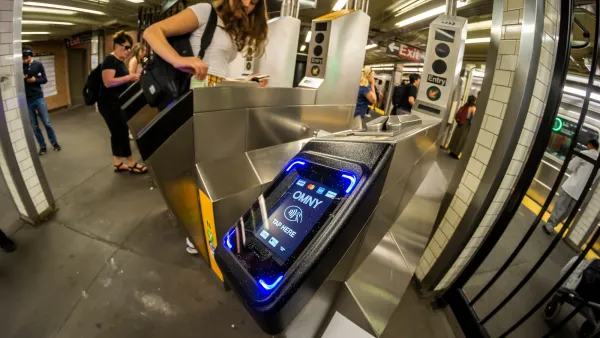
Popular transit payment system linked to Palantir could give ICE access to rider data
The tap-to-pay system is being used widely in transit systems including New York City, Boston and Chicago.
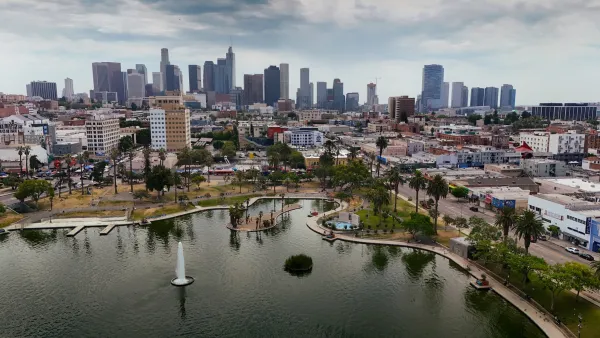
World Cup renews community spirit in LA's MacArthur Park
Soccer watch parties are bringing life back to the park that was recently the target of immigration raids and police actions.
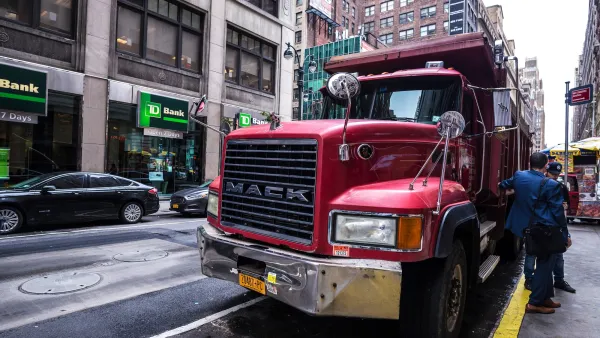
DOT withholds $73M from New York over immigrant trucking licenses
The Trump administration is requiring states to revoke the CDLs of non-domiciled drivers without proof of citizenship or risk losing federal funds.

Planetizen Federal Action Tracker
A weekly monitor of how Trump’s orders and actions are impacting planners and planning in America.

Amtrak, CN end decades-long dispute with eight-year agreement
The new operating agreement establishes an updated framework for the companies to work together, including processes to resolve disputes.

Judges permit Denver to divert 77,000 acre feet from the Colorado River for reservoir expansion
Overuse and climate change have caused the Colorado River’s water levels to plummet.

NYC DOT wants faster, more permanent street upgrades
The city is examining ways to build more concrete infrastructure without getting entangled in 'decades-long' projects.

'Something we’ve never seen before:' rising utility rates could strain city finances nationwide
Data centers, climate change and other factors have caused utility rates in the United States to increase by 38% since 2020.

Trump to overrule local leaders, lease millions of acres of America’s Pacific Island territories’ seafloors to mining companies
International law says that the Indigenous people of America’s territories have a right to prior and informed consent regarding projects that impact their countries.

FREE Course: Walkable City 1: Why Walkability?
After describing his path towards focusing on walkability as the essence of good planning, Jeff Speck marches through his five principal reasons for making more walkable places.
Reinventing Malls: Planning Alchemy—Turning Gray Fields Into Gold
The course focuses on the opportunities and imperatives that shape reinvention of mall sites.

Harvard University Graduate School of Design
KFH Group Inc.
Greater Baltimore Committee
The Architects Foundation
University of Cincinnati Online
The Pocatello Development Authority
The Urban Renewal Agency of the City of Pocatello