In some cases, argues Yonah Freemark, it makes more sense to bring cars into your downtown than to keep them out. Freemark visits Raleigh, North Carolina, where the city opened its pedestrian-only downtown to cars with some success.


Freemark writes, "Downtown Raleigh used to be a real nine-to-five place, the sort of American inner-city that managed to attract a fine lunch crowd but a much smaller group for dinner, and an even tighter circle for anything after that. Like the central business districts of many state capitals, North Carolina's was plagued by its almost overwhelming reliance on office workers, its few residents, and its decided lack of street life.
Part of the problem, it seemed, was the presence of a pedestrian mall at the center of the city on Fayetteville Street. Much as in other U.S. cities, Raleigh planners had assumed that moving cars off the city's main drag would improve quality of life and expand business, but the result was unfortunately frequently the opposite. By the early 2000s, the Fayetteville Street Mall was downright dour at night."
Thanks to Next American City
Read the full story: Raleigh’s Downtown Upgrade Pans Out
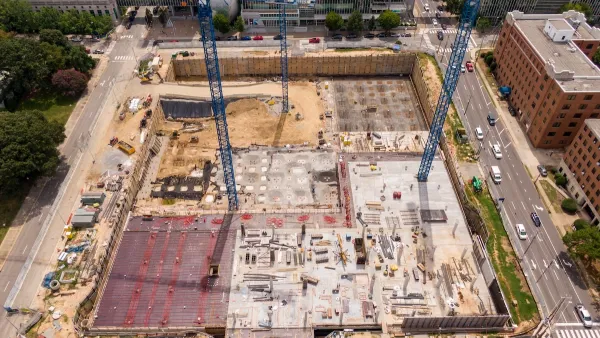
Novel study finds extreme state-by-state disparity in housing construction timelines
The first comprehensive working paper on U.S. construction timelines also found that the permitting process for multi-family projects has slowed nationwide.
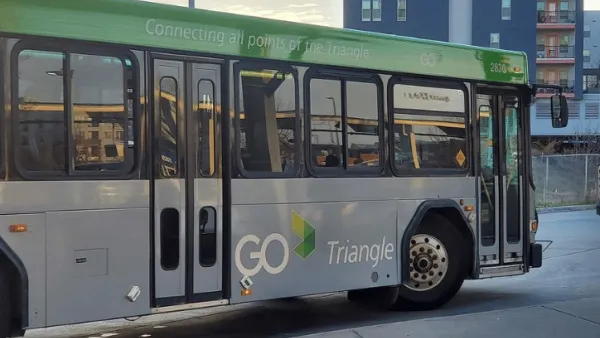
North Carolina Triangle transit ridership jumped 32% in April
Rising gas prices are prompting more Americans to consider public transit, where it's available.
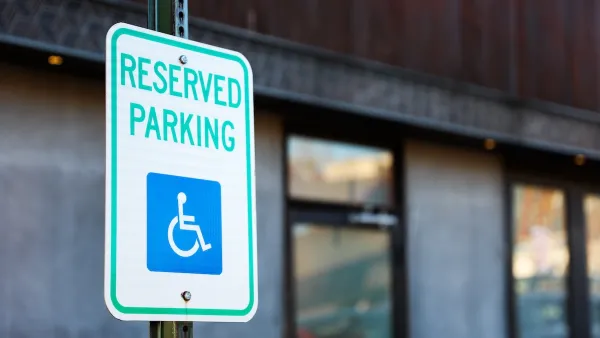
Raleigh Pilots App-Based Feedback Program for Accessible Parking
The city is using the program to collect real-time information about accessibility issues and correct them quickly.

Desperate measures: Advocates weigh draining Lake Powell to fill Colorado River
Draining the reservoir could reduce evaporation losses by a couple hundred thousand acre-feet.

Eastern Nebraska is running out of electricity
Data centers and electrification are straining eastern Nebraska’s grid, throttling economic development.

Move over, LA: St. Louis gears up for Olympics, invests millions in downtown redevelopment
The Missouri city will host the 2028 Olympic soccer group stage and knockout matches.

Mass. votes against statewide minimum lot size for single-family homes
Over 2 million residents voted on Question 7; it was decided by just over 30,000 votes.

Maryland’s $15 billion bridge project gains key approval
The Maryland Transit Authority said the project will create over 60,000 jobs and add $23 billion to the local economy.

‘No clear next steps’ for Chicago's permanent festival grounds
Eleventh Ward Ald. Nicole Lee has suggested Soldier Field as a possible location for the permanent event space.

FREE Course: Walkable City 1: Why Walkability?
After describing his path towards focusing on walkability as the essence of good planning, Jeff Speck marches through his five principal reasons for making more walkable places.
Reinventing Malls: Planning Alchemy—Turning Gray Fields Into Gold
The course focuses on the opportunities and imperatives that shape reinvention of mall sites.

City of Rosemead
Rutgers University, Edward J. Bloustein School of Planning and Public Policy
One Hundred Miles
University of Michigan School for Environment and Sustainability (SEAS)
Hunter College, City University of New York (CUNY)
The Architects Foundation
City of Cambridge
Montrose County
The Pocatello Development Authority