Sausalito, just across the Bay from SF, has replaced attendants with pay stations in four parking lots. While embedded sensors monitor vehicle activity in the lots, residents are given a tag to hang in their vehicles providing 3 hours free parking.


Sausalito's conversion to pay stations for off-street parking could provide an example for cities to overcome some local opposition to conversion from free to fee parking by the generous perk it provides to its residents. Since the purpose of the parking program is not to be a cash cow, the perk may make sense. However, the Sausalito program involves only a change of revenue collection and enforcement, not ending free parking.
"The city did not purchase the new equipment with the objective to increase revenues - instead the city is committed to ensuring that its residents and other customers are well-served by the parking managed in the public interest, and that the costs of enforcement are proportionate to parking revenues," said Jonathon Goldman, director of public works.
"Residents are allowed to park for free for up to three hours between 8 a.m. and 6 p.m. but have to hang a tag in their vehicles. Out-of-towners pay $1 to $3 an hour, depending on the parking lot."
Thanks to MTC Headlines
Read the full story: Sausalito's new high-tech parking makes ticket writing easier
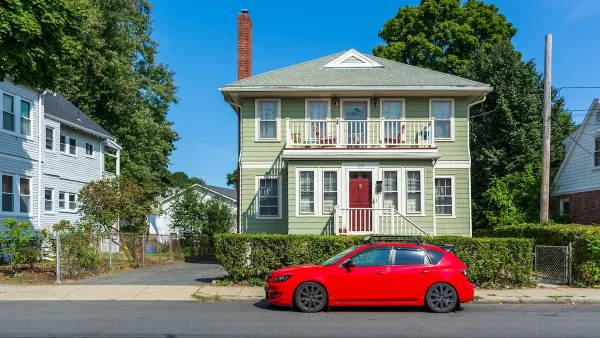
Parking: The Dark Matter of the Urban Universe
Parking regulations affect our lives and communities in many, often mysterious ways. These impacts are often overlooked, resulting in bad policies. It's time to apply urban planning magic: fewer driveways and better managed public parking.
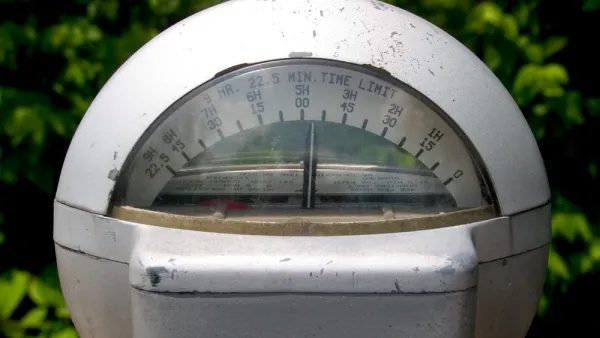
ITDP's New On-Street Parking Pricing Guidebook
This report explores strategies for efficient and equitable parking management with an emphasis on pricing. These strategies enable cities to reallocate space for bus lanes, bicycle lanes, wider sidewalks, and pickup zones, and generate revenue.
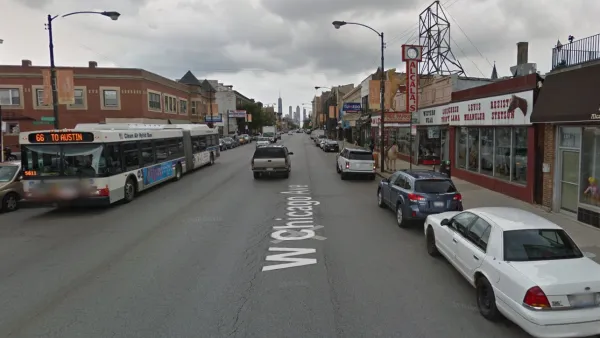
Opinion: Chicago Needs an Office of Parking Management
The city of Chicago needs a local agency empowered to planning, studying, or managing parking, according to a recent opinion piece published by Streetsblog Chicago.

Planetizen Federal Action Tracker
A weekly monitor of how Trump’s orders and actions are impacting planners and planning in America.

Washington state to charge fee to drivers with fuel-efficient cars
Revenue from the fee will go towards supporting the state’s highways.

Trump to blast ‘hydrocarbon highway’ through ‘world’s longest art gallery’
Environmental and historic preservation groups are suing to stop the project.

Minnesota Gold Line extension now has launch date
Plans to extend the Gold Line have existed since 2025.

Data centers need power – lower income, rural residents pay the price
In 2025, data centers paid only 38% of the energy infrastructure costs linked to their growth, with households, especially rural and low-income residents, bearing the remaining burden.

MBTA Green Line project moved to next phrase of CIG program
The modernization effort will cost $4.08 billion.

FREE Course: Walkable City 1: Why Walkability?
After describing his path towards focusing on walkability as the essence of good planning, Jeff Speck marches through his five principal reasons for making more walkable places.
Reinventing Malls: Planning Alchemy—Turning Gray Fields Into Gold
The course focuses on the opportunities and imperatives that shape reinvention of mall sites.

City of Charlotte
City of Rosemead
Rutgers University, Edward J. Bloustein School of Planning and Public Policy
University of Michigan School for Environment and Sustainability (SEAS)
Hunter College, City University of New York (CUNY)
The Architects Foundation
University District Partnership