Kansas senatorial candidate Charles Schollenberger calls for the creation of a Great Plains National Park on low-production farmland in order to attract tourism to support suffering local economies.


Schollenberger writes: "The Great Plains National Park - also known as the Buffalo Commons National Park - would be in Wallace and Greeley counties in western Kansas. Its attractions would include approximately 1 million acres of natural short grass prairie inhabited by bison and other wildlife.
Under a proposal advanced by the Star on Nov. 15, 2009, land acquisition costs could come from the federal Land and Conservation Fund, which uses offshore oil and gas royalties for land protection. However, members of Congress will have to fight for the park if it is to be established.
The national park would be ideally situated in an area of western Kansas where depletion of ground water has turned irrigated farmland into dry, low-production land. The park would preserve native Kansas prairie and generate tourism, becoming a potential savior to dwindling local economies of the area."
Read the full story: Guest column: Park needed
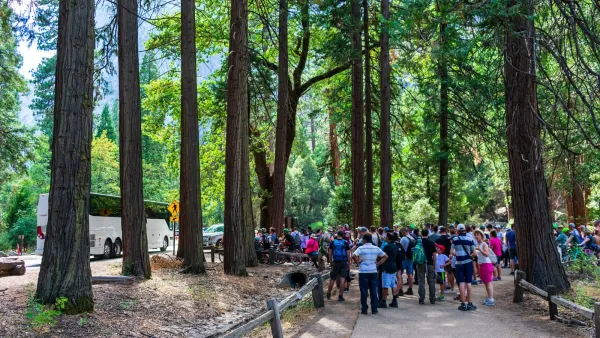
Yosemite crowds wait hours to enter park after NPS ends reservation system
Bumper-to-bumper traffic and a lack of parking foreshadowed a potentially chaotic summer.
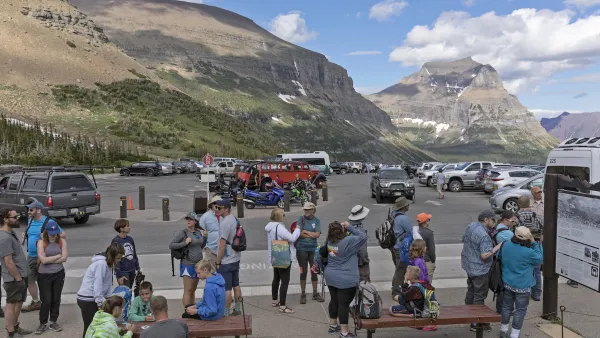
Glacier National Park drops reservation requirement, plans to double down on shuttle network
Since 2021, visitors with cars have had to make a reservation to access the park.
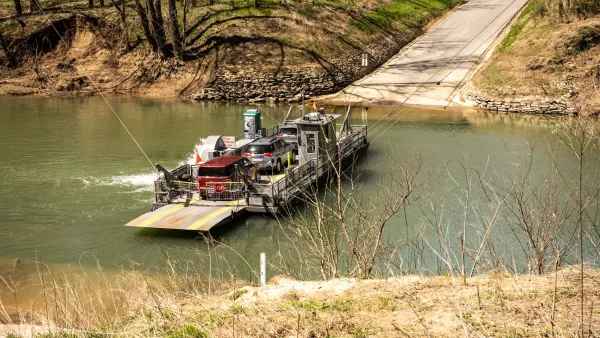
Nation’s Shortest Car Ferry Travels Just 200 Feet in a National Park
The Green River Ferry shuttles cars in a 30-second trip.

Planetizen Federal Action Tracker
A weekly monitor of how Trump’s orders and actions are impacting planners and planning in America.

Eastern Nebraska is running out of electricity
Data centers and electrification are straining eastern Nebraska’s grid, throttling economic development.
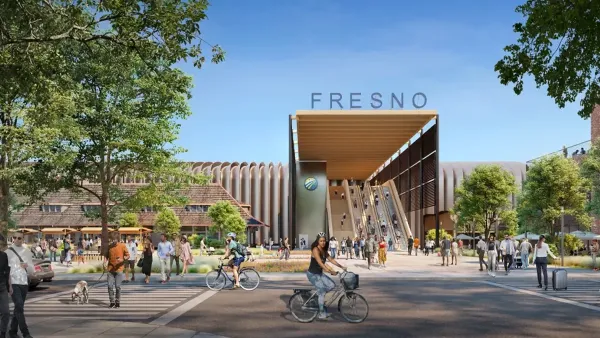
California High-Speed Rail Authority picks trainset manufacturer
The California High-Speed Rail Authority aims to start servicing passengers by 2033.

Massachusetts bogs generate both power, and cranberries
Putting solar panels above farmland is one way Massachusetts is advancing toward its goal of net-zero carbon emissions by 2050.

What could the future of LA transit look like under Raman?
The mayor-elect views broken sidewalks and potholes as crises that can be fixed with better governance.

States are counting on battery farms. Some towns don’t want them.
While fire safety has improved, some communities are still wary.

FREE Course: Walkable City 1: Why Walkability?
After describing his path towards focusing on walkability as the essence of good planning, Jeff Speck marches through his five principal reasons for making more walkable places.
Reinventing Malls: Planning Alchemy—Turning Gray Fields Into Gold
The course focuses on the opportunities and imperatives that shape reinvention of mall sites.

City of Rosemead
Rutgers University, Edward J. Bloustein School of Planning and Public Policy
One Hundred Miles
University of Michigan School for Environment and Sustainability (SEAS)
Hunter College, City University of New York (CUNY)
The Architects Foundation
City of Cambridge
The Pocatello Development Authority
The Urban Renewal Agency of the City of Pocatello