This piece from Re:Place looks at the urban impact of kiosks and food carts.


These small places of commerce can play an important role in encouraging local businesses and creating a lively urban realm, according to this article.
"In Portland you might enjoy a steaming bowl of curry, while in Accra a spicy box of jollof. Both purchased for a low cost and in a convenient location. What is known as a cart in Portland or New York, a kiosk in Accra or Moscow, might also be a booth, pavilion or a stand. Each is a different form of micro-enterprise that plays an increasingly important role in our cities today. A kiosk is an efficient way for an individual to start a business with low costs and short time, while providing an immediate service to an urban area. Congruently, the vibrancy of a neighborhood can be accentuated through the articulation of these small forms. But in spite of their proven role in developing walkable, socially intense communities, kiosks are an afterthought to urban design, and are impaired by insecure tenure, and generally considered undesirable."
Read the full story: Making Space for a Kiosk/Cart Culture from Portland to Accra
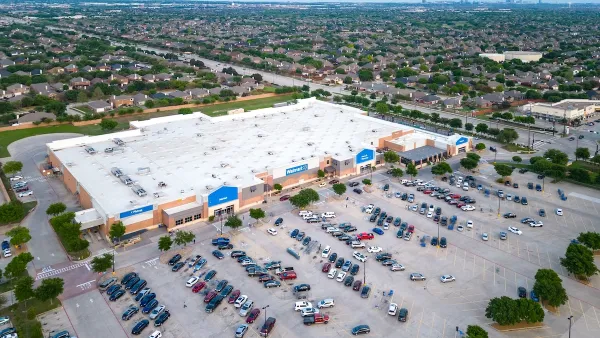
Is Driving Traffic to Big Box Stores True Economic Development?
Strong Towns’ Charles Marohn argues that planning for ‘commerce’ perpetuates an unsustainable, car-centric development model.
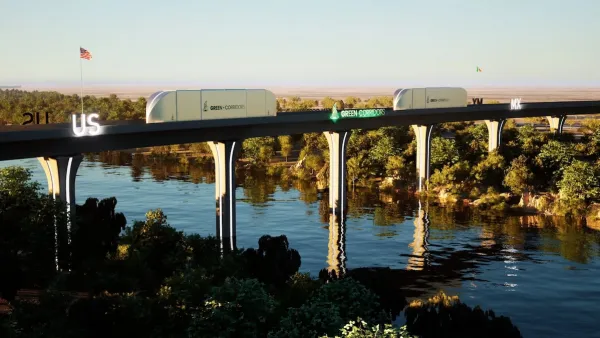
Trump Approves Futuristic Automated Texas-Mexico Cargo Corridor
The project could remove tens of thousands of commercial trucks from roadways.
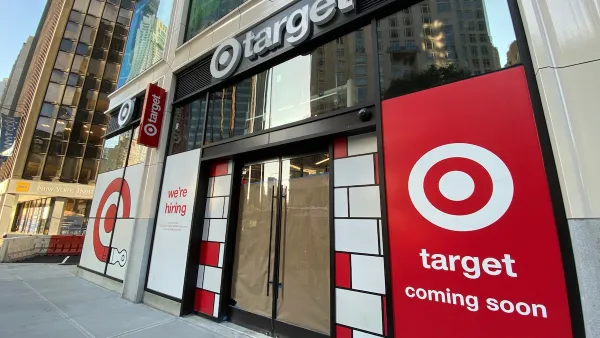
Why Big Box Stores Are Abandoning Their Urban Experiment
And why that may not be such a bad thing.

Desperate measures: Advocates weigh draining Lake Powell to fill Colorado River
Draining the reservoir could reduce evaporation losses by a couple hundred thousand acre-feet.

Eastern Nebraska is running out of electricity
Data centers and electrification are straining eastern Nebraska’s grid, throttling economic development.

Move over, LA: St. Louis gears up for Olympics, invests millions in downtown redevelopment
The Missouri city will host the 2028 Olympic soccer group stage and knockout matches.

Mass. votes against statewide minimum lot size for single-family homes
Over 2 million residents voted on Question 7; it was decided by just over 30,000 votes.

Maryland’s $15 billion bridge project gains key approval
The Maryland Transit Authority said the project will create over 60,000 jobs and add $23 billion to the local economy.

‘No clear next steps’ for Chicago's permanent festival grounds
Eleventh Ward Ald. Nicole Lee has suggested Soldier Field as a possible location for the permanent event space.

FREE Course: Walkable City 1: Why Walkability?
After describing his path towards focusing on walkability as the essence of good planning, Jeff Speck marches through his five principal reasons for making more walkable places.
Reinventing Malls: Planning Alchemy—Turning Gray Fields Into Gold
The course focuses on the opportunities and imperatives that shape reinvention of mall sites.

City of Rosemead
Rutgers University, Edward J. Bloustein School of Planning and Public Policy
One Hundred Miles
University of Michigan School for Environment and Sustainability (SEAS)
Hunter College, City University of New York (CUNY)
The Architects Foundation
City of Cambridge
Montrose County
The Pocatello Development Authority