Clean-tech incinerators are making their way into Danish neighborhoods. Why is the U.S. not implementing this technology? Environmental groups hate them, and land fills have been abundant.


Elisabeth Rosenthal reports on the growing, cleaner technology for incineration in Denmark that now filters many of the chemicals (like dioxin) that caused health problems in early generations.
Rosenthal writes, "...such plants have become both the mainstay of garbage disposal and a crucial fuel source across Denmark, from wealthy exurbs like Horsholm to Copenhagen's downtown area. Their use has not only reduced the country's energy costs and reliance on oil and gas, but also benefited the environment, diminishing the use of landfills and cutting carbon dioxide emissions."
Environmental groups argue that turning garbage into fuel will accelerate the appetite for waste, rather than encouraging conservation and recycling.
Read the full story: Europe Finds Clean Energy in Trash, but U.S. Lags

The Sustainability Challenges of E-Scooters
Scooters have helped diversify the mobility landscape, but companies need to better address the recycling and reuse process and the environmental impacts of defunct devices.
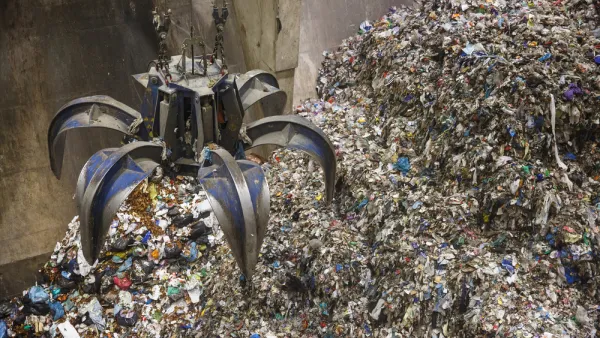
Recyclables Headed to Incinerators or Landfills
China's decision to halt imports of most recyclables from the United States has caused turmoil. With few markets for their recyclables, Philadelphia is sending half of them to a waste-to-energy incinerator in Chester not designed to burn them.
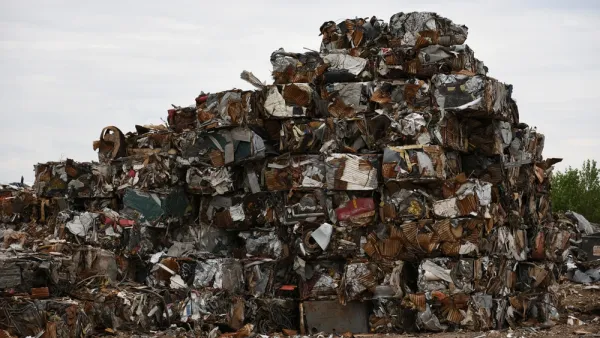
U.S. Recycling Markets in Free Fall After China Pulls Import Plug
China has stopped purchasing the recyclables that millions of Americans place curbside on recycling days, upending the industry. Recyclables are already directed toward landfills as domestic markets are sought. Berkeley, Calif. may go a novel route.

Planetizen Federal Action Tracker
A weekly monitor of how Trump’s orders and actions are impacting planners and planning in America.

Washington state to charge fee to drivers with fuel-efficient cars
Revenue from the fee will go towards supporting the state’s highways.

Trump to blast ‘hydrocarbon highway’ through ‘world’s longest art gallery’
Environmental and historic preservation groups are suing to stop the project.

Army detonates nearly 5 tons of lead in Iowa
The detonation comes after days of delays and public outcry.

Golden Girls bills could bring together older and younger roommates
In more than 30 states, local laws can restrict how many unrelated people can share a home.

Mamdani to replace Rikers Island with four borough-based jails
The four new jails are set to open between 2029 and 2032.

FREE Course: Walkable City 1: Why Walkability?
After describing his path towards focusing on walkability as the essence of good planning, Jeff Speck marches through his five principal reasons for making more walkable places.
Reinventing Malls: Planning Alchemy—Turning Gray Fields Into Gold
The course focuses on the opportunities and imperatives that shape reinvention of mall sites.

City of Charlotte
City of Rosemead
Rutgers University, Edward J. Bloustein School of Planning and Public Policy
University of Michigan School for Environment and Sustainability (SEAS)
Hunter College, City University of New York (CUNY)
The Architects Foundation
University District Partnership