


























The New York Times reviews a new book by Joel Kotkin about the role of immigration and minority populations in America.


Whereas in the past minority populations mainly had a big impact in large cities and "gateways", the impact of minority populations will spread over the next 40 years. And the concept of "minorities" will change as well. Kotkin's book predicts a continuation of American innovation, success and resilience.
"What will this nonhegemonic transcendent superpower look like? The Internet's democratization of information will mean more people will work at home. The heartland will be revived as places with 'skill surpluses' like Fargo, N.D., and Boise, Idaho, prosper through technology. The nation's suburbs will become more like preindustrial villages with vibrant town centers and less like bedroom communities catering to commuters. As a result the core of many central cities will shrivel and become anachronisms as the sprawling, multipolar, car-dependent cities of the South and Southwest (which can lure younger families with lower property prices) become cutting-edge cultural incubators.
Some older urban areas, like New York, may survive as "luxury cities," but Mr. Kotkin perceptively warns that municipal officials who believe they can position their cities only as playgrounds for the rich are doomed to a demographic dead end."
FULL STORY: A Nation 400 Million Strong


What President Trump's Border Wall Can't Stop
William H. Frey, a demographer with Brookings, argues that racial diversity is a good thing for the country by many measures. Trump's wall would make it harder to benefit from demographic changes, but changes is still coming.

Census Projections: U.S. Will Become 'Majority Minority' in 2045
William H. Frey reports that new Census projections have the United States becoming "minority white" in 2045.
Population Growth Slows for Asians and Hispanics
Minorities are on the rise in the U.S., but the rates of growth for Hispanics and Asians are slowing down, according to recent Census figures.

Planetizen Federal Action Tracker
A weekly monitor of how Trump’s orders and actions are impacting planners and planning in America.
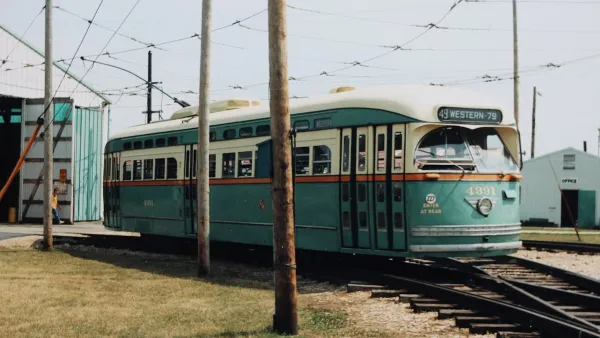
Chicago’s Ghost Rails
Just beneath the surface of the modern city lie the remnants of its expansive early 20th-century streetcar system.

Amtrak Cutting Jobs, Funding to High-Speed Rail
The agency plans to cut 10 percent of its workforce and has confirmed it will not fund new high-speed rail projects.

Ohio Forces Data Centers to Prepay for Power
Utilities are calling on states to hold data center operators responsible for new energy demands to prevent leaving consumers on the hook for their bills.

MARTA CEO Steps Down Amid Citizenship Concerns
MARTA’s board announced Thursday that its chief, who is from Canada, is resigning due to questions about his immigration status.

Silicon Valley ‘Bike Superhighway’ Awarded $14M State Grant
A Caltrans grant brings the 10-mile Central Bikeway project connecting Santa Clara and East San Jose closer to fruition.

Urban Design for Planners 1: Software Tools
This six-course series explores essential urban design concepts using open source software and equips planners with the tools they need to participate fully in the urban design process.
Planning for Universal Design
Learn the tools for implementing Universal Design in planning regulations.

Caltrans
City of Fort Worth
Mpact (founded as Rail~Volution)
City of Camden Redevelopment Agency
City of Astoria
City of Portland
City of Laramie