A new manifesto is being circulated in Hamburg, Germany, where city officials have used the concept of the "creative class" to rebrand the city and lure in creative people. The resulting gentrification of the city has many locals upset.


Artists and social activists are pushing the manifesto in an attempt to dissuade the city's reliance on the "creative class"-based ideas of Richard Florida.
"In recent weeks, this manifesto has attracted a great deal of attention in Hamburg and throughout Germany. It is directed against an urban development policy that is based on a theory that Florida has developed over the past few years.
In his theory, Florida argues that cities must reinvent themselves. In contrast to the 1990s, they should no longer attempt to attract companies, but people. More specifically, the right people -- people who invent things, who promote change and who shape a city's image. He has classified these people as the 'creative class.' It's a theory that has had unintentional consequences -- including bitter conflicts in places like Hamburg."
Read the full story: Who Has the Right to Shape the City?

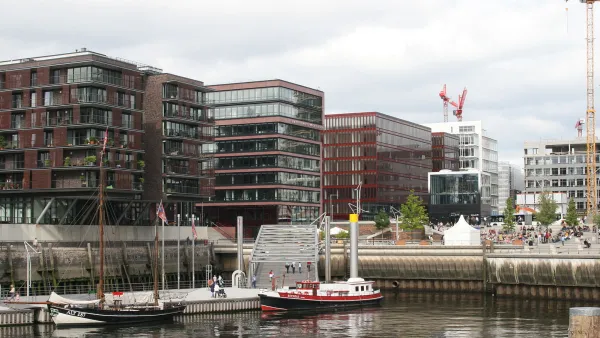
Living With Flooding in a German Port Town
A riverside neighborhood in Hamburg embraces flooding as part of its resilience planning, using old techniques to protect modern communities.

Berlin Caps Rents as Anti-Gentrification Measure
The capital city, known for its artists and party scene, is aiming to reduce gentrification by capping rent prices for a period of five years.

More Diesel Driving Bans Coming to German Cities
Germany's automotive industry and Chancellor Angela Merkel are increasingly worried about the economic effects of court-sanctioned diesel driving bans to improve air quality, as enacted in Hamburg last May. Four more cities are likely to enact bans.

‘Going backwards:’ Baltimore mayor, students rally against state's transit funding plan
Maryland's proposed six-year plan provides no funding for Baltimore’s BMORE bus program and reduces its road maintenance funding.

Detroit to transform waterfront with $2.2 billion investment
Developers will convert about 18 acres of unused parking lot space into civic spaces.

Mamdani sent nearly 6,000 pied-à-terre tax warnings to homes that didn’t qualify
A judge has ordered the administration to cancel thousands of pied-à-terre tax notices after it sent 35% of them erroneously.

25 states, cities sue the EPA over erased power plant emissions limits
The coalition also intends to sue the EPA for not regulating emissions from gas-fired power plants.

Newsom vetoes giving CA tribes greater voice in water projects
In his veto letter, Newsom said the bill would add ‘uncertainty’ to the state’s fight to secure Californians’ water supplies.

Michigan Senate votes to revise 'lax' dam safety laws
A Bridge Michigan investigation found more than 100,000 Michigan residents live in the floodpath of a high or significant-hazard dam.

FREE Course: Walkable City 1: Why Walkability?
After describing his path towards focusing on walkability as the essence of good planning, Jeff Speck marches through his five principal reasons for making more walkable places.
Reinventing Malls: Planning Alchemy—Turning Gray Fields Into Gold
The course focuses on the opportunities and imperatives that shape reinvention of mall sites.

City of Thousand Oaks
City of Wisconsin Rapids
Harvard University Graduate School of Design
The Architects Foundation
University of Cincinnati Online
Northern Illinois Transit Authority (NITA)
The Pocatello Development Authority
The Urban Renewal Agency of the City of Pocatello