























NASA scientists are floating the idea that turning deserts on the equator into lush forests could single-handedly end global warming.


In a recent article in The Journal of Climate Change, cell biologist Leonard Ornstein and NASA climate modelers Igor Aleinov and David Rind make the case that greening deserts on the equator is the quickest and most effective way to cool the atmosphere.
From ASLA's The Dirt blog: "Saudi Arabia, Libya, Tunisia, Morocco, and other northern African countries, along with central Australia, would all be suitable sites. Forestation must occur in sub-tropical areas where there is little chance of darker forested landscapes soaking up more sunlight and therefore warming the earth's surface."
From the Guardian UK: "Planting trees to combat rising carbon dioxide levels is controversial on a large scale, because most places where it has been suggested, such as Canada and Siberia, are in the northern hemisphere where the resulting change in surface colour, from predominantly light snow and rock to predominantly dark trees, could soak up more sunlight and cancel out the cooling benefit."
FULL STORY: New Geoengineering Idea: Turning Deserts into Forests


Climate Change Concerns Rising Among Americans
More Americans than ever agree climate change is happening—but fewer agree on what to do about it.
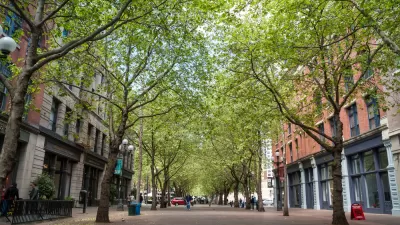
Cool Planning for a Hotter Future
Global warming increases the importance of designing buildings and communities that are comfortable, efficient, and safe in hot conditions.
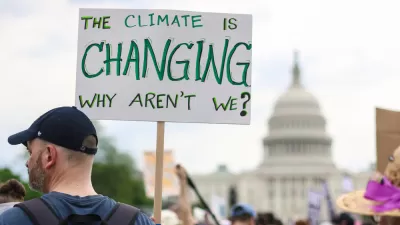
How Cities Can Curb Climate Change and Protect Vulnerable Residents
A new U.N. report urges cities to upgrade their infrastructure to bolster climate resilience and build more sustainable, climate-friendly places.

Planetizen Federal Action Tracker
A weekly monitor of how Trump’s orders and actions are impacting planners and planning in America.
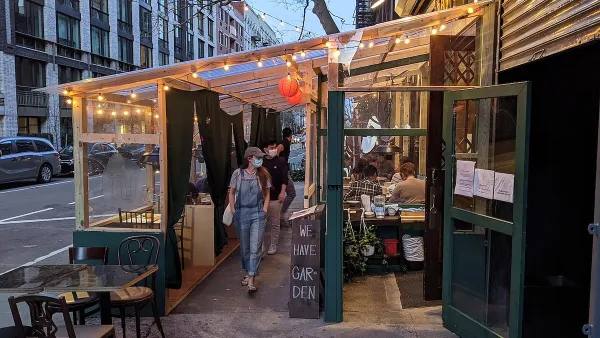
Restaurant Patios Were a Pandemic Win — Why Were They so Hard to Keep?
Social distancing requirements and changes in travel patterns prompted cities to pilot new uses for street and sidewalk space. Then it got complicated.

Maui's Vacation Rental Debate Turns Ugly
Verbal attacks, misinformation campaigns and fistfights plague a high-stakes debate to convert thousands of vacation rentals into long-term housing.

In California Battle of Housing vs. Environment, Housing Just Won
A new state law significantly limits the power of CEQA, an environmental review law that served as a powerful tool for blocking new development.

Boulder Eliminates Parking Minimums Citywide
Officials estimate the cost of building a single underground parking space at up to $100,000.

Orange County, Florida Adopts Largest US “Sprawl Repair” Code
The ‘Orange Code’ seeks to rectify decades of sprawl-inducing, car-oriented development.

Urban Design for Planners 1: Software Tools
This six-course series explores essential urban design concepts using open source software and equips planners with the tools they need to participate fully in the urban design process.
Planning for Universal Design
Learn the tools for implementing Universal Design in planning regulations.

Heyer Gruel & Associates PA
JM Goldson LLC
Custer County Colorado
City of Camden Redevelopment Agency
City of Astoria
Transportation Research & Education Center (TREC) at Portland State University
Camden Redevelopment Agency
City of Claremont
Municipality of Princeton (NJ)