


























This report from NPR looks at Houston's growth pattern, and the evolution of a city that at once provides a high quality of life but also creates a big environmental impact.


Citing a study of American cities by Harvard economist Edward Glaeser, this report discusses how Houston as a whole uses more energy than other cities like Los Angeles and New York. In fact, at 620 square miles, it's also one of the largest cities in the country.
"Among the town's advantages are an average work commute of less than 30 minutes and low housing costs. The National Association of Realtors puts the city's average home price at around $150,000, Glaeser says. Other perks include a lack of state income tax and a vibrant restaurant scene.
All of that taken together means that Houston has weathered the nation's economic crisis fairly well, he says.
But Glaeser notes that there are problems with Houston's sprawl: It takes a large amount of energy to make the area's humid, hot climate comfortable, and the city is built around the use of cars."
FULL STORY: Houston: Texas-Sized Sprawl, No End In Sight


The Social Dynamics of Houston's Urban Expansion
A new study published in the Land Use Policy journal explains how Houston's rapid expansion occurred, and why it matters.
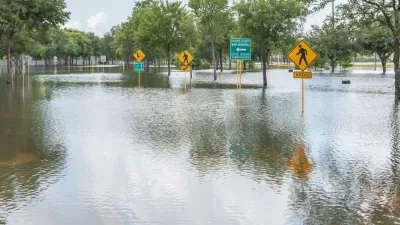
Houston Flooding: Climate Change or Development Patterns to Blame?
The Guardian's former environmental editor asks if urban sprawl is as much to blame as climate change for the flooding caused by Hurricane Harvey in Houston.
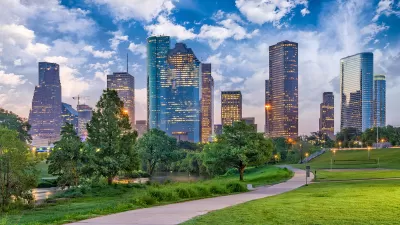
Promoting Infill Development for a Denser Houston
An advocacy group is calling for ‘sustainable, vertical’ mixed-use urbanism in the famously sprawling city.
Planetizen Federal Action Tracker
A weekly monitor of how Trump’s orders and actions are impacting planners and planning in America.

Chicago’s Ghost Rails
Just beneath the surface of the modern city lie the remnants of its expansive early 20th-century streetcar system.
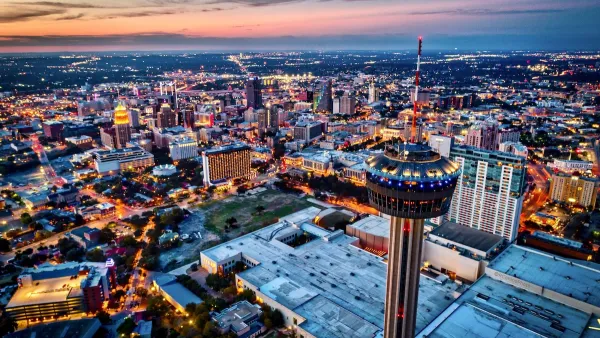
San Antonio and Austin are Fusing Into one Massive Megaregion
The region spanning the two central Texas cities is growing fast, posing challenges for local infrastructure and water supplies.

Since Zion's Shuttles Went Electric “The Smog is Gone”
Visitors to Zion National Park can enjoy the canyon via the nation’s first fully electric park shuttle system.

Trump Distributing DOT Safety Funds at 1/10 Rate of Biden
Funds for Safe Streets and other transportation safety and equity programs are being held up by administrative reviews and conflicts with the Trump administration’s priorities.

German Cities Subsidize Taxis for Women Amid Wave of Violence
Free or low-cost taxi rides can help women navigate cities more safely, but critics say the programs don't address the root causes of violence against women.

Urban Design for Planners 1: Software Tools
This six-course series explores essential urban design concepts using open source software and equips planners with the tools they need to participate fully in the urban design process.
Planning for Universal Design
Learn the tools for implementing Universal Design in planning regulations.

planning NEXT
Appalachian Highlands Housing Partners
Mpact (founded as Rail~Volution)
City of Camden Redevelopment Agency
City of Astoria
City of Portland
City of Laramie