


















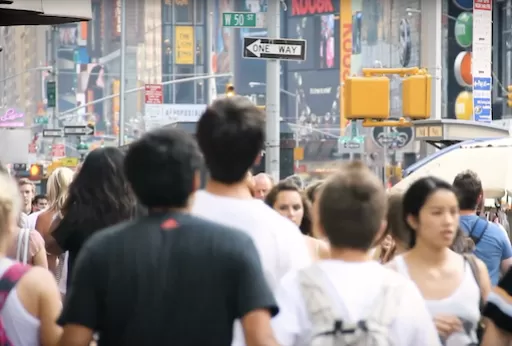
The Twentieth Century ushered in a historic era of optimism for the rational "modern" future. History may record that September 11 ended the modernist dream for cities. But already new visions are emerging for a wiser, more hopeful future.


 History may well record that the "modern" world ended on September 11, 2001.
On that day anti-modern extremists with medieval sensibilities launched a horrific attack upon a pinnacle symbol of twentieth-century modernity: the coolly rational towers of the World Trade Center, in New York City.
We now know that the organizer of that attack, Mohammed Atta, was a professional planner educated in Germany, and a skyscraper-hating anti-modernist. Atta personally flew the first plane into the north tower.
Atta was a religious fundamentalist of the most extreme sort, to be sure, along with Osama bin Laden and the Taliban regime. But clearly Atta felt more than Jerry Falwell's hatred of the west's libertine ways. He hated the west's hegemony in the third world, and he hated the western modernist buildings that he saw wiping out the traditional vitality of its cities. The thesis Atta wrote to get his master's degree at University was on the preservation of the ancient Syrian city of Aleppo, against the onslaught of western modernism.
Six of the al Qaeda plotters that Atta led, later arrested in Spain, were from Aleppo.
The twin towers were the grand expression of Le Corbusier's early twentieth-century modernist vision: rigidly geometrical towers, floating above a superblock, erasing the "clutter" and complexity of the street and replacing it with a breathtakingly "pure" and rational geometry. That was the modernist program in its essence: an art of geometrical fundamentalism, a chilling echo of the terrorists' own religious fundamentalism.
It may seem odd to call Le Corbusier a fundamentalist, but the term is apt. He was a utopian visionary with the most grandiose aspirations, willing to destroy almost anything in his way to build a new doctrinaire regime. Le Corbusier proposed to bulldoze the streets and buildings of Paris and replace them with soldier-like rows of modern towers.
Parisians didn't let him, thank goodness. But other cities weren't so fortunate. Le Corbusier tried to convince successive French governments, including the collaborationist Vichy regime, to implement his plan of razing Algiers, the capital of Algeria and then a French colony. The plan's eventual realization after the war coincided with the anti-French resentment that precipitated Algerian independence -- a movement that continues to fuel terrorism to this day.
In the boroughs of New York City, the regime of Commissioner Robert Moses saw dozens of neighborhoods razed and replaced by superblock "projects" that quickly degenerated into gangland slums.
Chicago, St. Louis, and other cities suffered similar fates. In New York, Moses' reign was brought to an end almost single-handedly by the urban critic and activist Jane Jacobs, who argued convincingly for the vital complexity of the street and the neighborhood. (Unthinkably now, Moses had planned to raze a part of Greenwich Village.)
But the third world continued to see more of these soldier-like "superblock" projects, scores of brutal concrete boxes marching across the landscape and destroying the complexity of traditional neighborhoods in their paths. For many natives, these awful buildings came to symbolize the west's colonial legacy and arrogant disregard for their native culture.
Le Corbusier was the cofounder of the enormously influential Congrès Internationaux d'Architecture Moderne (CIAM) in the 1920's, a movement that has shaped the architecture of modern sprawl to this day. Le Corbusier saw the new machine age as a final historic expression of the rational future of humanity -- the physical form of seventeenth and eighteenth century Enlightenment, and the promise of the new century for a "modern" future beyond the ills of humanity. His unbridled optimism was echoed in the early century's scientific projects to describe all of mathematics, and to crack all of the other secrets of nature.
The grand hope for providing a unified basis for all of mathematics was dashed by the monumental results of Kurt Gödel and Alan Turing. The parallel quest for a simplistic description of all of physics was in turn dashed by the discovery that the fundamental constituents of matter are in fact extraordinarily complex structures in their own right. Indeed, the most revolutionary scientific insight into how nature works has occurred in the interdisciplinary topic of complexity theory, which is the antithesis of the older search for a grand simplification.
Jacobs reflected the later, more sober and more sophisticated view -- the one that claimed science at the end of the century, as the lessons of uncertainty and incompleteness transformed physics and mathematics. Jacobs understood remarkably well the emerging lessons of the new complexity science, and she wrote eloquently of the disastrous folly of imposing simple abstractions on a natural setting. In 1962, as the grand modernist projects were still going up, her book The Death and Life of Great American Cities argued for a more artful, more accommodating design methodology, respectful of the complexities of vernacular culture.
But still the bulldozers and the towers marched over the earth, particularly in the third world, in countries like Egypt. And Atta and the others were there, with their despair and their rage growing. Then along came another visionary, to spin another utopian fantasy of a future with hope. His name was Osama bin Laden.
No one should feel sorry for terrorists such as Atta; they are murderers, and not sympathetic and sensitive figures. Nonetheless, they vividly demonstrate that twentieth-century urbanism unleashed intensely negative forces in society, precisely because it represents an assault on the mathematical qualities of life and organization. Everyone can feel those forces. Different people react variously with a numbing retreat into palliatives such as drugs; perversions; violence; the isolation of the suburbs; the superficiality of contemporary societal relations; and the like. A wily demagogue, however, can channel these forces to power his own fanatical movement. It is thus essential to stop those forces from being generated in the first place.
And so we are left with a world after the modern towers, and after modernism. We will surely destroy al Qaeda and the Taliban. But even more important, we need to destroy the festering conditions in which men like these are made. To do that, we will have to reexamine the kind of modern world we have imposed upon the planet -- economic, technological, artistic. We will have to reexamine, and rebuild, the decaying foundations of our own modern culture.
The very word "modern" carries a hidden negative attachment, by creating a false dichotomy of values: if modern is good, then all that came before it must now be bad. It is just one philosophical step further to throw away the accumulated value of millennia of civilization in the pursuit of a false utopian promise of progress. The alternative, however, is emphatically not a nostalgic looking-back to the past. It is an application of the evolutionary principles that have produced us: advantageous adaptations are built on top of existing structures. Evolution has no "eraser"; it is natural catastrophes that cause discontinuities of the fossil record.
Throughout history, innovation takes place in a complex spatio-temporal pattern. If we are to survive as a species, we must be open to change while not losing what we already have. The technological success stories of our times resulted from adapting old ideas to new uses, combining them into a complex brew that catalyzed new ideas with an empowerment of the individual. Information and communications technology is not a monolithic modernist structure, but instead a connecting network that links persons in a complex society.
This lesson is not obvious. There is a tragic disconnect between two opposite points of view. What the World Trade Center Towers' architect Minoru Yamasaki thought was a "symbol of peace" was for others a symbol of war -- a war of occupation and extermination of traditional architectural and social values by what they regard as overwhelmingly powerful forces of global imperialism.
The crisis forces us to examine, and to fight for, what is most important about our legacy: democratic equality, open society, tolerance, freedom and self-determination As we fight to secure these conditions for ourselves, we must be willing to secure them for others who seek them as well. In an age of nuclear and biological terror, we no longer have a choice.
As we fight for the rights of others, we must honor their right to their own traditions, and their right to protect their world from the rapacious effects of misguided technology. Science is the understanding of nature, whereas technology is the application of what we have learned. That application can be either constructive or destructive, so it is foolish to trust in technology without the guiding hand of a wisdom gained through experience and reflection.
We can hope that this crisis may catalyze a new era in history, in which science and technology learn to better support the richness of traditional culture and the natural world. Then traditional cultures around the world may be more willing to join our call for a new age of tolerance and coexistence, cooperation on mutual threats to survival, and human progress for all.
That kind of modern world just might survive modernism.
Michael Mehaffy is an urban designer and author in Portland, Oregon. Nikos Salingaros is a physicist and Professor of Mathematics at the University of Texas, San Antonio. He has conducted extensive research into the mathematics of architecture and urban design, supported by the Alfred P. Sloan Foundation. Their full paper, "Geometrical Fundamentalism", can be seen at Plan Net Online Architectural Resources. An Italian version is available at Professione Architetto.

Maui's Vacation Rental Debate Turns Ugly
Verbal attacks, misinformation campaigns and fistfights plague a high-stakes debate to convert thousands of vacation rentals into long-term housing.

Planetizen Federal Action Tracker
A weekly monitor of how Trump’s orders and actions are impacting planners and planning in America.
San Francisco Suspends Traffic Calming Amidst Record Deaths
Citing “a challenging fiscal landscape,” the city will cease the program on the heels of 42 traffic deaths, including 24 pedestrians.

Half of Post-Fire Altadena Home Sales Were to Corporations
Large investors are quietly buying up dozens of properties in Altadena, California, where a devastating wildfire destroyed more than 6,000 homes in January.

Opinion: What San Francisco’s Proposed ‘Family Zoning’ Could Really Mean
Mayor Lurie is using ‘family zoning’ to encourage denser development and upzoning — but could the concept actually foster community and more human-scale public spaces?

Jacksonville Launches First Autonomous Transit Shuttle in US
A fleet of 14 fully autonomous vehicles will serve a 3.5-mile downtown Jacksonville route with 12 stops.

Urban Design for Planners 1: Software Tools
This six-course series explores essential urban design concepts using open source software and equips planners with the tools they need to participate fully in the urban design process.
Planning for Universal Design
Learn the tools for implementing Universal Design in planning regulations.

Gallatin County Department of Planning & Community Development
Heyer Gruel & Associates PA
JM Goldson LLC
City of Camden Redevelopment Agency
City of Astoria
Transportation Research & Education Center (TREC) at Portland State University
Jefferson Parish Government
Camden Redevelopment Agency
City of Claremont