
























This piece from NPR looks at the debate over plans to use more than $7 billion from the stimulus plan to expand broadband Internet access in rural areas.


"The stimulus package includes $7.2 billion to expand broadband Internet access into 'underserved' and rural areas. Katz listed ways that the $7.2 billion could be put to better use, including an effort to combat infant deaths. But he also spoke of rural places as environmentally hostile, energy inefficient and even weak in innovation, simply because rural people are spread out across the landscape."
"Rural advocates say high-speed access is a necessity in a global economy, and a critical part of economic revival and survival for rural places."
"There are plenty of other anecdotal examples of broadband bringing jobs and commerce to rural towns. But there aren't definitive studies or data, says Shane Greenstein, an economist at Northwestern University who specializes in telecommunications."
"The reach of broadband nationwide is also unknown. There is no comprehensive tracking of broadband service, including which neighborhoods, towns and cities have it and which don't. No federal agency or private group keeps track."
"But surveys conducted by the Pew Internet and American Life Project indicate 57 percent of the people interviewed nationwide do have broadband connections at home. But only 41 percent of the rural respondents connect at high speeds."
"Another survey indicates that broadband generally tends to go to two kinds of rural places: counties with large farms, and mountain and beachside enclaves that attract owners of second homes and tourists."
FULL STORY: Stimulus Stirs Debate Over Rural Broadband Access


Commentary: Why We Need a Federal Definition of ‘Rural’
A patchwork of definitions of rural versus urban areas has real consequences for communities seeking federal funding.
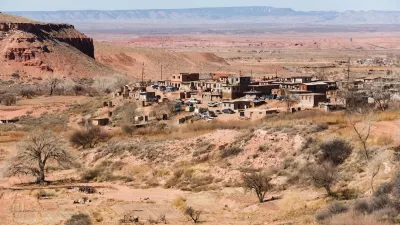
Tribal Communities Create Own Broadband Networks
Access to quality internet connectivity in many tribal and rural communities lags far behind other regions.

Virginia Coalition Calls for Increased Data Center Industry Oversight
Environmental groups voice concern that the states large, and growing, number of data centers is putting unsustainable pressure on natural resources and utility infrastructure.
Planetizen Federal Action Tracker
A weekly monitor of how Trump’s orders and actions are impacting planners and planning in America.
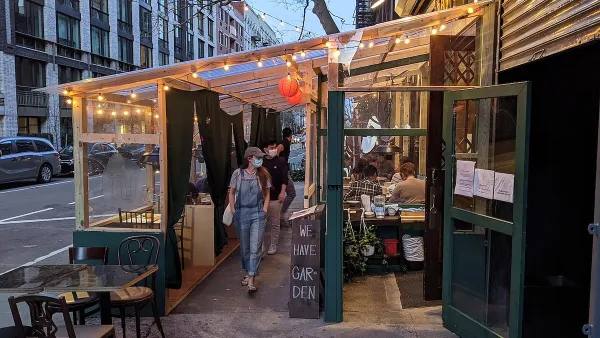
Restaurant Patios Were a Pandemic Win — Why Were They so Hard to Keep?
Social distancing requirements and changes in travel patterns prompted cities to pilot new uses for street and sidewalk space. Then it got complicated.
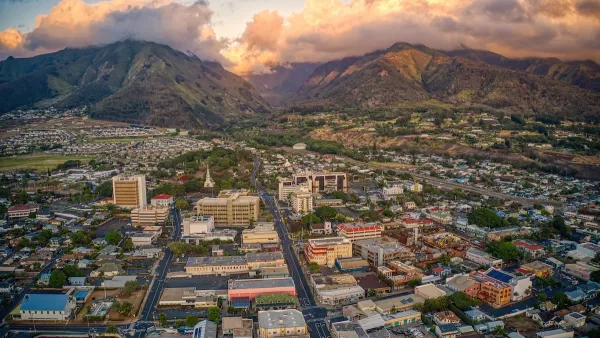
Maui's Vacation Rental Debate Turns Ugly
Verbal attacks, misinformation campaigns and fistfights plague a high-stakes debate to convert thousands of vacation rentals into long-term housing.

In California Battle of Housing vs. Environment, Housing Just Won
A new state law significantly limits the power of CEQA, an environmental review law that served as a powerful tool for blocking new development.

Boulder Eliminates Parking Minimums Citywide
Officials estimate the cost of building a single underground parking space at up to $100,000.

Orange County, Florida Adopts Largest US “Sprawl Repair” Code
The ‘Orange Code’ seeks to rectify decades of sprawl-inducing, car-oriented development.

Urban Design for Planners 1: Software Tools
This six-course series explores essential urban design concepts using open source software and equips planners with the tools they need to participate fully in the urban design process.
Planning for Universal Design
Learn the tools for implementing Universal Design in planning regulations.

Heyer Gruel & Associates PA
JM Goldson LLC
Custer County Colorado
City of Camden Redevelopment Agency
City of Astoria
Transportation Research & Education Center (TREC) at Portland State University
Camden Redevelopment Agency
City of Claremont
Municipality of Princeton (NJ)