A new study shows that New York City is losing is middle class, and quick. However, says one planner, the findings, though detailed, don't give the big picture.


"'What they're doing in the report is looking at domestic outflow by itself,' [Joe Salvo, director of the New York City Department of Planning's population divions] said. 'You can't do that.'
'We have a dynamic operating here,' he said. 'People who come and people who leave, they come from everywhere and they go everywhere.'
He said if outmigration were a problem, it would be visible in the boroughs outside Manhattan."
"The sky-high cost of living in the city is the lead driving force behind the squeeze on the middle class, the report argues. City residents pay among the highest prices in the nation for electricity, telephone service, auto insurance, home heating oil, parking and milk-and those prices continue to rise. Combined state and local taxes are tops among major cities, and housing is the most expensive. In the third quarter of 2008, only 10.6% of all housing in New York City was deemed affordable to people earning the median area income. And average rents in the fourth quarter were $2,801, or 53% higher than in San Francisco, the city with the second-highest figure, the report shows."
Read the full story: City’s middle-class exodus seen accelerating
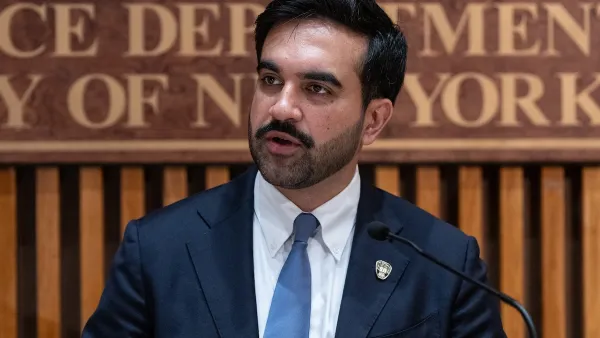
DSA members accuse Mamdani of 'abandoning values' over housing redevelopment
New York City's mayor plans to replace about 2,000 units of public housing with private, mixed-income housing.
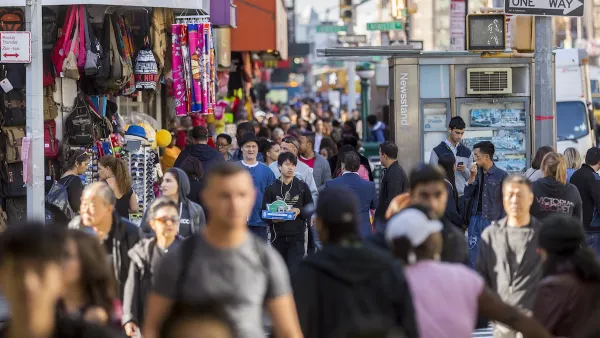
NYC renovations for dangerous, ‘mercilessly crammed’ street delayed until 2027
Construction was supposed to begin this fall.
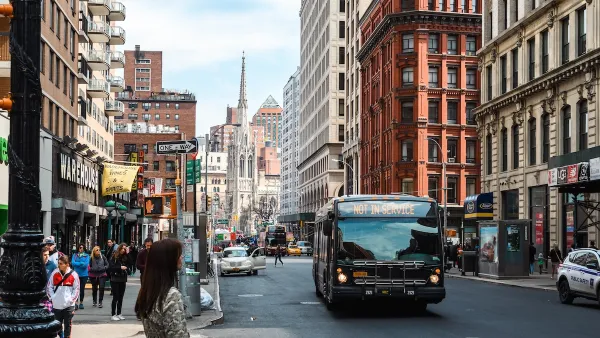
MTA sends Dem leaders a wish list to mend Trump’s damages
Requests include exempting new train and bus components from tariffs and increasing transit security funding.

Planetizen Federal Action Tracker
A weekly monitor of how Trump’s orders and actions are impacting planners and planning in America.

Eastern Nebraska is running out of electricity
Data centers and electrification are straining eastern Nebraska’s grid, throttling economic development.

Study reveals best places in the U.S. for cycling, walking
New research from Streetlight Data examines bicycle and pedestrian miles per capita in the 100 largest U.S. cities by population.

Next-generation nuclear reactors are coming to Texas
The reactors will not require towering containment structures thanks to new safety features.

California distributes $1.3 billion to prevent transit service cuts, bolster projects
Twenty-eight projects across California received a portion of the funding.

Pennsylvania Democrats have 15 affordability, clean energy bills for flipped state Senate
Bills in consideration include a bill supporting geothermal energy and a bill supporting solar on warehouses.

FREE Course: Walkable City 1: Why Walkability?
After describing his path towards focusing on walkability as the essence of good planning, Jeff Speck marches through his five principal reasons for making more walkable places.
Reinventing Malls: Planning Alchemy—Turning Gray Fields Into Gold
The course focuses on the opportunities and imperatives that shape reinvention of mall sites.

City of Charlotte
City of Rosemead
Rutgers University, Edward J. Bloustein School of Planning and Public Policy
University of Michigan School for Environment and Sustainability (SEAS)
Hunter College, City University of New York (CUNY)
The Architects Foundation
City of Cambridge
The Pocatello Development Authority
The Urban Renewal Agency of the City of Pocatello