Mark Gorton, creator of Limewire started developing his GeoServer software in 1999. Recently Portland adopted the software to plan bus routes. Gorton wants to foster a new revolution in participatory planning.


"'99 percent of planning in the United States is volunteer citizens on Tuesday nights in a high school gym,' Wright says. 'Creating a software that can reach into that dynamic would be very profound, and open it up, and shine light on the decision-making. Right now, it becomes competing experts trying to out-credential each other in front of these citizen and volunteer boards... [Gorton] could actually change the whole playing field.'
Portland, Oregon has already used his open-source software to plan its bus routes. San Francisco, whose MUNI bus system is a frequent target of criticism, could be next to get the treatment. Gorton says he's in talks with the city to supply transit routing software for MUNI that will do a much better job of keeping track of where people are going and figuring out how best to get them there. San Francisco "overpaid greatly" for a badly-supported proprietary closed-source system that barely works, according to Gorton, putting the city under the thumb of a private company that provides sub-par support."
Thanks to Ian McIntyre
Read the full story: LimeWire Creator Brings Open-Source Approach to Urban Planning

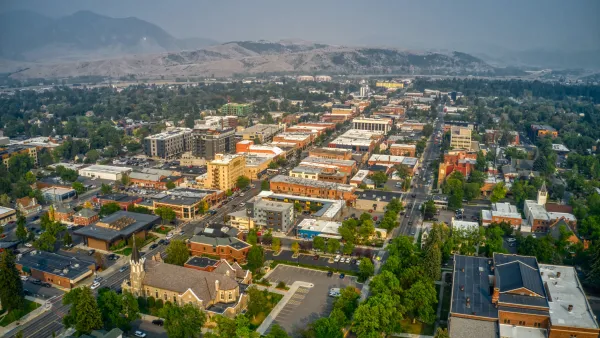
Montana Land Use Reform Overhauls Public Participation Rules
In a bid to streamline housing permits, new state legislation limits public input to the land use planning stage.
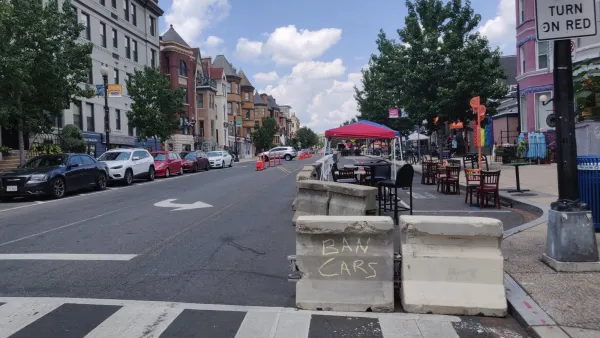
The Slow Streets Reckoning
Slow streets programs provided a quick short-term solution and paved the way for some permanent street closures and realignments. Now, these programs are getting a second look as community groups react to the changes.

Meet Google's Open Source, Time-Traveling Map
All historic maps are welcome in Google's open source machine learning project.

Planetizen Federal Action Tracker
A weekly monitor of how Trump’s orders and actions are impacting planners and planning in America.

Chicago breaks ground on $3 billion megadevelopment
The new neighborhood, titled Foundry Park, will one day host 3,700 residences.

This MA town is drowning in its own sewage — and residents like it that way
Susan Murcott, a waste water expert, said if Carlisle didn't address their leaking sewage, the problem could turn “deadly.”

Feds to more closely scrutinize proposed Amtrak facility’s environmental impact
The Federal Railroad Administration had initially said the facility qualified for a less extensive environmental review.

Boston is hard to build housing in: its chief of planning wants to keep it that way
Chief of Planning Kairos Shen said she would not make changes to Boston’s affordability requirements for new housing, which critics say have slowed down development.

California plans to bury El Niño’s downpour
If the state plays its cards right, it may be able to store a billion acre-feet of El Niño’s water in aquifers.

FREE Course: Walkable City 1: Why Walkability?
After describing his path towards focusing on walkability as the essence of good planning, Jeff Speck marches through his five principal reasons for making more walkable places.
Reinventing Malls: Planning Alchemy—Turning Gray Fields Into Gold
The course focuses on the opportunities and imperatives that shape reinvention of mall sites.

City of Rosemead
Rutgers University, Edward J. Bloustein School of Planning and Public Policy
One Hundred Miles
Hunter College, City University of New York (CUNY)
The Architects Foundation
University of Cincinnati Online
Montrose County
The Pocatello Development Authority
The Urban Renewal Agency of the City of Pocatello