An exhibition in Houston organized by the Center for Land Use Interpretation looks at how the oil industry has transformed the landscape of Texas.


"Texas Oil: Landscape of an Industry will be the culmination of the CLUI's study of Texas and will show how the extraction and refining of oil has sculpted the state's terrain. The exhibition will open with a "landscan" video, an extended aerial shot of petroleum refineries and shipping yards that shows the massive scale of these places. In addition to this projection, the galleries will be filled with CLUI photographs and texts on many different sites across the Lone Star State from west Texas oil towns such as Odessa and Kermit to petrochemical processing centers on the Gulf Coast and everywhere in-between. These places tell the incredible and often surprising story of an industry that fuels our civilization by using deposits of hydrocarbons to create gasoline, fertilizers, plastics, and many other products."
The exhibition opens today and runs through March 29th. CLUI is also organizing boat tours through the Buffalo Bayou area to view landscapes impacted by oil production.
Read the full story: Texas Oil: Landscape of an Industry
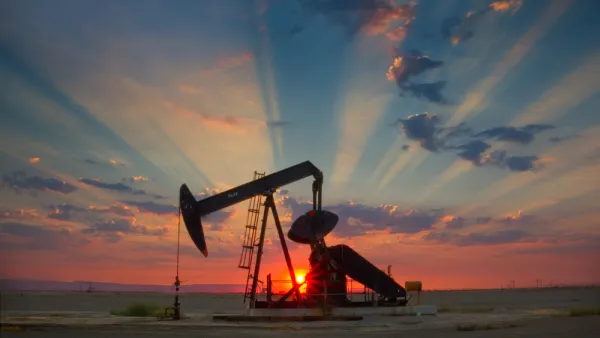
Holding Oil Companies Accountable for California's High Fuel Prices
Gov. Gavin Newsom signed into law a first-in-the-nation bill that would penalize California's oil refineries for excessive profits. Will it lower the state's highest-in-the-nation fuel prices?
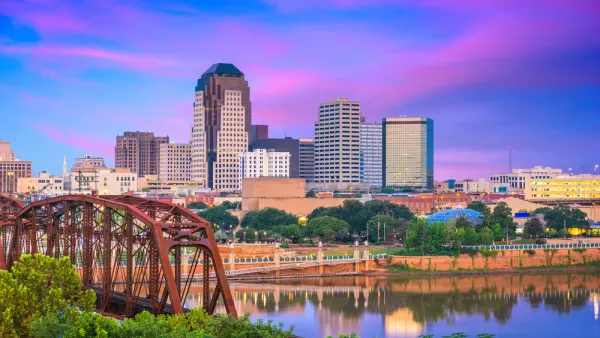
State Legislation Would Make Louisiana a 'Fossil Fuel Sanctuary State'
A Louisiana state legislator who is also the owner of oil company has proposed several laws that would remove regulations for the oil industry, including one that would prevent the local and state regulation of oil and gas companies.

Oil Companies Set Fundraising Record in Opposing Washington's Carbon Tax
At some point you have to wonder which is more costly: the new tax or opposing the tax?

Planetizen Federal Action Tracker
A weekly monitor of how Trump’s orders and actions are impacting planners and planning in America.

Washington state to charge fee to drivers with fuel-efficient cars
Revenue from the fee will go towards supporting the state’s highways.

Illinois considers spending $1 billion in taxpayer money on data center
A quantum computing campus and data center are currently under construction in Chicago.

Some incoming, leading US House Dems urge a national moratorium new data centers
McGovern, the top Democrat on the House Rules Committee, called for “an immediate change to the status quo.”

People Mover delayed again, LAX and contractor trade barbs
The automated train was last slated to open in January 2027.

Trump to blast ‘hydrocarbon highway’ through ‘world’s longest art gallery’
Environmental and historic preservation groups are suing to stop the project.

FREE Course: Walkable City 1: Why Walkability?
After describing his path towards focusing on walkability as the essence of good planning, Jeff Speck marches through his five principal reasons for making more walkable places.
Reinventing Malls: Planning Alchemy—Turning Gray Fields Into Gold
The course focuses on the opportunities and imperatives that shape reinvention of mall sites.

City of Charlotte
City of Rosemead
Rutgers University, Edward J. Bloustein School of Planning and Public Policy
University of Michigan School for Environment and Sustainability (SEAS)
Hunter College, City University of New York (CUNY)
The Architects Foundation
University District Partnership