




















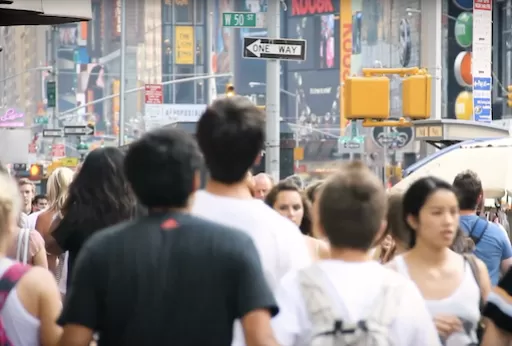
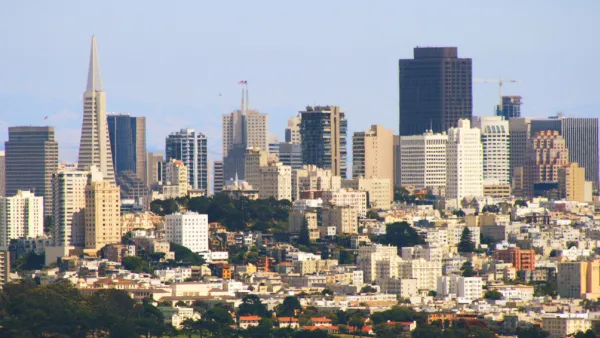
Relative to those in Chicago's Grant Park or New York's Time Square, post-election celebration turnouts in San Francisco public spaces were sparse. But it's not because of urban design--it's the city's character.


"This isn't necessarily a bad thing. But the void was apparent on election night when Obama's victory caused a meteor shower of public exultation to shoot across our civic landscape - flickering up with high-fives and car honks and spontaneous delight, dissolving in most places as people moved on.
That's a far cry from what went on in Grant Park, where the official Obama gathering near the lakefront was a magnet for more than 100,000 people wanting to be part of history in the making. Or Times Square, where thousands of people showed up to watch enormous television screens proclaiming the results but also to take part in something larger.
On a map, to be sure, we have such spaces. Union Square is the obvious one, framed by masonry walls. Yerba Buena Gardens is beguiling and green. Both are close by Muni and BART.
Both, though, are designed as passive backdrops. They're amenities, not destinations. And while Yerba Buena at one point included visions of large-scale outdoor projection screens, critics who then as now fear 'Manhattanization' were horrified by the idea."
FULL STORY: S.F.'s party spot? Not Justin Herman Plaza

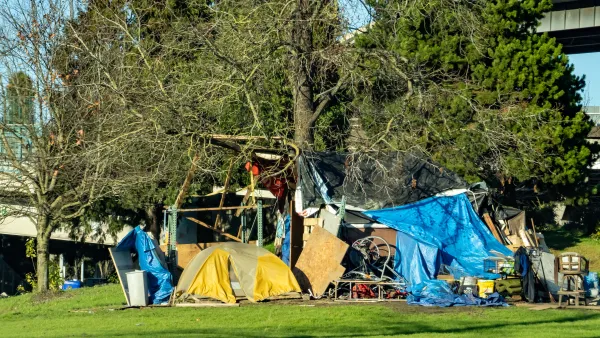
Tent Encampments: Will the Legal Restraint be Lifted?
A controversial U.S. Ninth Circuit Court of Appeals ruling in 2018 that has hindered the ability of western cities to clear tent encampments on public spaces will likely be revisited and overturned by the Supreme Court, predicts a popular CNN host.
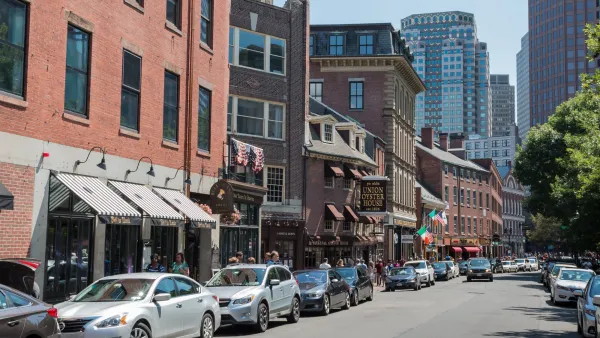
A Bold Vision for a Car-Free Boston
As other cities take daring steps to reclaim their streets, a car ban in downtown Boston doesn’t seem so implausible.
Making Public Spaces Actually Public
Developers get a lot of milage from building privately owned public spaces—but the public often doesn't. Planners in San Francisco are now requiring buildings to make hidden POPS known, so that the public can actually use them.

Planetizen Federal Action Tracker
A weekly monitor of how Trump’s orders and actions are impacting planners and planning in America.
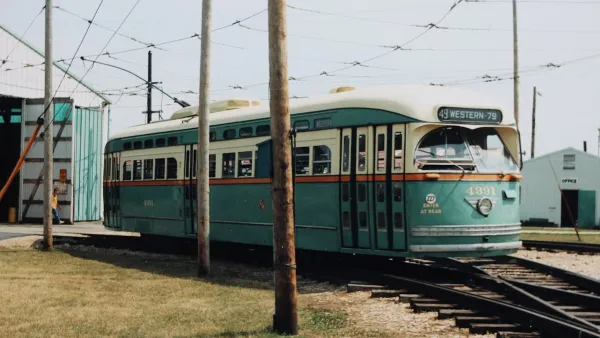
Chicago’s Ghost Rails
Just beneath the surface of the modern city lie the remnants of its expansive early 20th-century streetcar system.
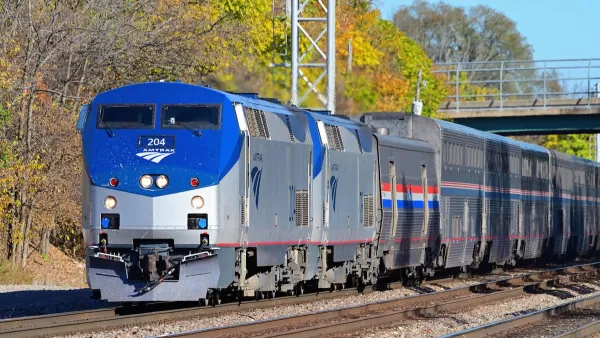
Amtrak Cutting Jobs, Funding to High-Speed Rail
The agency plans to cut 10 percent of its workforce and has confirmed it will not fund new high-speed rail projects.

Ohio Forces Data Centers to Prepay for Power
Utilities are calling on states to hold data center operators responsible for new energy demands to prevent leaving consumers on the hook for their bills.

MARTA CEO Steps Down Amid Citizenship Concerns
MARTA’s board announced Thursday that its chief, who is from Canada, is resigning due to questions about his immigration status.

Silicon Valley ‘Bike Superhighway’ Awarded $14M State Grant
A Caltrans grant brings the 10-mile Central Bikeway project connecting Santa Clara and East San Jose closer to fruition.

Urban Design for Planners 1: Software Tools
This six-course series explores essential urban design concepts using open source software and equips planners with the tools they need to participate fully in the urban design process.
Planning for Universal Design
Learn the tools for implementing Universal Design in planning regulations.

Caltrans
City of Fort Worth
Mpact (founded as Rail~Volution)
City of Camden Redevelopment Agency
City of Astoria
City of Portland
City of Laramie