

























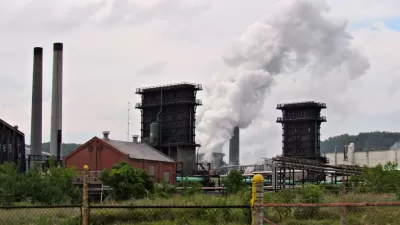
Sixty years after twenty people died from air pollution spewing from a steel and zinc mill in Donora, PA (just outside Pittsburgh) in perhaps the worst air quality tragedy in the U.S., a museum has opened to commemorate and learn from the tragedy.


The smog from the two mills rolled in Oct. 27, 1948, and didn't lift until it rained on Oct. 31. By then, "20 people in Donora had died, and nearly half the town became ill in one of the worst air pollution disasters in the nation's history."
"Over the last two weeks, (Donora residents) marked the 60th anniversary with memorials for the families of those who died".
"We want people to realize Donora was a big part of the environmental movement," said Don Pavelko, a Donora councilman who came up with idea for the museum.
"Smog was not unusual in Donora, a town of 14,000 then that was home to the American Steel & Wire Company and the Donora Zinc Works plants - both run by the United States Steel Company - that sat along the river and employed 5,000 people.
But this was different. The thick, yellowish, acrid smog was the result of an unusual weather inversion - a pocket of warm, stagnant air - that sat over the valley for five days.
Underneath what was essentially a lid on the valley were sulfuric acid, nitrogen dioxide and other poisonous gases, including fluorine, that would normally rise into the atmosphere. Most researchers blame the zinc plant..."
FULL STORY: Unveiling a Museum, a Pennsylvania Town Remembers the Smog That Killed 20


Comment: EPA Cuts will Send Atlanta Back to Eye-burning Ozone, Lung-damaging Smog, and Raw Sewage in the Chattahoochee River
A veteran political journalist takes stock of the hard-earned ground Georgia stands to lose with slashed environmental protection.
Coming to Terms with the Racist Causes of Pollution
Pittsburgh, Pennsylvania took the dramatic step of officially declaring racism a public health threat. Public policy has yet to mitigate the city's worsening air quality, however.

Another EPA Rollback, Tailor-Made for Gov. Walker and Southeast Wisconsin
Politics and economics win over public health in Racine County as the EPA exempted the area around the Foxconn's massive facility from meeting stricter ozone pollution standards, saving the company from investing in smog-reducing equipment.

Maui's Vacation Rental Debate Turns Ugly
Verbal attacks, misinformation campaigns and fistfights plague a high-stakes debate to convert thousands of vacation rentals into long-term housing.

Planetizen Federal Action Tracker
A weekly monitor of how Trump’s orders and actions are impacting planners and planning in America.
In Urban Planning, AI Prompting Could be the New Design Thinking
Creativity has long been key to great urban design. What if we see AI as our new creative partner?

King County Supportive Housing Program Offers Hope for Unhoused Residents
The county is taking a ‘Housing First’ approach that prioritizes getting people into housing, then offering wraparound supportive services.

Researchers Use AI to Get Clearer Picture of US Housing
Analysts are using artificial intelligence to supercharge their research by allowing them to comb through data faster. Though these AI tools can be error prone, they save time and housing researchers are optimistic about the future.

Making Shared Micromobility More Inclusive
Cities and shared mobility system operators can do more to include people with disabilities in planning and operations, per a new report.

Urban Design for Planners 1: Software Tools
This six-course series explores essential urban design concepts using open source software and equips planners with the tools they need to participate fully in the urban design process.
Planning for Universal Design
Learn the tools for implementing Universal Design in planning regulations.

planning NEXT
Appalachian Highlands Housing Partners
Mpact (founded as Rail~Volution)
City of Camden Redevelopment Agency
City of Astoria
City of Portland
City of Laramie