By enlisting the help of concerned local citizens, researchers are getting better documentation of the locations of potentially polluting industrial land uses near residential areas.


"Frustrated because she must keep her asthma- and bronchitis-suffering daughters indoors to protect their health, Herrera recently joined a cadre of northeastern San Fernando Valley residents to catalog the location of industrial businesses and their proximity to gathering places for young and elderly residents, who could be most affected by contaminated air and water."
"The effort, known as 'ground truthing,' is part of an ambitious project devised by environmental justice researchers and a local nonprofit group to compile an accurate picture of where toxic and hazardous sites are located in Southern California and how they affect the health of nearby communities."
"Updated information is necessary because state and federal environmental databases that track industrial uses by location or type of pollution they emit are incomplete, said James Sadd, a professor of environmental science at Occidental College."
"Without data that show the full picture, lawmakers have a hard time drafting laws to protect neighborhoods and can't accurately target cleanup efforts, residents and researchers said."
Read the full story: L.A. residents ferret out toxic sites for researchers

Houston is reining in gas station development
The city has proposed new rules that would limit development in residential areas.
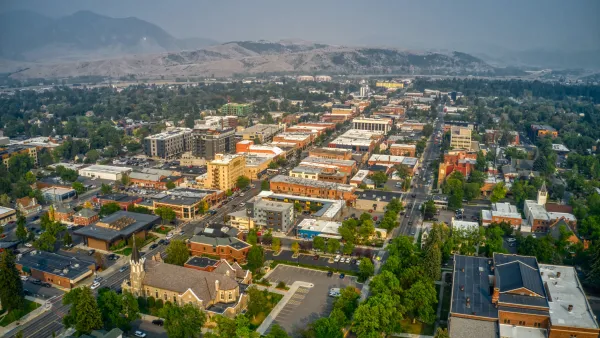
Montana Land Use Reform Overhauls Public Participation Rules
In a bid to streamline housing permits, new state legislation limits public input to the land use planning stage.
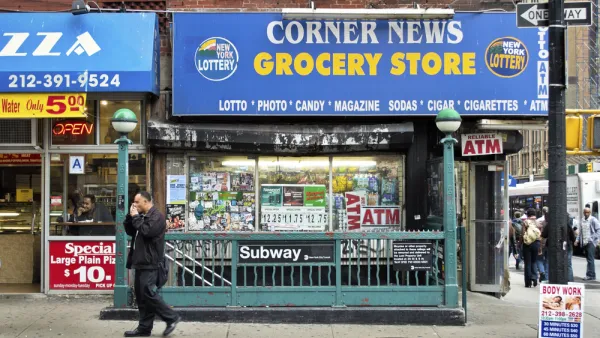
‘City of Yes’ Zoning Changes Take Shape in New York
The signature zoning and planning effort of the Adams administration took a step forward recently, with changes meant to clear red tape for businesses in New York City.

Planetizen Federal Action Tracker
A weekly monitor of how Trump’s orders and actions are impacting planners and planning in America.

Eastern Nebraska is running out of electricity
Data centers and electrification are straining eastern Nebraska’s grid, throttling economic development.
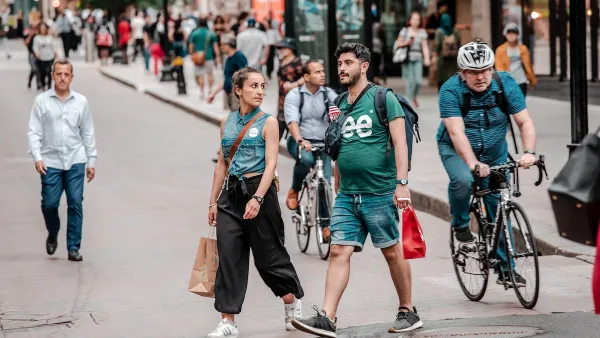
Study reveals best places in the U.S. for cycling, walking
New research from Streetlight Data examines bicycle and pedestrian miles per capita in the 100 largest U.S. cities by population.

As Texas embraces carbon storage, a Black community questions the risks
Texas now issues permits for companies to store carbon dioxide underground. East Texas residents fear safety risks, and skeptics doubt the climate benefits.

New BLM proposal would slash public comment periods, environmental protections
The proposed rewrite would also strip legal leverage from Tribal nations and state governments.

DSA members accuse Mamdani of 'abandoning values' over housing redevelopment
New York City's mayor plans to replace about 2,000 units of public housing with private, mixed-income housing.

FREE Course: Walkable City 1: Why Walkability?
After describing his path towards focusing on walkability as the essence of good planning, Jeff Speck marches through his five principal reasons for making more walkable places.
Reinventing Malls: Planning Alchemy—Turning Gray Fields Into Gold
The course focuses on the opportunities and imperatives that shape reinvention of mall sites.

City of Rosemead
Rutgers University, Edward J. Bloustein School of Planning and Public Policy
One Hundred Miles
University of Michigan School for Environment and Sustainability (SEAS)
Hunter College, City University of New York (CUNY)
The Architects Foundation
City of Cambridge
The Pocatello Development Authority
The Urban Renewal Agency of the City of Pocatello