InTransition Magazine talks to Rick Eckstein, author of Public Dollars, Private Stadiums: The Battle over Building Sports Stadiums about why stadiums fail to fulfill their promises of economic revitalization.


"Eckstein began studying the issue in depth after seeing a stadium referendum shot down by Pittsburgh voters in the late 1990s, only for city leaders to fund it through other means later. He has been quoted widely by media outlets throughout the recent stadium boom, making few friends among sports fans along the way.
When you add up the tangible economic indicators-such as jobs created, tax ratables and sales revenues-it never justifies the investment of public dollars in construction, infrastructure upgrades, policing and other needs, he said. Only the team owners make out big in the end.
He said part of the reason for this is what social scientists call the 'substitution effect.' When a stadium is torn down so a new one can be built elsewhere, you're merely moving money from one place to another. The cash being spent at the arenas and new stores, hotels and restaurants that crop up around them is just cash not being spent on other forms of entertainment, he said."
Read the full story: Academics Say Stadiums Don’t Pay

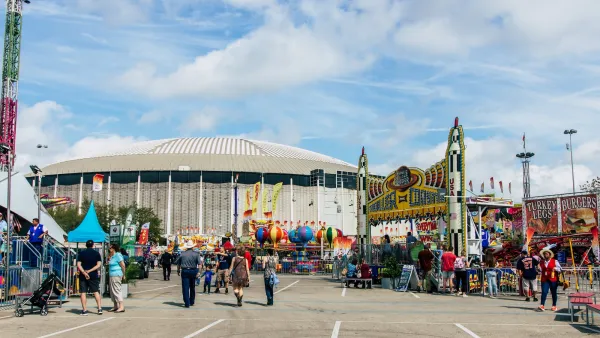
Saving the Houston Astrodome Could Cost $750 Million
Local residents have shown strong support for using public funds to preserve and restore the historic stadium as an entertainment venue.
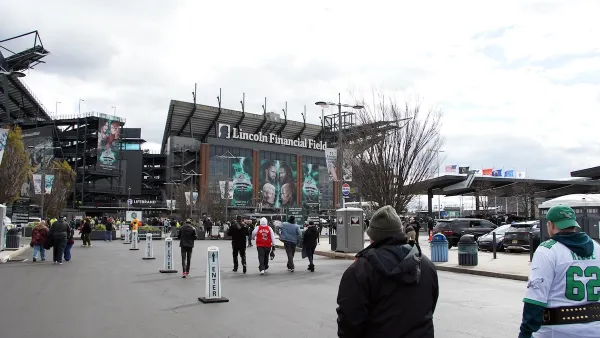
Sports Gambling Company Sponsors Suspended Philly Stadium Train Amidst SEPTA Cuts
After SEPTA announced it would have to cut the subway line that leads to Lincoln Field, FanDuel offered $80k to keep the train running for the season opener.

Planetizen’s Top Urban Planning Books of 2024
Top of mind in 2024 were the far-reaching impacts of climate displacement, zoning as a solution to the housing crisis, and the potential for safer roads and better public transit in American cities.

Planetizen Federal Action Tracker
A weekly monitor of how Trump’s orders and actions are impacting planners and planning in America.

Data reveals that NYC’s bet on congestion pricing has paid off
After almost two years of the program, reports show positive impacts on traffic and air quality and no disruptions to parking.

Denver is solving homelessness. Why aren't the rest of us?
Since 2023, Denver's street homeless population has decreased by 64%, proving that effective tools exist to support those in need of housing.

CA city to shut down airport, transform it into utopian park
The western side of the 200-acre park will feature a dog park, nature education center and arboretum.

NYC to vote on supporting outdoor dining, streamlining bus and bike lane creation
The city has five proposed amendments to its municipal constitution on the ballot this November.

Chicago breaks ground on $3 billion megadevelopment
The new neighborhood, titled Foundry Park, will one day host 3,700 residences.

FREE Course: Walkable City 1: Why Walkability?
After describing his path towards focusing on walkability as the essence of good planning, Jeff Speck marches through his five principal reasons for making more walkable places.
Reinventing Malls: Planning Alchemy—Turning Gray Fields Into Gold
The course focuses on the opportunities and imperatives that shape reinvention of mall sites.

City of Rosemead
Rutgers University, Edward J. Bloustein School of Planning and Public Policy
One Hundred Miles
The Architects Foundation
University of Cincinnati Online
Montrose County
Northern Illinois Transit Authority (NITA)
The Pocatello Development Authority