


























G.E. is currently experimenting with a new lased-based technology that could make nuclear enrichment much easier. This would be a boon to nuclear power, but would also make nuclear-based weapons easier to make.


"'The threat is there,' says Edwin Lyman, a nuclear nonproliferation expert with the Union of Concerned Scientists, a research and advocacy group in Cambridge, Mass. 'If [GE-Hitachi] succeeds in overcoming remaining technological hurdles, the resulting laser-enrichment would be extremely vulnerable to proliferation. It's also a technology that several countries would likely pursue.'
Henry Sokolski, director of the Nonproliferation Policy Education Center in Washington, is worried about SILEX too. 'If it works, it has enormous industrial implications with the US perhaps bringing back all the enrichment services it has lost to Europe and Russia,' he says.
'But how long can you keep this process secret and out of the hands of proliferators? That's the real question.'
The US Department of Energy, which oversees nuclear power, is not worried.
'Any program to build additional enrichment facilities in the United States will be evaluated for its safety, environmental, and nonproliferation characteristics before it is licensed to operate,' the DOE said in a statement responding to Monitor queries."
FULL STORY: Will lasers brighten nuclear’s future?


Google Inks Nuclear Power Deal
Tech giants are seeking out renewable energy to fuel power-hungry data centers and AI applications.
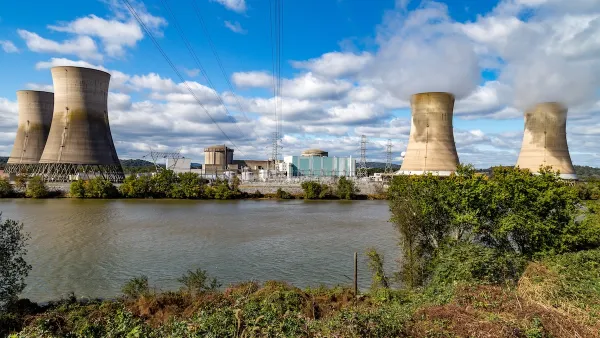
Three Mile Island Nuclear Plant Could Power Microsoft Data Centers
The proposal to restart one unit of the infamous plant, which suffered a partial meltdown in 1979, still requires federal, state, and local approvals.

Small-Scale Nuclear Power Dealt Major Setback
The company that made history in January when its 'small modular nuclear reactor' became the first in the nation to receive certification from the Nuclear Regulatory Commission has canceled it due to financial reasons.

Planetizen Federal Action Tracker
A weekly monitor of how Trump’s orders and actions are impacting planners and planning in America.

Chicago’s Ghost Rails
Just beneath the surface of the modern city lie the remnants of its expansive early 20th-century streetcar system.

Amtrak Cutting Jobs, Funding to High-Speed Rail
The agency plans to cut 10 percent of its workforce and has confirmed it will not fund new high-speed rail projects.

Ohio Forces Data Centers to Prepay for Power
Utilities are calling on states to hold data center operators responsible for new energy demands to prevent leaving consumers on the hook for their bills.

MARTA CEO Steps Down Amid Citizenship Concerns
MARTA’s board announced Thursday that its chief, who is from Canada, is resigning due to questions about his immigration status.

Silicon Valley ‘Bike Superhighway’ Awarded $14M State Grant
A Caltrans grant brings the 10-mile Central Bikeway project connecting Santa Clara and East San Jose closer to fruition.

Urban Design for Planners 1: Software Tools
This six-course series explores essential urban design concepts using open source software and equips planners with the tools they need to participate fully in the urban design process.
Planning for Universal Design
Learn the tools for implementing Universal Design in planning regulations.

Caltrans
City of Fort Worth
Mpact (founded as Rail~Volution)
City of Camden Redevelopment Agency
City of Astoria
City of Portland
City of Laramie