Eric Lombardi, a waste-management guru, has drawn up a fanciful plan for an "eco-cycle, zero waste park" which reimagines the dump as a composting, recycling, and educating facility.


"The park would be a one-stop dumping ground for truck loads of already-sorted city waste. The park includes a composting facility for organic materials; reuse center for still-good items; a center for hard-to-recycle materials (Eco-Cycle has already successfully created one of these in Boulder); a materials recovery facility for recovering valuable technical nutrients like metals; a residue facility for handling any trash that is leftover after the former; and a public education center.
Lombardi's plan doesn't invent a way to deal with waste, it simply connects the dots between established solutions. "None of the technologies in my park is new," says Lombardi. "They're simple, proven, low-tech and little risk."
And making an investment in zero-waste can be enormously profitable to a city – but only if residents commit to sorting their waste much more zealously than we do right now. But that in itself is a wise move that would benefit everyone."
Read the full story: Eric Lombardi's Zero Waste Park
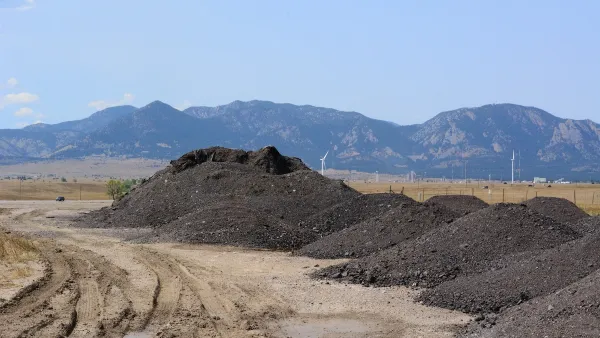
Colorado Ramps Up Rural Recycling Program
The state is creating a framework for building better access to recycling facilities and services for rural residents and businesses.
Rising Costs Could End Phoenix's Municipal Recycling Program
The city of Phoenix will either have to raise the rate for waste removal int he city or cut programs like recycling.
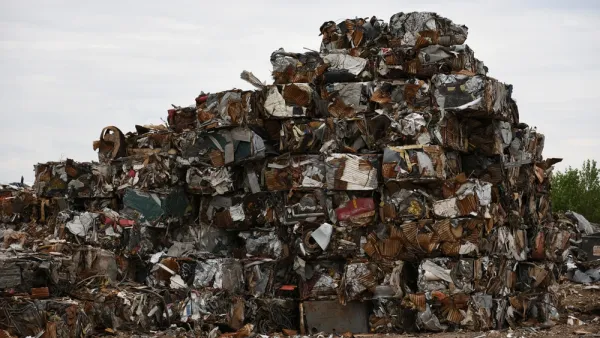
Striving for a Zero-Waste Future
A number of U.S. cities have set ambitious zero-waste goals, but reaching targets has been challenging. Turning waste into a viable commodity is one strategy to get materials out of the waste stream.

Planetizen Federal Action Tracker
A weekly monitor of how Trump’s orders and actions are impacting planners and planning in America.

Eastern Nebraska is running out of electricity
Data centers and electrification are straining eastern Nebraska’s grid, throttling economic development.

Study reveals best places in the U.S. for cycling, walking
New research from Streetlight Data examines bicycle and pedestrian miles per capita in the 100 largest U.S. cities by population.

DSA members accuse Mamdani of 'abandoning values' over housing redevelopment
New York City's mayor plans to replace about 2,000 units of public housing with private, mixed-income housing.

All sides of BRT debate unhappy with CDOT’s most recent move
The Colorado Department of Transportation is no longer considering center-running bus lanes for Colorado Boulevard.

Massachusetts bogs generate both power, and cranberries
Putting solar panels above farmland is one way Massachusetts is advancing toward its goal of net-zero carbon emissions by 2050.

FREE Course: Walkable City 1: Why Walkability?
After describing his path towards focusing on walkability as the essence of good planning, Jeff Speck marches through his five principal reasons for making more walkable places.
Reinventing Malls: Planning Alchemy—Turning Gray Fields Into Gold
The course focuses on the opportunities and imperatives that shape reinvention of mall sites.

City of Rosemead
Rutgers University, Edward J. Bloustein School of Planning and Public Policy
One Hundred Miles
University of Michigan School for Environment and Sustainability (SEAS)
Hunter College, City University of New York (CUNY)
The Architects Foundation
City of Cambridge
The Pocatello Development Authority
The Urban Renewal Agency of the City of Pocatello