City cycling can be hectic. Let's be realistic: most American cities are not meant for cyclists. It would be great if they were, but for now, our city forms are primarily designed for the movement of cars. Because cities are made for cars, it's understandable that car drivers tend to disregard the fact that somebody might be riding a bike out there. (Interchange blogger Mike Lydon recently wrote an excellent piece about planning for bicycle networks.) Until our urban forms and public policies encourage the use of roads by a variety of transportation types, the burden is on cyclists to assert their role in the transit jungle. Communication is key to achieving this goal. Safe cycling (and safe transportation in general) relies heavily on communication. Safe cyclists speak bike language -- a rudimentary system made up of three main components: the wave, the yell and the nod.


City cycling can be hectic. Let's be realistic: most American cities are not meant for cyclists. It would be great if they were, but for now, our city forms are primarily designed for the movement of cars. Because cities are made for cars, it's understandable that car drivers tend to disregard the fact that somebody might be riding a bike out there. (Interchange blogger Mike Lydon recently wrote an excellent piece about planning for bicycle networks.) Until our urban forms and public policies encourage the use of roads by a variety of transportation types, the burden is on cyclists to assert their role in the transit jungle. Communication is key to achieving this goal. Safe cycling (and safe transportation in general) relies heavily on communication. Safe cyclists speak bike language -- a rudimentary system made up of three main components: the wave, the yell and the nod.
1. The Wave
The wave is a critical part of cyclist communication. The wave is the simple use of the arm to indicate where one is heading. To show others where they intend to go, bikers can merely point in the direction of a turn, just like a driver can use a turn signal. When people know what to expect on the road, they can react appropriately. It's a pretty simple concept, and one that is incredibly easy to put into action. In addition to being a basic safety measure, the wave can also be used by bikers to thank others for acknowledging their presence. For example, when a car yields to the right-of-way of a cyclist, or when drivers stop to let a signaling biker turn, a friendly wave is a nice way of saying "thanks for not killing me."
2. The Yell
The unfortunate reality of city biking is that cyclists are often unnoticed. The wave helps to make bikers more noticeable, but sometimes a wave is not enough. The yell is an important part of bike language, as it tends to be used when there's little time to do anything else. A brief yelp has saved many bikers' lives from blindly merging cars and distracted drivers. It's also a highly effective method of reminding people that cars are not the only occupants of the road. Car drivers are used to seeing the roads filled with other car drivers, so many don't often even consider the fact that there might be a biker infiltrating their playgrounds. This is a symptom of sloppy driving, but one more deeply caused by a road network design focused on serving one type of user. Ignorant drivers should by no means be forgiven for overlooking cyclists, but we should recognize the root cause of their ignorance. The yell is a great way to help drivers transcend from this ignorant state and attain the true understanding of the road as a multi-user medium.
3. The Nod
The third of the three most important elements of bike language is the nod. While the yell and the wave are mainly instruments of cyclist safety, the nod is more about community. As cyclists pass each other on the road, they can often be seen giving each other a quick nod of the head. It's a sign of solidarity in a world where the cyclist is a second-class citizen of the road. This simple gesture creates a subtle but real sense of community amongst bikers, reminding that, no, they are not alone.
Using these three basic forms of bike language will make city biking a lot safer, and a lot easier to integrate into the fast-moving oblivious world of the automobile. Now, Im sure many drivers out there have had some frustrations with self-righteous bikers at some point, and I know for sure that many cyclists out there have had some scary and painful interactions with inattentive drivers in the course of their city cycling. Let's remind ourselves that the few outliers can't possibly represent the entire spectrum of bikers and drivers. Yes, many are conscious and respectful of each other, but it's best in this situation to assume the worst and proceed as cautiously as possible. A lot of people say the best way to drive is to drive defensively. I think the best way to bike is to bike communicatively.


Planetizen Federal Action Tracker
A weekly monitor of how Trump’s orders and actions are impacting planners and planning in America.

Northwest rail fans eager for Sept. 30 debut of Amtrak’s Airo fleet
Get ready for that new train smell and more seats. But they won’t go faster or run more frequently on the Cascades route in Washington and Oregon.
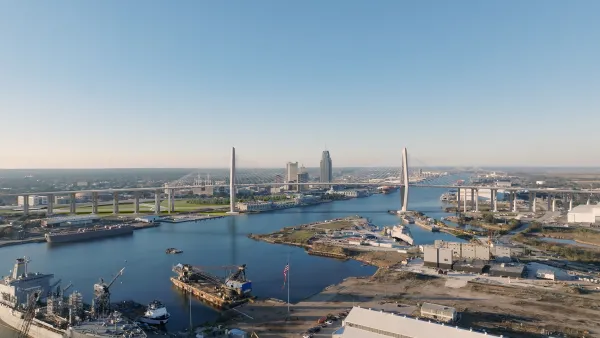
Alabama scores up to $2.5 billion federal loan for largest infrastructure project in state’s history
The Mobile River Bridge and Bayway Project aims to ease congestion at Alabama’s worst bottleneck.

Novel study finds extreme state-by-state disparity in housing construction timelines
The first comprehensive working paper on U.S. construction timelines also found that the permitting process for multi-family projects has slowed nationwide.

California may destroy its beaches trying to save homes from El Niño
Boulders and seawalls can protect homes from waves, but ultimately destroy sandy beaches.

California high-speed rail accomplishes only one legislative goal in 2026
The majority of the agency's failed pitches were never developed into written proposals.

FREE Course: Walkable City 1: Why Walkability?
After describing his path towards focusing on walkability as the essence of good planning, Jeff Speck marches through his five principal reasons for making more walkable places.
Reinventing Malls: Planning Alchemy—Turning Gray Fields Into Gold
The course focuses on the opportunities and imperatives that shape reinvention of mall sites.

City of Thousand Oaks
City of Wisconsin Rapids
Harvard University Graduate School of Design
The Architects Foundation
University of Cincinnati Online
Northern Illinois Transit Authority (NITA)
The Pocatello Development Authority
The Urban Renewal Agency of the City of Pocatello

