Although Tucson has only about 6 percent of the population of metropolitan Los Angeles, residents of the Arizona city fear California-style sprawl and water problems. So where are Tucson residents looking for answers? That's right, California.


"Pima County has doubled in size to 1 million people since 1980 and is expected to add another 250,000 in population by 2020. A unscientific online survey by the Daily Star – completed by 3,000 residents – found that more than half of the respondents oppose continued population growth, compared with only a third who favor it. However, more than half of the respondents also said they would recommend the Tucson area to their friends as a place to live." So the place must not be ruined yet.
Water is a major concern, and local officials and the governor's office are interested in "doing something" to manage growth. But how aggressively officials will manage growth is uncertain.
Thanks to Paul Shigley
Read the full story: Surprise! Tucson Doesn't Want To Be Los Angeles Either
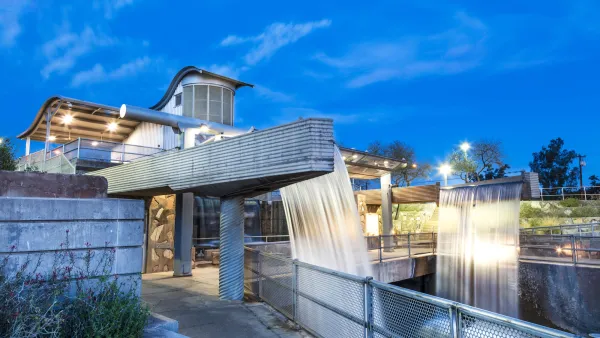
Phoenix and Tucson create emergency water reserve, anticipating Colorado River cuts
The Secure Water Arizona Program will allow participating cities to use a reserve of water or make agreements to buy it from other jurisdictions.
Planetizen’s Top Posts of 2025
The most-read articles on Planetizen in 2025.
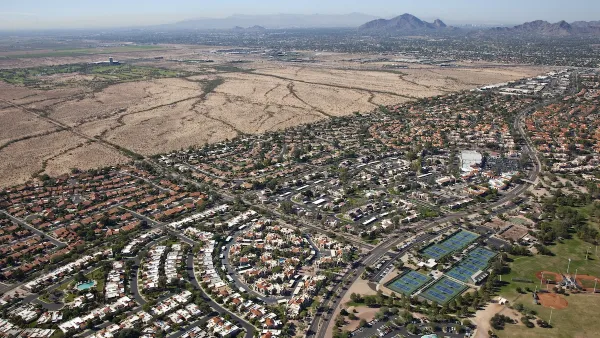
Nearly Half a Million New Arizona Homes Halted Due to Water Crisis
The Arizona Department of Water Resources has put a moratorium on new water supply permits, making the future of planned residential developments uncertain.

Planetizen Federal Action Tracker
A weekly monitor of how Trump’s orders and actions are impacting planners and planning in America.

Eastern Nebraska is running out of electricity
Data centers and electrification are straining eastern Nebraska’s grid, throttling economic development.

Washington state to charge fee to drivers with fuel-efficient cars
Revenue from the fee will go towards supporting the state’s highways.

Instead of building new housing, LA developers are turning mansions into mega-mansions
In the richest areas, the number of houses valued at $30 million with demolition permits has skyrocketed since 2018.

Illinois considers spending $1 billion in taxpayer money on data center
A quantum computing campus and data center are currently under construction in Chicago.

As development costs rise, Boston moves to lessen affordable housing requirements
The Boston Zoning Commission and the City Council still need to approve Boston Mayor Michelle Wu’s proposed changes

FREE Course: Walkable City 1: Why Walkability?
After describing his path towards focusing on walkability as the essence of good planning, Jeff Speck marches through his five principal reasons for making more walkable places.
Reinventing Malls: Planning Alchemy—Turning Gray Fields Into Gold
The course focuses on the opportunities and imperatives that shape reinvention of mall sites.

City of Charlotte
City of Rosemead
Rutgers University, Edward J. Bloustein School of Planning and Public Policy
University of Michigan School for Environment and Sustainability (SEAS)
Hunter College, City University of New York (CUNY)
The Architects Foundation
City of Cambridge
The Pocatello Development Authority
The Urban Renewal Agency of the City of Pocatello